
Neofusicoccum pistaciae
Neofusicoccum pistaciae
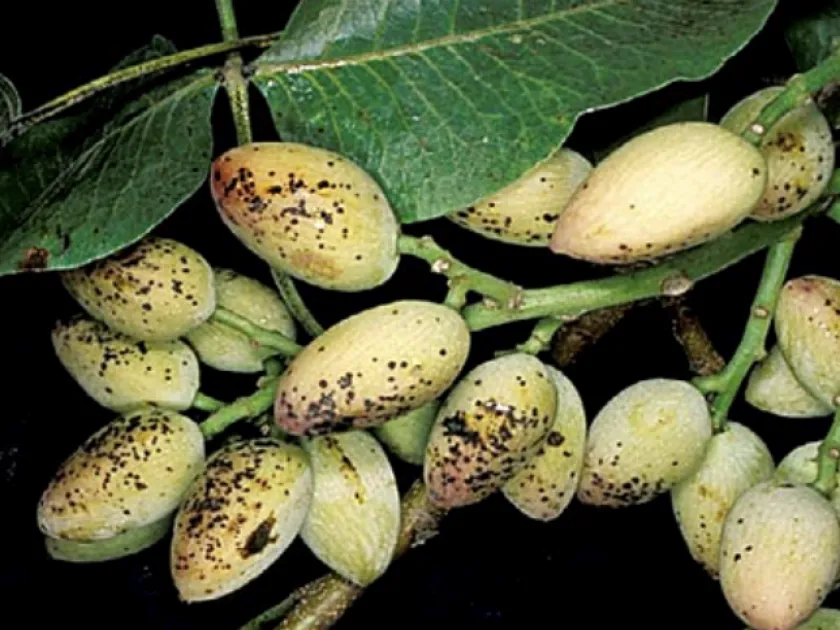
Description
Symptoms
The most characteristic symptom is the sudden wilting and death of individual branches, frequently referred to as shoot dieback or blight. Leaves on these branches become necrotic and curled but remain attached to the stem.
Cankers and cracks develop on the bark of infected limbs and trunks. These lesions are often accompanied by gum exudation (gummosis), which is the tree's natural defense mechanism against fungal invasion.
Cross-sections of affected branches reveal dark brown to black discolored wood, indicating the destruction of vascular tissues and internal fungal colonization.
As the disease progresses, systemic infections can lead to the death of major scaffold branches, significantly altering the canopy structure and overall health of the tree.
In advanced stages, the fungus can extend its range to the trunk, potentially leading to the death of the entire tree if left unmanaged over several growing seasons.
- Sudden shoot wilting and dieback.
- Cankers and longitudinal bark cracking.
- Profuse gum exudation.
- Internal wood discoloration (blackened pith).
- Persistent dead leaves on blighted branches.
Pathogen
The causative agent of this disease is the ascomycete fungus Neofusicoccum pistaciae, which belongs to the Botryosphaeriaceae family. This pathogen is known for its ability to cause severe necrotic lesions in various woody hosts.
The fungus exists as an endophyte within the plant tissues, often remaining asymptomatic for extended periods until the host tree experiences environmental or physical stress.
Propagation occurs primarily through conidia, which are dispersed by splashing rain, wind currents, and contaminated agricultural tools used during pruning processes.
The pathogen effectively survives in infected bark, twigs, and fallen debris, serving as a primary source of inoculum that maintains the disease cycle in orchards year-round.
Molecular identification has confirmed that N. pistaciae is a specialized and aggressive pathogen specifically associated with pistachio decline and dieback symptoms.
Conditions for development
The development of Neofusicoccum pistaciae is highly favored by high ambient temperatures, particularly during the summer, which induce water stress and weaken the tree's natural defenses.
Mechanical injuries caused by improper pruning, hail damage, or orchard machinery provide direct entry points for the fungal spores to colonize host tissues.
Moist and humid conditions during spring and autumn facilitate the germination of conidia and the spread of the pathogen across the orchard, especially when accompanied by wind.
Trees suffering from inadequate nutrient management or waterlogged soil conditions are significantly more susceptible to successful fungal infection and rapid disease development.
Lack of proper orchard sanitation provides an ideal reservoir for the fungus, ensuring that spores are readily available to infect new growth during every favorable weather window.
Why it matters
This pathogen causes significant economic losses by reducing tree longevity, decreasing fruit yields, and necessitating expensive removal of dead canopy sections.
The reduction in fruit quality, often resulting from infected fruit or weakened physiological states of the tree, significantly lowers the market value of the harvest.
Systemic infections require high maintenance costs, including constant monitoring and professional pruning, which increase the total cost of production per hectare.
If not addressed, the disease can spread throughout the plantation, leading to large-scale orchard decline and the necessity for complete tree removal and replanting.
The persistent nature of the fungus requires long-term management strategies, as complete eradication is extremely difficult once the pathogen is established in an orchard.
Protection
The cornerstone of disease management is strict orchard sanitation, which involves the removal and immediate incineration of all blighted branches and infected wood.
Pruning tools must be thoroughly disinfected using alcohol or copper-based sanitizers between every tree to prevent the mechanical transmission of spores.
Preventive fungicide sprays, particularly those based on copper compounds, can provide a protective barrier during periods of high vulnerability, such as early shoot emergence.
Proper irrigation management is critical to avoid water stress and waterlogging, ensuring the trees remain vigorous and better able to resist fungal penetration.
When establishing new orchards, selecting well-drained sites and choosing cultivars with reported resistance or tolerance to bark-dwelling pathogens is essential for long-term health.
Discussion
No discussions yet — be the first.