
Neofuscelia loxodes
Neofuscelia loxodes
Description
Symptoms
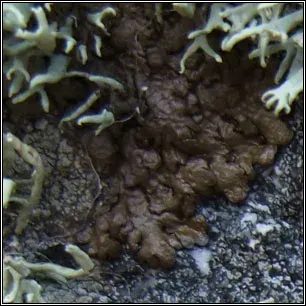
The external signs of Neofuscelia loxodes include flat, tightly adherent foliose rosettes on the bark surface. The thallus has a characteristic lobate structure.
The surface of the lichen is usually matte and covered with isidia — tiny granular or cylindrical outgrowths that facilitate vegetative reproduction and give the plant a textured appearance.
Colors range from olive-brown to deep dark brown. When multiple colonies grow together, they can cover significant areas of the tree trunk or thick branches.
Unlike true bark diseases, this lichen does not penetrate the tree's vascular system. It can be removed with light mechanical force without revealing necrotic lesions underneath.
Under the lichen layer, the bark typically remains intact and healthy. This helps distinguish it from fungal infections that cause discoloration or wood rot.
Pathogen
Neofuscelia loxodes (synonym Xanthoparmelia loxodes) is a species of foliose lichen belonging to the Parmeliaceae family. It is crucial to note that this is not a plant pathogen or a disease agent.
A lichen is a symbiotic partnership between a fungus and an alga or cyanobacterium. It survives by absorbing nutrients from rainfall, dust, and atmospheric moisture, rather than extracting sap from the tree host.
In agronomy, it is often mistaken for a parasitic disease due to its appearance on fruit tree bark. However, it is an autotrophic organism that produces its own food through photosynthesis.
The biology of this species is defined by a slow growth rate and a persistent thallus that attaches firmly to the substrate. It is ecologically important as a bioindicator of air quality.
The presence of Neofuscelia loxodes in an orchard usually indicates relatively clean air, as lichens are highly sensitive to sulfur dioxide and other industrial pollutants.
Conditions for development
The development of Neofuscelia loxodes depends heavily on environmental humidity. As an epiphyte, it absorbs water directly from the air during rain, dew, or fog.
This species prefers moderate light conditions. It often populates the well-lit branches of mature fruit trees but tends to avoid the deepest, darkest sections of a dense canopy.
The chemical composition of the bark serves as the primary substrate. It prefers surfaces with a neutral or slightly acidic pH to establish its holdfasts effectively.
Temperature fluctuations are not a limiting factor for this species, as it possesses high resilience to varying climatic conditions, including winter frosts and summer heat.
Industrial pollution, especially sulfur dioxide, is the primary factor limiting the spread of this organism, making it a reliable natural indicator of environmental purity.
Why it matters
Neofuscelia loxodes causes no direct harm to agricultural crops. It acts strictly as an epiphyte, using the tree merely as a physical support system for growth.
However, an excessive buildup of lichens on the trunk or skeleton branches may indirectly provide shelter for orchard pests, such as scale insects, mites, or overwintering larvae.
While the lichen does not feed on the tree, a very thick layer could theoretically impede the gas exchange of the bark, though this rarely impacts the health of vigorous trees.
For most garden owners, the concern is primarily aesthetic. The presence of these organisms is often erroneously linked to poor tree health, which is generally not the case.
In conclusion, the harm is negligible, and there is no need for chemical control, as the organism is an integral part of a balanced ecosystem.
Protection
Since Neofuscelia loxodes is not a pathogen, specific antifungal treatments are unnecessary and will not yield the desired results.
If removal is desired for cosmetic reasons or to reduce hiding spots for pests, manual cleaning with soft scrapers is the most effective and safest method for the tree.
Maintaining proper tree vitality through balanced nutrition and regular pruning is the best long-term preventive measure to ensure the tree remains healthy and robust.
Adequate pruning also improves airflow throughout the canopy, which naturally helps regulate the humidity levels that lichens rely on for colonization.
- Regular sanitary and thinning pruning.
- Manual mechanical cleaning of bark.
- Promotion of tree health through fertilization.
Discussion
No discussions yet — be the first.