
Neofuscelia
Neofuscelia
Description
Symptoms
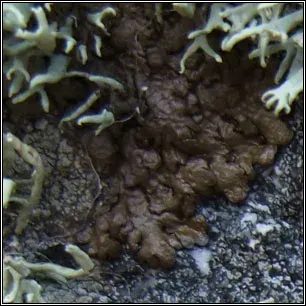
Neofuscelia manifests as dark brown or blackish, leaf-like crusts (thalli) that adhere tightly to the surface of the bark. These formations are often rosettes or irregular lobes.
When moist, the lichen can appear more pliable and vivid in color; however, during dry periods, it shrinks and becomes brittle, making it easy to scrape off.
Unlike parasitic fungi that cause lesions or oozing, this lichen sits on top of the bark without causing visible internal damage to the woody tissues underneath.
It is most frequently observed on mature trees, where the texture of the bark is rough and provides deep crevices for the spores to germinate and establish.
The lichen growth is typically static and slow, gradually expanding over seasons if the environmental conditions remain favorable.
Pathogen
Neofuscelia is a genus of foliose lichens that grow on the bark of various tree species. While often mistaken for a plant disease, it is technically an epiphyte, a composite organism formed by a symbiotic relationship between fungi and algae.
It does not function as a pathogen in the traditional sense. It does not extract water or nutrients from the host plant's tissues, meaning it does not cause direct rot or biological decay to the tree.
However, it is a pioneer species that colonizes surfaces where it can find stability. As a member of the Ascomycota group, it is highly adaptable to changing environmental conditions.
In terms of botany, its presence is usually an indication of environmental conditions, such as high humidity and stable surfaces, rather than an infection resulting from poor tree health.
Despite its harmless nutritional nature, the sheer coverage of lichen can sometimes overshadow the aesthetic and physiological aspects of tree bark management.
Conditions for development
High relative humidity is the primary driver for Neofuscelia development. It thrives in environments where moisture lingers on the bark for extended periods.
Shade or semi-shaded conditions promote growth because they prevent the rapid evaporation of water, keeping the lichen hydrated for longer durations.
Dense tree canopies that restrict airflow contribute significantly to the proliferation of lichen, as stagnant air increases the micro-humidity around the trunk and branches.
Long-term atmospheric stability is necessary for colonization. Young, fast-growing trees with smooth bark are rarely colonized by Neofuscelia compared to older, aging trees.
Low levels of nitrogen-based air pollution can also influence the diversity and growth rate of various lichen genera in a specific area.
Why it matters
The primary concern with Neofuscelia is its role as a habitat for pests. The dense layers of lichen provide excellent shelter for scale insects, mites, and other sap-sucking pests to hide from predators.
While the lichen itself isn't parasitic, excessive coverage can interfere with the bark's ability to breathe, potentially hindering gas exchange in certain species.
By trapping moisture against the bark during winter and spring, heavy lichen growth can create conditions that soften the bark, making it more susceptible to frost cracks or fungal infections.
A heavy infestation can also mask early signs of tree distress or underlying diseases, making it difficult for an observant gardener to monitor the tree's health accurately.
The presence of significant lichen coverage is often perceived as a sign of an unkempt garden, leading to potential loss in decorative value for ornamental trees.
Protection
The most effective strategy involves thinning out the canopy through proper pruning. This improves air circulation and increases sunlight penetration, which naturally discourages lichen growth.
Manual cleaning of the bark using a soft wire brush or a specialized scraper during the dormant season is a highly effective way to remove the organism without harming the tree.
Whitewashing the trunks with a lime-based solution (often containing copper sulfate) creates a hostile environment that prevents spores from anchoring to the bark.
Improving the overall vigor of the tree through balanced fertilization and hydration helps the bark remain healthy and dynamic, making it harder for epiphytes to settle.
- Regular canopy thinning and pruning.
- Mechanical brushing of the main trunk.
- Application of copper-based fungicides in early spring.
- Monitoring for hidden pests like scale insects.
- Ensuring proper soil drainage and tree nutrition.
Discussion
No discussions yet — be the first.