
Neofabraea rot
Neofabraea vagabunda
Description
Symptoms
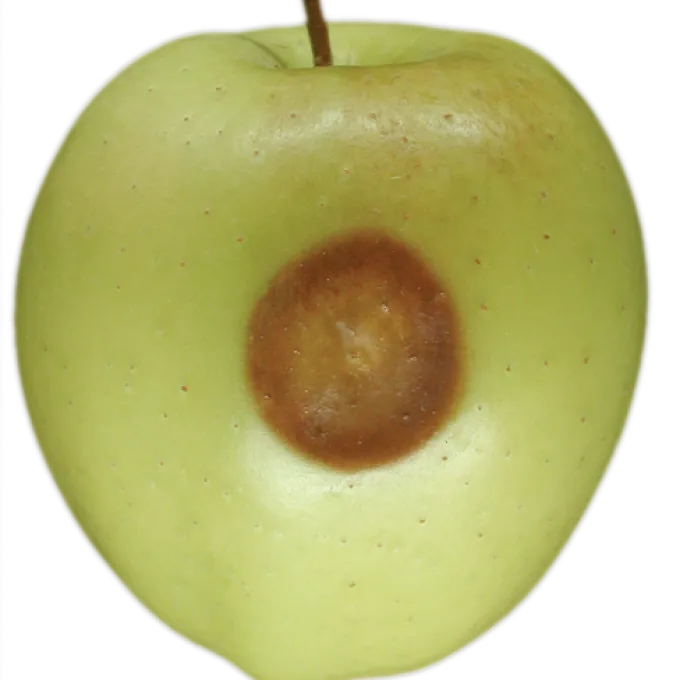
Initial symptoms on fruits appear as small, circular, slightly sunken lesions that are tan or brown in color, often occurring around lenticels or wounds.
As the rot progresses, the lesions expand, and the affected tissue becomes soft and watery, often displaying a bitter taste due to the specific metabolic products of the fungus.
Under humid conditions, small cream-colored to white fruiting bodies, known as acervuli, develop in concentric rings on the surface of the lesions.
In storage facilities, the infection can spread rapidly from fruit to fruit, resulting in nests of decayed apples if the affected produce is not sorted out promptly.
On tree limbs, the fungus can induce perennial cankers, which appear as depressed or slightly raised areas of dead bark that can eventually girdle and kill the infected branch.
Pathogen
The disease is caused by the ascomycete fungus Neofabraea vagabunda (formerly Gloeosporium vagabundum), a serious pathogen known for causing decay in pome fruits.
The pathogen survives the dormant season in the form of mycelium within bark cankers, on mummified fruits, or in woody tissues of the host plant throughout the orchard.
The fungus produces conidia which are disseminated primarily by wind-driven rain splashes, allowing the pathogen to spread effectively during the growing season.
Its biological cycle is characterized by latent infections, meaning the fungus can enter the fruit during the summer but remains quiescent until the fruit starts to mature or is placed in storage.
The mycelium grows intercellularly, colonizing the fruit flesh and secreting enzymes that break down cell walls, eventually leading to the characteristic soft decay symptoms.
Conditions for development
High humidity, frequent rain, and moderate temperatures during the late summer and early autumn provide the ideal conditions for spore germination and infection.
Poor orchard ventilation, resulting from dense canopy growth, retains moisture on fruit surfaces for longer periods, significantly increasing the probability of fungal colonization.
Mechanical injuries caused by hail, insect punctures, or handling during harvest create entry points that bypass the fruit's natural protective barriers.
An imbalance in soil nutrients, particularly low calcium levels in fruit flesh, is strongly correlated with increased susceptibility to Neofabraea rot infections.
The transition from field conditions to storage can activate latent infections if the fruit is not pre-cooled immediately to inhibit fungal enzymatic activity.
Why it matters
The primary economic impact is the significant loss of marketable yield during storage and post-harvest shipping, often leading to substantial financial losses for growers.
The cost of grading and sorting fruit increases dramatically when Neofabraea rot is present, as infected fruits must be identified and removed to prevent spread within containers.
The disease causes premature fruit drop in the orchard, reducing the total volume of high-quality produce available for commercial distribution.
Chronic branch infections reduce the overall vigor and productivity of the trees, potentially leading to cumulative dieback and the need for expensive tree removal.
Infected fruits are completely unsuitable for the fresh market, and their decay negatively impacts the reputation of the producer and the quality of the overall inventory.
Protection
Sanitation is the cornerstone of control; it involves pruning out cankered branches and removing all mummified or fallen fruit to reduce the inoculum load in the orchard.
Scheduled fungicide applications during the summer and just before harvest are essential to protect the fruit from infection during peak risk periods.
Maintaining optimal soil fertility, with specific attention to balanced calcium application, helps strengthen fruit cell walls, making them more resistant to fungal penetration.
Effective management of orchard pests, particularly those that puncture fruit skin, is crucial to prevent the opportunistic entry of the fungus into the fruit.
Post-harvest management, including rapid cooling to storage temperatures and maintaining strict hygiene in packing houses, is critical to suppress the development of latent infections.
Discussion
No discussions yet — be the first.