
Neofabraea kienholzii
Neofabraea kienholzii
Description
Symptoms
The primary symptom of the infection is the appearance of small, slightly sunken patches of brown or reddish-brown color on the bark of branches and stems.
Over time, these patches enlarge into deep necrotic cankers, which typically display an elongated elliptical shape along the length of the branch.
Within the center of older cankers, small, dense fungal fruiting bodies known as acervuli often develop, typically displaying a cream or pale beige coloration.
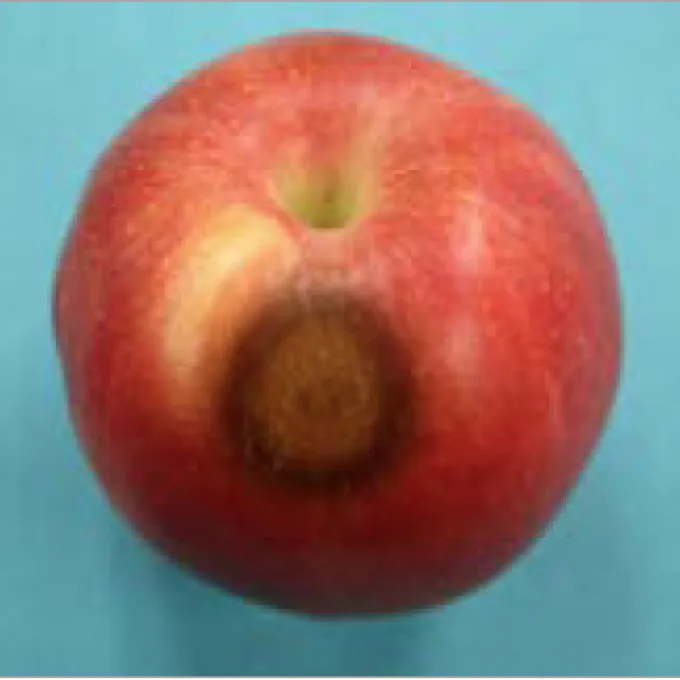
When fruit is affected, the disease manifests as skin browning followed by the formation of concentric circles of fungal spores around the center of the lesion.
The bark in infected areas eventually cracks and peels away, exposing the wood, which leads to the progressive desiccation and death of individual branches.
Pathogen
The causative agent of the disease is the ascomycete fungus Neofabraea kienholzii, which belongs to a group of pathogens that cause bark cankers and rot.
This microorganism is closely associated with a complex of fungi that induce bull's eye rot and frequently acts as a primary parasite of bark and cambium tissues.
The infection persists in the orchard as mycelium within infected bark tissues, in old branch cankers, and on mummified fruit remaining on the ground.
Spore dissemination is primarily facilitated by rain splashes, wind currents, and mechanical transmission via contaminated tools during pruning or maintenance.
The pathogen's life cycle is tightly synchronized with periods of high humidity, when spores are actively released from fruiting bodies to colonize new bark surfaces.
Conditions for development
Cool and humid weather conditions are most favorable for the development of Neofabraea kienholzii, particularly during the autumn and spring seasons.
Prolonged rainfall, heavy fog, and high relative humidity create optimal conditions for spore germination and the penetration of fungal hyphae into plant tissues.
The presence of micro-trauma on the bark, sunscald, frost damage, or open pruning wounds significantly increases the tree's susceptibility to infection.
Orchards located in low-lying areas with stagnant cold air and poor canopy ventilation are significantly more prone to rapid disease proliferation.
Imbalanced nutrition, especially excess nitrogen application which reduces bark winter-hardiness, indirectly contributes to the spread of the infection.
Why it matters
The primary damage involves the destruction of conducting tissues, leading to impaired nutrient and water transport, overall tree stress, and reduced yields.
Deep cankers on the main trunk and scaffold branches can cause the dieback of entire canopy sections and, in severe cases, the eventual death of the tree.
The disease substantially reduces fruit marketability, as the fungus infects fruit in the orchard, leading to post-harvest decay during cold storage.
Massive spread of the pathogen in young orchards can result in the loss of nursery stock and significant economic losses for fruit growers.
Indirect costs include the high labor requirement for sanitary pruning and continuous investment in protective fungicide applications throughout the year.
Protection
The foundation of control is regular sanitary pruning, involving the removal of all infected branches and cankers, ensuring that healthy tissue is cleared beyond the lesion.
All pruning cuts and mechanical injuries must be immediately sealed with orchard wax or specific antiseptic pastes to prevent fungal spore penetration.
Strict disinfection of pruning tools after working on each individual tree is mandatory to prevent the cross-contamination of healthy plants.
Application of copper-based fungicides in the autumn after leaf fall and in early spring before bud break helps effectively suppress the orchard's infection levels.
- Ensuring proper canopy ventilation through structured training and pruning
- Removal and destruction of infected leaf litter and mummified fruit
- Maintenance of optimal agricultural practices and balanced nutrient levels
Discussion
No discussions yet — be the first.