
Neofabraea inaequalis
Neofabraea inaequalis
Description
Symptoms
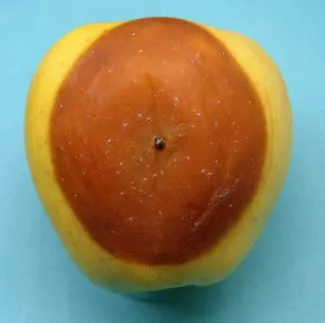
The primary symptom is the appearance of circular spots on the fruit surface, which tend to enlarge rapidly. Affected tissue becomes brownish and slightly depressed compared to healthy skin.
Over time, fruiting bodies known as acervuli develop on the necrotic spots. These often appear in concentric rings, which serves as a reliable diagnostic feature for identification.
Under high humidity conditions, whitish or creamy spore masses may emerge from these spots. The flesh beneath the lesion softens and develops a bitter taste, rendering the fruit unusable.
On tree shoots, the fungus causes the formation of cankers that can lead to bark death and the decline of individual branches. The affected bark cracks, revealing the wood beneath the necrotic area.
During post-harvest storage, the rot can spread rapidly, affecting a large portion of the harvest if strict temperature and humidity controls are not maintained.
Pathogen
The causal agent of this disease is the fungus Neofabraea inaequalis, which belongs to the Ascomycota phylum. This pathogen is closely related to other species within the same genus known for causing significant fruit rots.
The life cycle of the fungus primarily takes place on tree branches, where it produces conidial spore masses. The fungal mycelium can survive for extended periods within the bark of infected shoots, acting as a reservoir for primary inoculum.
Spore dissemination occurs via rain splashes and wind, which transport the infection onto maturing fruits in the orchard. The fungus typically enters fruit tissues through micro-cracks or lenticels.
The biological traits of the fungus include an ability to thrive across a broad temperature range, allowing it to remain active even during cooler summer or early autumn weather conditions.
Unlike related species, this pathogen exhibits specific virulence against certain apple cultivars, making it a serious concern for modern high-density orchards.
Conditions for development
The development of the fungus is favored by prolonged rainy weather during the second half of the summer, as fruits approach maturity. High humidity is critical for spore germination.
The optimal temperature range for infection spreading is between 15–22 degrees Celsius. Cool nights accompanied by heavy dew significantly increase the risk of fruit infection before harvest.
The presence of damaged branches in the orchard, where the fungus survives as a saprophyte, provides a consistent source of inoculum for young developing fruits.
Poor orchard management practices, such as overly dense canopies and restricted airflow, contribute to moisture retention on fruit surfaces, facilitating fungal colonization.
Extended storage in cold facilities that fail to maintain consistently low temperatures creates ideal conditions for latent infections to transition into active decay.
Why it matters
The main impact is the mass spoilage of apple fruits, making them unsuitable for long-term storage or fresh market sale. Affected batches suffer significant commercial losses.
The pathogenicity is aggravated by the latent nature of the infection: symptoms may not be visible during harvest but develop weeks later during the storage phase.
The fungus can also reduce overall tree vigor by causing branch cankers, which weakens the entire plant and decreases fruit production capacity over subsequent growing seasons.
Economic losses include costs for labor-intensive fruit sorting, reduced shelf life, and the necessity for additional fungicide spray programs throughout the season.
If left unmanaged, the disease can necessitate the disposal of large portions of the harvested yield, especially if storage conditions are not optimized for moisture control.
Protection
Effective management requires mandatory sanitary pruning of infected branches in the orchard to reduce the primary fungal inoculum source during the winter period.
Implementing a preventative fungicide spray program during the growing season, particularly in the weeks leading up to harvest, is essential to prevent fruit contamination.
Strict adherence to optimal harvest timing is crucial to avoid over-maturity, as overripe fruits are significantly more susceptible to fungal infections.
Ensuring rapid removal of field heat from harvested fruits and maintaining strict low-temperature protocols during storage helps to slow the progression of latent infections.
- Selection and planting of resistant apple cultivars.
- Balanced fertilization to avoid excessive vegetative growth.
- Regular disinfection of cold storage rooms and containers.
- Maintenance of proper orchard aeration and pruning.
Discussion
No discussions yet — be the first.