
Neofabraea
Neofabraea
Description
Symptoms
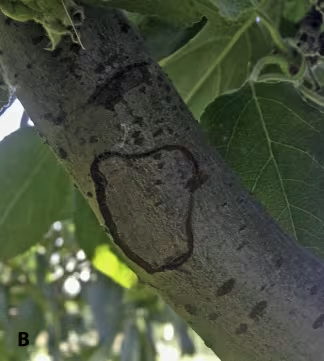
On woody stems, the disease manifests as depressed, necrotic lesions that can develop into deep cankers over time, damaging the tree's bark.
The most distinctive symptom on fruits is known as "bullseye rot," appearing as circular, brown, slightly sunken spots on the fruit skin.
Small, whitish or cream-colored cushions of fungal fruiting bodies often emerge in the center of these spots in a characteristic concentric pattern.
Internally, the flesh of the infected fruit turns spongy and acquires a bitter taste, rendering the harvest unmarketable and unsuitable for consumption.
Severe infections on branches can lead to foliage yellowing and the eventual death of the affected limbs due to disruption of vascular systems.
Pathogen
The disease is caused by fungi belonging to the genus Neofabraea, specifically species such as Neofabraea alba and Neofabraea malicorticis.
These fungi are classified within the class Leotiomycetes and act as parasitic organisms on various fruit-bearing trees, particularly pome fruits.
The lifecycle of the pathogen involves the colonization of woody tissues where the mycelium persists during the dormant season.
Reproductive structures, known as apothecia, are produced on infected bark surfaces to facilitate the dissemination of spores.
Spores are primarily dispersed via wind and rain splash, allowing the fungus to colonize both healthy shoots and maturing fruit crops.
Conditions for development
Cool and humid weather conditions, particularly during the late summer and autumn months, significantly favor the development of Neofabraea infections.
High relative humidity and frequent rainfall events during the pre-harvest period are critical factors that trigger the mass release of fungal spores.
Orchards with poor ventilation or those planted with high density are more susceptible to the rapid spread of the pathogen throughout the canopy.
Wounds caused by pests, hail, or pruning serve as entry points for the pathogen, accelerating the infection process in vulnerable trees.
Optimal growth of the fungus occurs in moderate temperatures, but it can successfully survive and spread across a broad range of environmental conditions.
Why it matters
The primary economic impact of Neofabraea is the significant loss of fruit quality during cold storage, as infections may remain latent at harvest.
Continuous infections result in the gradual degradation of tree health, leading to decreased yields and a shorter productive lifespan for the orchard.
Management costs increase substantially due to the need for repeated fungicide applications and intensive labor for pruning and orchard sanitation.
The presence of cankers on the main trunk and branches weakens the tree structure, increasing the risk of breakage during high winds or heavy crops.
Uncontrolled outbreaks can lead to widespread contamination, requiring the removal and destruction of severely infected trees to protect the rest of the orchard.
Protection
Effective management begins with rigorous orchard sanitation, which includes the prompt removal and destruction of all infected wood and mummified fruits.
Balanced fertilization and good horticultural practices are essential to maintain tree vigor and improve the natural resistance of the plants to pathogens.
A well-timed fungicide program, focusing on the critical growth stages of the fruit, is necessary to minimize the risk of late-season infection.
- Ensure proper pruning for optimal light and air circulation.
- Disinfect all pruning tools between trees to prevent cross-contamination.
- Harvest fruit under dry conditions to reduce post-harvest rot risks.
- Seal larger pruning cuts with appropriate wound dressings to block entry points.
Storage management is crucial, requiring careful regulation of humidity and temperature to inhibit the growth of the fungus on harvested produce.
Discussion
No discussions yet — be the first.