
Neocosmospora wilt
Neocosmospora rekana
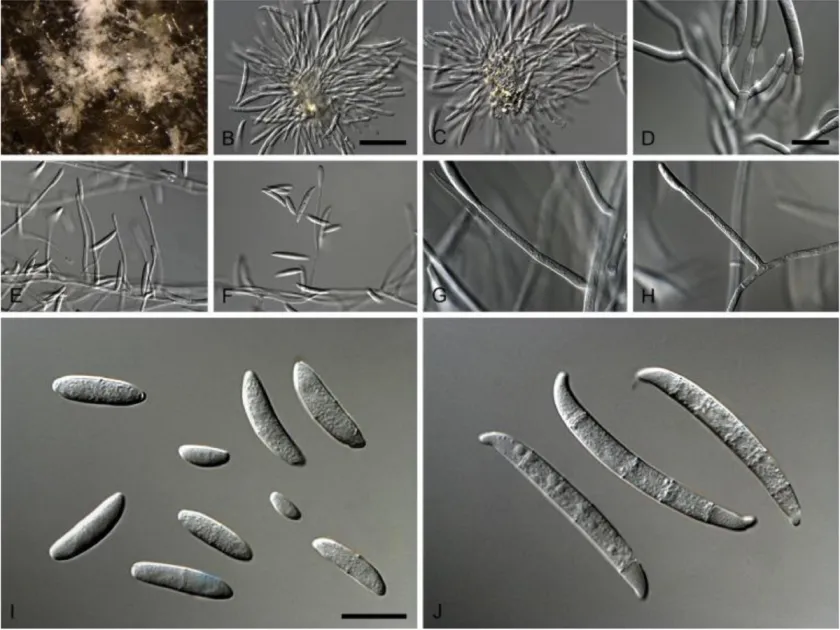
Description
Symptoms
The primary symptom of Neocosmospora wilt is chlorosis of the lower leaves, which gradually advances upwards. In the early stages, plants show signs of wilting during the day that may appear to recover at night.
A distinctive internal sign is the browning of vascular bundles observed when cutting the stem. This indicates tracheomycosis, a condition caused by the development of fungal mycelium within the conducting tissues.
The root system of infected plants often undergoes decay, with root bark peeling away easily, leading to a total loss of turgor in the plant. Growth is stunted, and fruit development is severely impaired or halted.
Under high humidity conditions, a characteristic fungal growth may become visible on the stem surface or the root collar, signaling active sporulation of the pathogen in the environment.
In advanced stages, the disease leads to total wilting, necrosis, and plant death. Infected fields often show patches of dead plants as the fungus spreads through the root zone to neighboring crops.
Pathogen
The disease is caused by the fungus Neocosmospora rekana, which was previously classified within the Fusarium solani species complex. It is a soil-borne ascomycete capable of surviving for long periods through the formation of resilient chlamydospores.
The fungus colonizes the plant's vascular tissue, effectively blocking the flow of water and essential nutrients. The pathogen exhibits high adaptive capacity, allowing it to thrive in diverse soil types and environmental conditions.
The pathogen spreads through infested soil particles, contaminated propagation material, irrigation water, and infected agricultural equipment. Microscopic conidia can also be dispersed by air currents over short distances.
Neocosmospora rekana possesses a complex life cycle that includes a dormant phase, making total eradication of the pathogen from infested agricultural fields an extremely difficult task.
The fungus exhibits pathogenicity against a wide spectrum of agricultural crops, including various vegetables and legumes, requiring a comprehensive approach to site sanitation and disease management.
Conditions for development
The development of Neocosmospora rekana is highly favored by elevated soil temperatures, typically between 25 and 30 degrees Celsius. Excessive root zone heat significantly reduces the plant's natural defense mechanisms.
High soil moisture combined with poor drainage creates an ideal environment for spore germination and mycelial spread. Waterlogged soils are particularly high-risk areas for this pathogen.
Imbalanced soil pH levels, specifically acidity, promote the activity of this fungus. Maintaining an optimal, balanced soil pH acts as a preventative barrier against successful infection.
Mechanical damage to the roots caused by cultivation tools or soil pests creates entry points for the pathogen. Once inside the vascular system, the fungus moves rapidly throughout the plant's tissues.
Excessive nitrogen fertilization often results in the formation of soft, succulent tissues that are more susceptible to fungal attack. Balanced nutrient management is crucial for maintaining plant health.
Why it matters
The major danger of this disease lies in its vascular nature, which renders remedial action nearly ineffective once external symptoms appear. Preventive measures are the only reliable way to manage this pathogen.
Infested soil becomes unsuitable for susceptible crops for several years due to the pathogen's high environmental stability. This results in significant long-term economic losses for farmers.
Yield losses can reach 50 to 80 percent depending on the timing of the infection. The quality of the harvested product is also severely degraded, reducing its market value and shelf life.
In greenhouses, the pathogen can spread rapidly via irrigation systems and contaminated tools, potentially wiping out entire production cycles if strict isolation protocols are not followed.
Neocosmospora wilt frequently occurs in complex with other root-rotting fungi, making diagnosis difficult and complicating the selection of effective fungicides for integrated pest management programs.
Protection
Crop rotation is the cornerstone of control. Susceptible crops should not be planted on infested soil for at least 3 to 5 years to allow the natural decay of the pathogen population.
Using certified, disease-free seed and transplant material is mandatory. Seed treatment with broad-spectrum fungicides can provide a critical window of protection during the early stages of seedling growth.
Regular disinfection of greenhouse structures, agricultural tools, and equipment is necessary to prevent the mechanical transfer of the fungus. Ensure irrigation water sources are secure and free of contamination.
The application of biological control agents, such as Trichoderma species, helps suppress the fungus in the rhizosphere. These beneficial microbes compete with the pathogen for space and resources.
Upon detection, infected plants should be promptly rogued, removed with their root balls, and destroyed away from the field. The planting hole should be treated with appropriate fungicide solutions to minimize spread.
Discussion
No discussions yet — be the first.