
Neocosmospora awan
Neocosmospora awan
Description
Symptoms
The hallmark symptom of Neocosmospora awan infection is the progressive wilting of the plant. It typically begins with the lower leaves turning yellow and losing their turgor before spreading upwards.
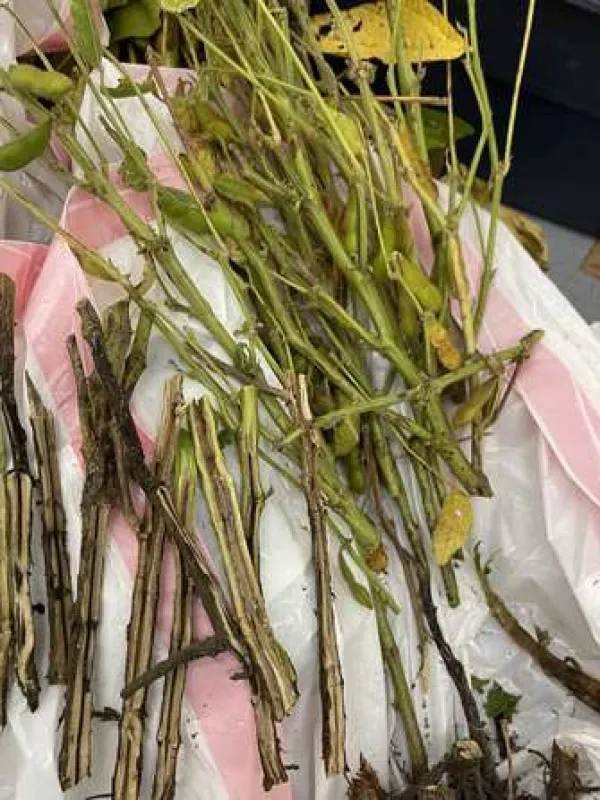
A definitive diagnostic sign is found by cross-sectioning the stem near the base. A distinct brown or reddish-brown discoloration of the vascular tissues is observed, indicating deep-seated fungal colonization.
Under high humidity, external sporulation may appear on the lower stem or crown. The fungal growth often manifests as fluffy white, pink, or orange mycelial masses on the surface.
The root system of infected plants is often stunted and decayed. Fine feeder roots may be absent, and primary roots may show dark necrotic lesions, preventing the plant from absorbing water effectively.
- Interveinal chlorosis of leaves
- Stunted plant growth
- Vascular browning inside the stem
- General yellowing (yellowing) of the canopy
- Seedling damping-off
Pathogen
Neocosmospora awan is a pathogenic fungus belonging to the Nectriaceae family. Historically associated with the Fusarium complex, this pathogen is capable of causing severe vascular wilt diseases in various agricultural crops worldwide.
The fungus primarily lives in the soil, surviving as a saprotroph on organic debris. Under favorable conditions, it switches to a parasitic lifestyle, actively invading the roots of host plants to exploit their internal resources.
Infection usually occurs through roots, especially when the plant's natural barriers are compromised by mechanical damage, nematode feeding, or root rot. Once inside, the fungus colonizes the xylem vessels.
As the mycelium spreads within the host, it physically blocks the movement of water and dissolved nutrients, eventually leading to the collapse of the plant's physiological system.
Genomic studies highlight that this species is highly adaptable, allowing it to colonize diverse environments and survive long periods of unfavorable conditions through the production of resilient chlamydospores.
Conditions for development
The pathogen thrives in warm soil temperatures, with the most favorable range for growth being between +22°C and +28°C. Rapid disease progression is often linked to periods of heat stress.
High soil moisture levels are a critical driver of the disease. Waterlogged or poorly drained soils provide the ideal medium for spore germination and movement toward host root systems.
The fungus generally prefers slightly acidic to neutral soil pH levels. Modifying soil acidity is sometimes discussed as a management strategy, though its effectiveness varies by soil type.
Continuous cropping of susceptible varieties without rotation leads to a significant build-up of inoculum. The fungus can persist in the soil for years, making the site highly dangerous for subsequent plantings.
Plant stress, whether caused by drought, heavy rainfall, or poor nutrition, significantly increases the susceptibility of the crop to invasion by Neocosmospora awan.
Why it matters
The economic impact of this disease is significant. It can result in complete crop failure, particularly in regions where the environment perfectly matches the pathogen's growth requirements.
In addition to yield reduction, the presence of the fungus in the soil renders the field less productive for years. This often necessitates expensive land treatment or shifting production to different areas.
Quality loss is another major issue. Infected plants often produce undersized or malformed fruits, and the overall nutritional value and marketability of the produce are severely downgraded.
Secondary infections are common because the disease weakens the plant's defense mechanisms. This leads to a complex syndrome where the plant is attacked by multiple microorganisms simultaneously.
The potential for mycotoxin contamination in harvested parts is a concern for food safety, which can lead to regulatory rejection of the crop and financial losses for the grower.
Protection
The most robust defense is a long-term crop rotation scheme, ideally incorporating non-host crops for at least three to five years to allow the soil pathogen levels to naturally decline.
Starting with certified, disease-free seed or transplant material is essential. Treating seeds with effective systemic fungicides can provide a protective buffer during the vulnerable germination phase.
Good field hygiene, including the removal and destruction of crop residues, helps eliminate the sources of overwintering inoculum. Deep plowing can also help expose the fungus to antagonistic organisms.
The use of biological control agents, such as Trichoderma species, has shown promise in suppressing the growth of Neocosmospora in the rhizosphere and enhancing root health.
When chemical control is required, systemic fungicides applied as soil drenches or seed treatments are necessary, as contact-only products are insufficient against a vascular-dwelling pathogen.
Discussion
No discussions yet — be the first.