
Neoascochyta wheat blight
Neoascochyta triticicola
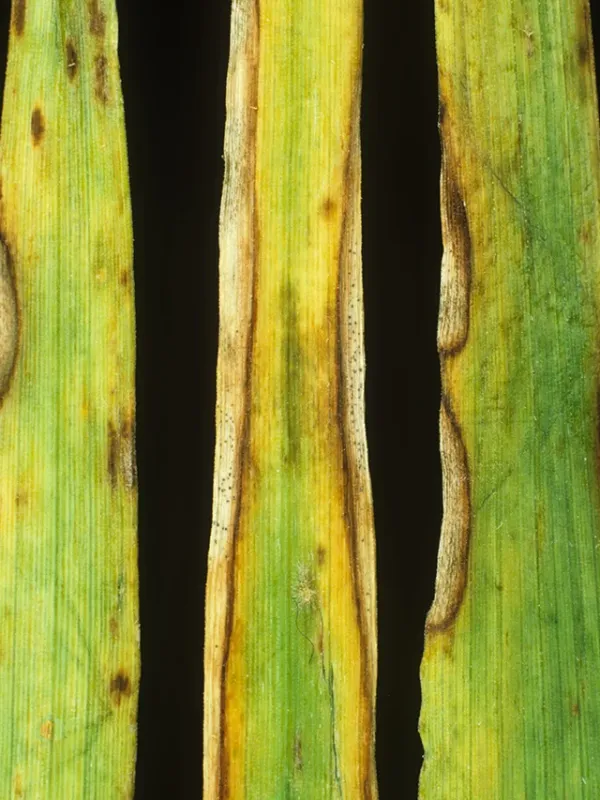
Description
Symptoms
Initial symptoms of the disease appear as light-brown or gray spots on the lower leaves. As the infection progresses, these spots expand and often develop a yellowish halo around the necrotic tissue.
A distinctive feature of Neoascochyta blight is the presence of small, dark, pimple-like structures called pycnidia scattered within the lesions. These are the fruiting bodies of the fungus and are essential for accurate identification.
Severe infections lead to the yellowing and premature death of leaves, significantly reducing the plant's photosynthetic capacity. When the leaf tissue dies, it may turn brittle and eventually tear.
The disease can also manifest on stems, leaf sheaths, and sometimes even the glumes of the wheat head. These lesions interfere with nutrient and water transport, resulting in stunted plant growth.
During humid weather, the spots on the leaves can merge to form large, irregular patches, leading to the rapid decay of the entire foliage, which is particularly detrimental during the grain-filling stage.
Pathogen
The causative agent of this disease is the fungus Neoascochyta triticicola. It belongs to the Ascomycota phylum and is known for its ability to cause significant necrotic lesions on various parts of wheat plants.
The fungus persists through winter in the form of pycnidia and mycelium on infected plant debris, soil, and occasionally within seeds. As conditions become favorable in spring, it releases conidia that serve as the primary source of infection.
This pathogen demonstrates high biological adaptability to various environmental conditions. It can survive for extended periods in the soil, even in the absence of a host crop, making it a persistent challenge for farmers.
The life cycle of the fungus includes both asexual reproduction via conidia and potential sexual stages, which increases its genetic variability and ability to overcome plant resistance mechanisms.
Dissemination occurs primarily through wind-blown spores and rain splashes during the growing season, facilitating the spread of the disease within the crop canopy and across neighboring fields.
Conditions for development
The development of Neoascochyta wheat blight is highly dependent on moderate temperatures and high humidity. Optimal growth for the pathogen typically occurs within the range of +18°C to +24°C.
Prolonged rainfall, heavy morning dews, and high air moisture are the primary drivers for disease spread. These conditions facilitate the germination of conidia and their subsequent penetration into the plant's epidermis.
Fields with dense canopy and poor aeration create a microclimate that promotes fungal proliferation. Excessive use of nitrogen fertilizers often results in lush, succulent growth that is more susceptible to infection.
Surface residues from previous wheat crops are the most common source of inoculum. In conservation tillage systems where crop debris remains on the field, the risk of early-season infection is significantly higher.
Field management practices that prevent proper airflow, combined with high-moisture weather patterns, create an environment where the fungus can rapidly transition from a localized infection to an epidemic.
Why it matters
The primary economic impact of Neoascochyta blight is the reduction of total crop yield due to the loss of photosynthetic leaf area. This results in smaller, lower-quality kernels.
When the flag leaf is severely infected, the grain filling process is disrupted, leading to shriveled grains with low test weight and reduced milling quality, which directly affects the market value.
Diseased plants are often more susceptible to secondary infections from other pathogens, such as root rot fungi, which further weaken the plant and may lead to premature ripening or lodging.
Seed contamination can occur in heavily infected fields, reducing the vigor and germination rate of the seeds saved for the following season's planting.
The disease poses a consistent threat in areas with intensive wheat production, forcing farmers to increase expenditure on chemical controls and intensive management practices to maintain stable yields.
Protection
Effective management begins with robust crop rotation practices. Avoiding consecutive wheat crops in the same field helps break the fungal life cycle by depriving the pathogen of its host.
Deep plowing or incorporating crop residues into the soil is an effective way to speed up the decomposition of infected debris, thereby significantly reducing the initial inoculum pressure for the next season.
Selecting resistant or tolerant wheat varieties is the most sustainable approach to controlling the disease. Breeders continuously focus on incorporating resistance genes into new high-yielding lines.
Fungicide application remains a necessary intervention in cases of high disease pressure. Products containing triazoles or strobilurins are effective when applied during the flag leaf stage to protect the canopy.
- Use certified disease-free seeds.
- Implement balanced nutrient management.
- Maintain appropriate plant density.
- Practice effective weed control.
Discussion
No discussions yet — be the first.