
Ascochyta blight of cereals
Neoascochyta graminicola
Description
Symptoms
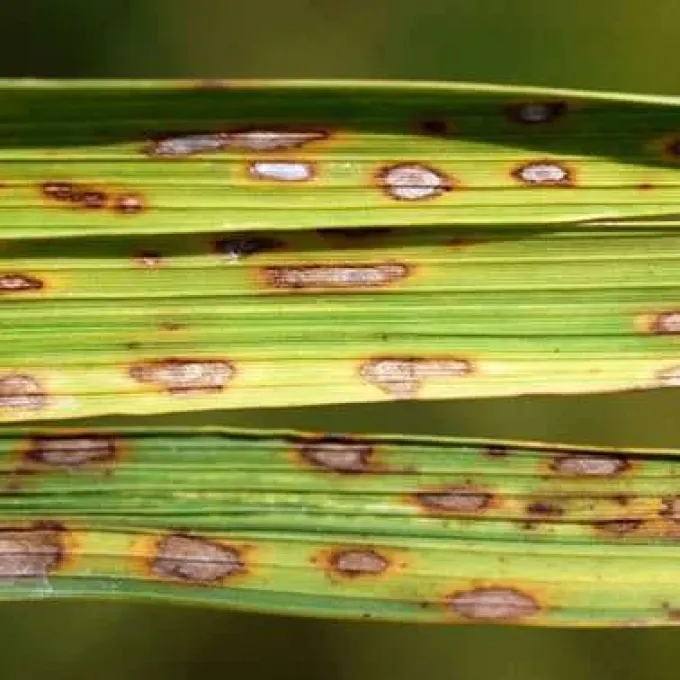
The primary symptoms manifest as spots on leaves and leaf sheaths. Initially, these spots are pale green or yellowish, later turning light brown or greyish with necrotic centers.
The lesions are often surrounded by a chlorotic halo or a dark margin, which distinguishes the infected area. The shape of the spots is typically oval or elongated.
The most reliable sign of Ascochyta blight is the presence of numerous tiny black dots (pycnidia) arranged in rows within the necrotic spots. These are clearly visible with a hand lens.
In cases of severe infection, leaves will yellow prematurely and wither, leading to significant defoliation, especially in the lower canopy of the crop.
Infection can spread to the stem and glumes during periods of high humidity, impacting the overall structure and health of the plant during the grain-filling stage.
Pathogen
The causal agent of this disease is the fungus Neoascochyta graminicola (formerly known as Ascochyta graminicola). It is a fungal pathogen that survives in crop residues and infected seed.
The fungus reproduces through pycnidia, which are microscopic fruiting bodies embedded in the host plant's tissues. These pycnidia release pycnidiospores (conidia) that spread the infection.
It affects various cereal crops, including wheat, barley, rye, and oats. The pathogen is adapted to thrive in temperate climates, making it widespread in major cereal-producing regions.
The life cycle involves primary infection from soil-borne or seed-borne inoculum, followed by secondary spread via wind and rain splashes during the growing season.
The disease is often found in complex with other foliar pathogens, requiring precise identification through the observation of characteristic fruiting bodies.
Conditions for development
Ascochyta blight is highly dependent on environmental conditions, particularly high humidity and frequent rainfall. Moisture is essential for spore germination and infection.
Temperatures ranging from 15°C to 22°C are optimal for the growth of the fungus. Within this range, the development of the disease occurs rapidly, leading to significant spread.
Dense crop stands create a favorable microclimate by retaining moisture on leaf surfaces and reducing airflow, which significantly increases the risk of an outbreak.
Stubble left on the soil surface after harvest acts as a major reservoir for the fungus, allowing it to survive through the winter until the next planting season.
Management practices that delay drying of the canopy, such as improper plant spacing, significantly contribute to the severity of the disease.
Why it matters
The disease causes significant damage by reducing the photosynthetic capacity of the plant. This loss of leaf area directly impacts the accumulation of biomass and grain filling.
When the flag leaf is affected, the impact on yield is particularly severe, as this leaf contributes most to the grain development process.
The grains produced on heavily infected plants are often shriveled and lightweight, which lowers the quality and market value of the harvest.
Seed transmission is a major concern, as infected seeds may show poor germination rates and introduce the pathogen into previously clean fields.
Under favorable conditions for the fungus, yield losses can range from 10% to 30%, making it a disease that requires active monitoring and intervention.
Protection
The foundation of control is a crop rotation strategy where susceptible cereals are not planted back-to-back, allowing time for crop residues to decompose.
Good soil management, including deep tillage to bury infected straw, helps reduce the initial inoculum level before the new crop emerges.
Using high-quality, disease-free seed and applying appropriate seed treatments are essential steps in limiting early-season disease development.
- Optimizing seeding rates to avoid canopy density.
- Balanced nutrient management to avoid overly lush growth.
- Applying fungicides at the onset of symptoms during the growing season.
Fungicides from the triazole and strobilurin classes are effective in managing the disease if applied at the first signs of symptoms. Regular field scouting is necessary for timely decision-making.
Discussion
No discussions yet — be the first.