
Nematostoma parasiticum
Nematostoma parasiticum
Description
Symptoms
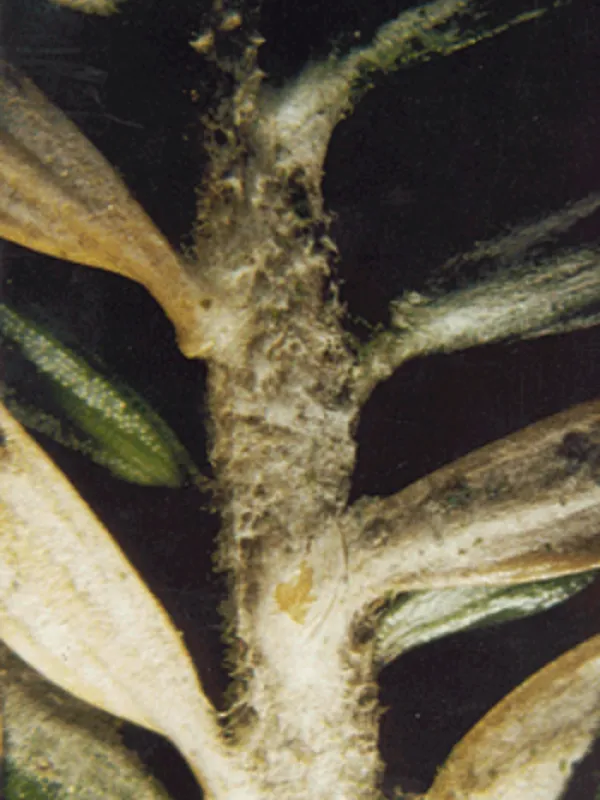
Early symptoms appear as small chlorotic lesions on the foliage, which eventually progress into necrotic spots as the tissue dies due to fungal activity.
As the disease progresses, visible dark fruiting bodies (perithecia) develop within the necrotic spots, appearing as minute black dots on the leaf surface.
Stems affected by the pathogen may show signs of deformation and localized cankers, which can restrict the flow of water and essential nutrients to the upper parts of the plant.
Premature senescence and defoliation are common manifestations, as the plant reacts to the fungal invasion by shedding infected leaves to limit the spread of the pathogen.
In high humidity environments, a fine growth of fungal spores may be observed, covering the damaged areas and serving as a secondary source of infection.
Pathogen
The causal agent of this disease is the fungus Nematostoma parasiticum, which belongs to the class of Ascomycota. This organism is recognized as a parasitic fungus capable of infecting various plant species.
The life cycle of the pathogen involves the development of perithecia, which are small fruiting bodies containing spores responsible for the primary infection of host tissues.
The mycelium of the fungus penetrates the plant epidermis, spreading through the intercellular spaces and invading the parenchyma, which disrupts the host's normal physiological functions.
Nematostoma parasiticum exhibits features of a facultative parasite, meaning it can survive on decaying plant organic matter when a living host is not available.
Dissemination is largely facilitated by the dispersal of spores via wind currents or water droplets, allowing the pathogen to move effectively between plants in a field.
Conditions for development
The development of the disease is highly dependent on environmental conditions, with high relative humidity (above 80%) being the most significant trigger.
Temperatures ranging from 18°C to 24°C provide the optimal thermal window for spore germination and rapid colonization of host tissues by the fungus.
Poor ventilation within dense canopy crops creates a stagnant microclimate that retains moisture on the leaf surfaces for longer periods, promoting fungal growth.
Frequent rainfall or overhead irrigation systems that keep foliage wet for extended durations significantly increase the risk of an outbreak.
Plants under nutrient stress or those experiencing unfavorable soil conditions exhibit reduced vigor, making them more susceptible to the colonization of Nematostoma parasiticum.
Why it matters
The primary damage results in significant yield reduction due to the disruption of photosynthesis and the destruction of leaf area, leading to poor plant performance.
Fruit quality is often compromised, leading to increased rates of post-harvest decay and reduced marketability for the harvested produce.
The disease acts as a gateway for secondary infections by opportunistic bacteria and other fungi, further weakening the structural integrity of the plant.
Severe infestations can lead to substantial economic losses, especially when favorable conditions for the disease persist throughout the growing season.
The presence of the pathogen in the soil and on crop debris creates a long-term management challenge, often necessitating strict crop rotation schedules.
Protection
Cultural control remains the most effective strategy, particularly the implementation of proper crop rotation to break the pathogen's survival cycle.
Sanitation practices, including the removal and destruction of crop residues after harvest, are crucial for lowering the inoculum pressure in the field.
Chemical control involving the timely application of fungicides, particularly those with systemic action, can effectively curb the disease if applied at the first sign of symptoms.
Managing canopy density and ensuring balanced fertilization can improve plant resilience and overall health, decreasing the probability of infection.
- Regular inspection of fields for disease signs.
- Selection of resistant or tolerant cultivars.
- Effective management of weeds that may host the pathogen.
Discussion
No discussions yet — be the first.