
Description
Symptoms
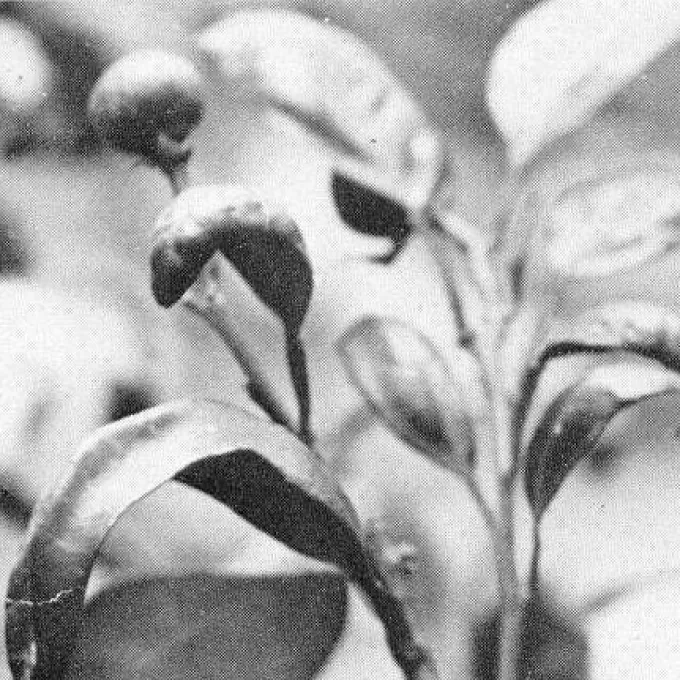
The primary symptom is the abnormal leaf shape, which includes narrow, spoon-shaped, or boat-like deformations on the branches.
Affected trees exhibit stunted growth and shortened internodes, leading to a compact, dwarfed appearance that inhibits standard development.
Leaves often show yellowing or mosaic patterns, which reduces the photosynthetic efficiency of the citrus tree foliage.
Fruit set is significantly impacted, leading to small, misshapen, and low-quality fruits that are unsuitable for commercial distribution.
Over time, the trees demonstrate reduced vigor, which is visually distinguishable from healthy, thriving trees in the same block.
Pathogen
The disease is caused by the Satsuma dwarf virus (SDV), which is the type species of the genus Sadwavirus. It is a single-stranded RNA virus.
The virus is mainly transmitted through infected grafting materials and contaminated pruning tools used in citrus orchards.
Transmission can also occur via soil-borne vectors, particularly the nematode species Paratrichodorus porosus, which facilitates local spread.
The virus systematically infects the host, traveling through the phloem and affecting the overall development of the citrus tree.
It can persist in various citrus cultivars, which serve as reservoirs for the pathogen in contaminated fields.
Why it matters
Satsuma dwarf virus causes substantial economic losses by reducing both the yield and the market value of the harvested citrus fruits.
The infection leads to the gradual decline of tree health, making the plantation less profitable over the long term.
Because there is no cure, infected trees effectively become a total loss, often requiring removal to prevent spread to neighbors.
The presence of this virus can restrict international trade of citrus nursery stock due to strict phytosanitary regulations.
It complicates orchard management by requiring constant monitoring and potential removal of high-value trees.
Protection
The cornerstone of management is the use of certified virus-free budwood and rootstocks for new orchard establishment.
Strict phytosanitary protocols are essential to prevent the entry of the virus into non-infested citrus-growing regions.
Disinfection of all pruning and grafting tools using appropriate chemical solutions is critical to prevent mechanical transmission.
Soil management strategies, such as controlling populations of nematode vectors, can help slow the spread of the disease.
Early identification and rigorous removal of symptomatic trees remain the most effective methods to contain the virus within an orchard.
Pathogens and affected parts
Affects crops · 1
Discussion
No discussions yet — be the first.