
Pink rot of palms
Nalanthamala vermoesenii
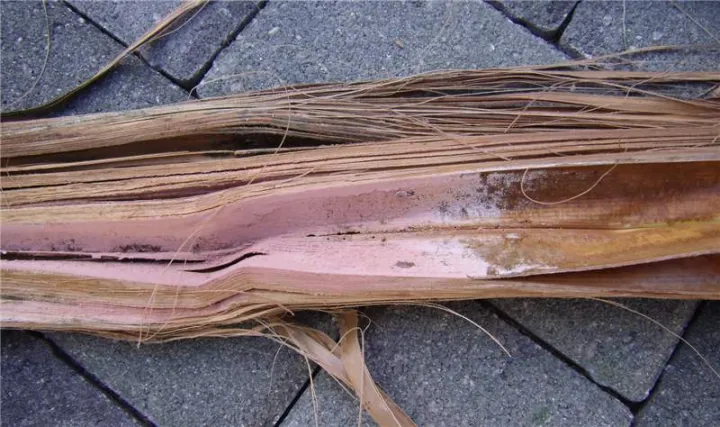
Description
Symptoms
One of the hallmark symptoms is the development of brown or black necrotic lesions on leaves and the base of petioles, which eventually show a pinkish or orange spore mass.
Young fronds often appear stunted, distorted, or wilted, frequently failing to emerge correctly, which is a sign of terminal bud infection.
As the disease progresses, the central stem may show signs of soft rot, and a foul odor may emanate from the affected areas of the trunk.
The base of the fronds might become soft and pulpy, eventually detaching from the trunk even with minimal physical force.
- Pink/orange fungal spore masses
- Terminal bud death
- Leaf necrosis and distortion
- Stem base softening
Pathogen
The fungus Nalanthamala vermoesenii, formerly classified as Gliocladium vermoesenii, is the causal agent of pink rot, a significant disease affecting palm species.
This pathogen is an opportunistic fungus that primarily targets weakened or damaged plant tissue, although it can also attack relatively healthy specimens under favorable conditions.
The fungus reproduces through conidia, which are easily disseminated by wind, water splashes, and mechanical transport on gardening tools or even insects.
It colonizes the palm's vascular and parenchymal tissues, secreting enzymes that lead to the rapid breakdown and decay of the plant structure.
The pathogen is known for its ability to persist in plant debris and soil, creating a high risk of re-infection if hygiene standards are not maintained.
Conditions for development
Pink rot thrives in environments with high humidity and moderate temperatures, which are common in many indoor plant settings and greenhouses.
Stressed palms, due to improper watering, nutritional deficiencies, or root damage, are significantly more susceptible to successful colonization by the fungus.
Wounds caused by pruning, trimming, or environmental factors provide easy entry points for the fungal spores to establish deep inside the plant tissue.
Poor air circulation significantly increases the risk by keeping the leaf surfaces and stem moist for longer periods, facilitating spore germination.
Over-irrigation that saturates the root zone lowers the palm's natural defenses, creating an environment where the pathogen can proliferate unchecked.
Why it matters
Pink rot is a lethal condition for palms because once the fungus infects the apical meristem (the growing point), the plant loses its ability to regenerate.
The disease can spread rapidly throughout a collection of plants, potentially leading to the total loss of nursery stock or ornamental specimens.
Beyond the loss of life, the disease destroys the visual appeal of the plants, making them unsuitable for decorative use even in the early stages.
The long-term impact involves increased labor and chemical costs associated with quarantine, surgical removal of affected parts, and repeated treatments.
Plants affected by the fungus act as constant reservoirs of inoculum, posing a persistent threat to all other susceptible plants in the vicinity.
Protection
Strict sanitation protocols are the most effective management strategy: prune with sterilized tools and maintain a clean environment around the palms.
Avoid excessive watering and overhead irrigation, as keeping the foliage dry is crucial for preventing fungal spore germination and penetration.
If an infection is detected, perform a surgical excision of the diseased tissue back to healthy, firm material and treat the exposed area with a fungicide.
Regular application of systemic fungicides during high-risk seasons can provide a protective layer and suppress existing but sub-clinical fungal activity.
Improve greenhouse ventilation to ensure air movement, which minimizes leaf moisture and creates a less conducive environment for Nalanthamala vermoesenii.
Discussion
No discussions yet — be the first.