
Pine needle cast
Naemacyclus steatopygioides
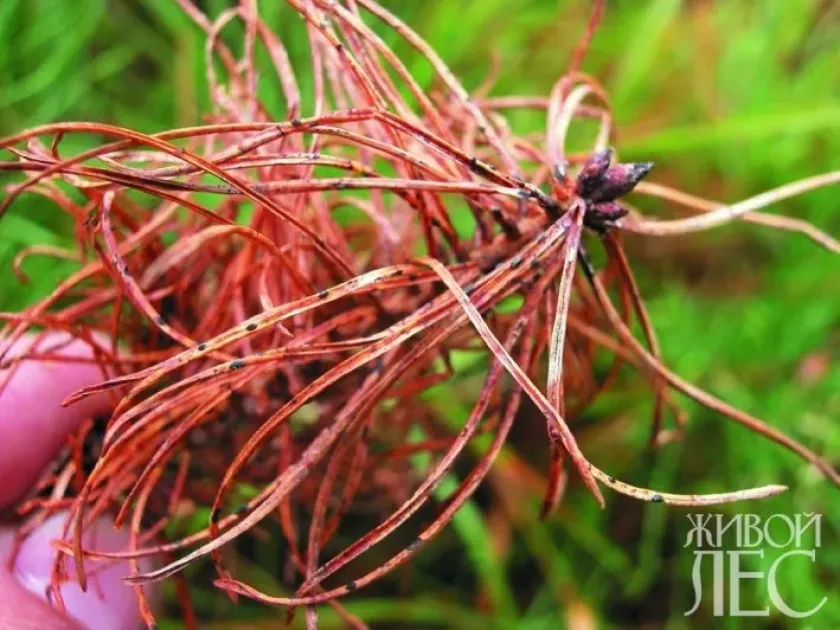
Description
Symptoms
Early symptoms appear as small yellow or light brown spots on needles, which gradually expand to cover the entire needle surface as the disease progresses.
Affected needles lose their deep green color, turning a grayish-brown hue and eventually shedding prematurely, causing sparse foliage in the lower canopy.
A diagnostic sign is the presence of small, elongated, dark-colored fruiting structures (apothecia) that appear as transverse slits on both sides of the needles.
Unlike natural needle senescence, this disease often affects younger needles that should normally remain on the tree for several years.
- Yellowing of needles in late summer.
- Transverse slit-like apothecia on needles.
- Premature needle drop in pine stands.
- Thinning of the lower crown foliage.
- Loss of overall aesthetic value and tree vigor.
Pathogen
The causal agent of this disease is the ascomycete fungus Naemacyclus steatopygioides, which primarily infects the needles of various pine species, leading to needle blight.
The fungus develops its mycelium within the needle tissues, gradually colonizing the parenchyma and disrupting the tree's vital physiological functions.
The lifecycle involves the formation of apothecia, which are small fruiting bodies that erupt through the epidermis of the needles once they reach maturity.
The pathogen survives primarily in the forest litter, where infected needles act as a persistent source of inoculum for the following growing seasons.
Laboratory diagnosis relies on observing the characteristic slit-like apothecia that rupture the needle surface, distinguishing it from other needle cast pathogens.
Conditions for development
High relative humidity and frequent rainfall during the summer months are the primary environmental drivers that facilitate spore dispersal and infection.
Dense stand architecture that restricts air circulation creates a microclimate with stagnant humidity, which is highly favorable for the development of Naemacyclus steatopygioides.
Trees weakened by environmental stress, poor soil quality, or drought are significantly more susceptible to successful colonization by this fungal pathogen.
Spores are primarily spread via wind currents and rain splash, enabling rapid transmission from infected needles to healthy foliage in the vicinity.
Optimal temperatures for fungal growth and sporulation generally range between 18 and 24 degrees Celsius, coinciding with periods of peak vegetative activity.
Why it matters
Pine needle cast causes significant damage in nurseries, where it can drastically reduce growth rates and cause the death of young, vulnerable seedlings.
Persistent infection reduces the tree's photosynthetic capacity, leading to overall metabolic exhaustion and increased sensitivity to other biotic and abiotic stressors.
In mature stands, chronic infection makes the trees more vulnerable to secondary infestation by bark beetles and other wood-boring insects due to reduced tree vigor.
The economic impact includes diminished timber increment, increased costs for sanitary forest management, and reduced commercial value of the affected trees.
In landscape and ornamental settings, the disease degrades the visual appeal of pines, often requiring intensive maintenance to preserve tree health.
Protection
The most effective management strategy involves sanitation: removing and destroying infected needle litter to eliminate the primary source of fungal inoculum.
Fungicidal treatments can be applied in nursery settings to control severe outbreaks, provided they are used during periods of high infection risk.
Promoting tree health through proper irrigation, balanced fertilization, and adequate spacing helps improve the host tree's natural resistance to the pathogen.
Thinning operations that increase airflow within the canopy can significantly reduce the humidity levels that the fungus requires to complete its lifecycle.
Early detection through regular field inspections allows for the prompt removal of infected materials, preventing the further spread of spores to healthy trees.
Discussion
No discussions yet — be the first.