
Naemacyclus needle cast
Naemacyclus korfii
Description
Symptoms
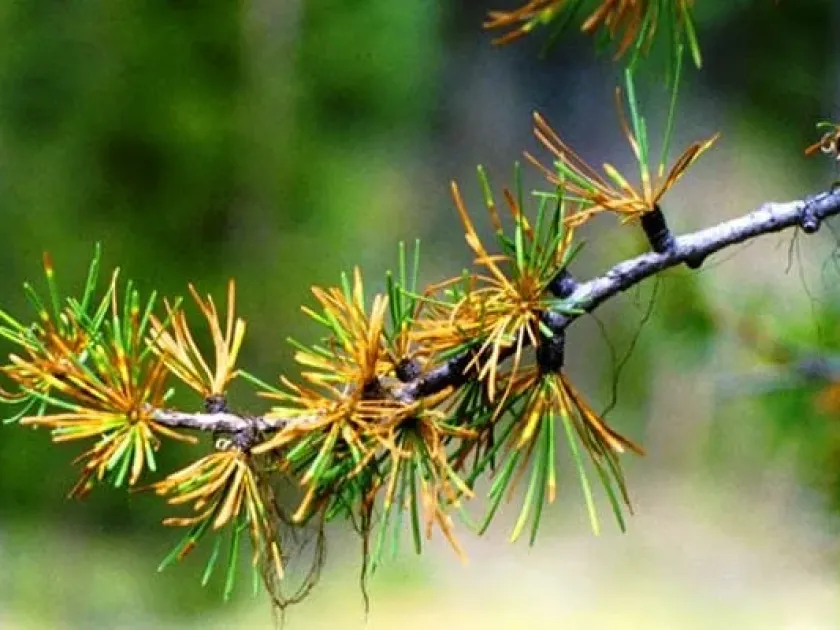
The primary symptom of this disease is the premature yellowing and browning of needles, often occurring in the lower branches first.
Small, elliptical or round apothecia, which are cream-colored to white, appear on the underside or surface of the infected needles during the late stages of infection.
Infected needles become brittle and dry, eventually falling off the tree, which results in a sparse and unhealthy appearance of the canopy.
The symptoms are most visible in spring or late autumn when the weather conditions favor the fungal growth and spore production.
Unlike other needle cast diseases, the symptoms can remain subtle for a long time until the fruiting bodies of the fungus emerge through the epidermis.
Pathogen
The causative agent of this disease is the fungus Naemacyclus korfii, which specifically targets pine needles and belongs to the group of fungi causing needle cast symptoms.
The life cycle of the pathogen involves the production of apothecia, which appear as small fruiting bodies on the surface of infected or fallen pine needles.
Spores produced by the fungus are dispersed by wind and rain, allowing the disease to spread rapidly to nearby healthy pine trees during wet seasons.
The fungus survives on fallen needles during the winter, acting as a persistent reservoir of inoculum that triggers new infections every spring.
Inside the host tissue, the mycelium of Naemacyclus korfii colonizes the needle cells, disrupting metabolic processes and weakening the tree's health.
Conditions for development
High humidity, frequent rainfall, and fog are the most critical environmental factors that promote the development and spread of the disease.
Dense plantations with poor air circulation create an ideal microclimate for the fungus to thrive and infect new needles more aggressively.
Trees stressed by poor soil conditions, nutritional deficiencies, or drought are significantly more susceptible to Naemacyclus korfii infestation.
Temperatures ranging from 10°C to 20°C create a suitable environment for the fungal spores to germinate and colonize host tissues effectively.
Accumulation of old, infected needles around the base of the tree provides a continuous source of inoculum, perpetuating the disease cycle annually.
Why it matters
The main harm caused by this disease is the significant reduction in photosynthetic capacity due to premature needle shedding, which inhibits tree growth.
Severe and persistent infections weaken the trees, making them more vulnerable to secondary attacks by pests like bark beetles and other wood-boring insects.
The loss of foliage leads to a decrease in the ornamental and commercial value of pine trees, which is especially detrimental in landscaping and forestry.
If left unmanaged, the disease can eventually lead to the death of young seedlings or the progressive decline of mature, weakened pine trees.
The widespread presence of the pathogen in a stand can jeopardize the overall forest health, requiring expensive sanitation measures to contain the infection.
Protection
Sanitation is the most important control method: regularly collect and remove all fallen needles to reduce the amount of inoculum available for new infections.
Improve air circulation in plantations by planting at appropriate densities and performing regular pruning to remove dead or diseased branches.
Apply copper-based fungicides or systemic chemical treatments during the active growth season to protect the foliage from fungal spores.
Maintain tree health through proper fertilization and watering, as vigorous, well-nourished trees are more capable of resisting fungal pathogens.
Monitor the trees frequently for early signs of infection to ensure that control measures are implemented before the disease becomes widespread.
Discussion
No discussions yet — be the first.