
Myxotrichum chartarum
Myxotrichum chartarum
Description
Symptoms
The initial sign of infection is the appearance of a characteristic dark or grayish-brown coating on the surface of leaves, stems, or fruits. The coating can be fluffy or velvety.
In the affected areas, plant tissues gradually lose turgor, begin to turn yellow, and eventually progress to a necrotic stage. The process of tissue destruction is often accompanied by a specific moldy odor.
When seeds or planting material are affected, delayed germination is observed, and the emerging seedlings often die due to hypocotyl infection, leading to sparse crops.
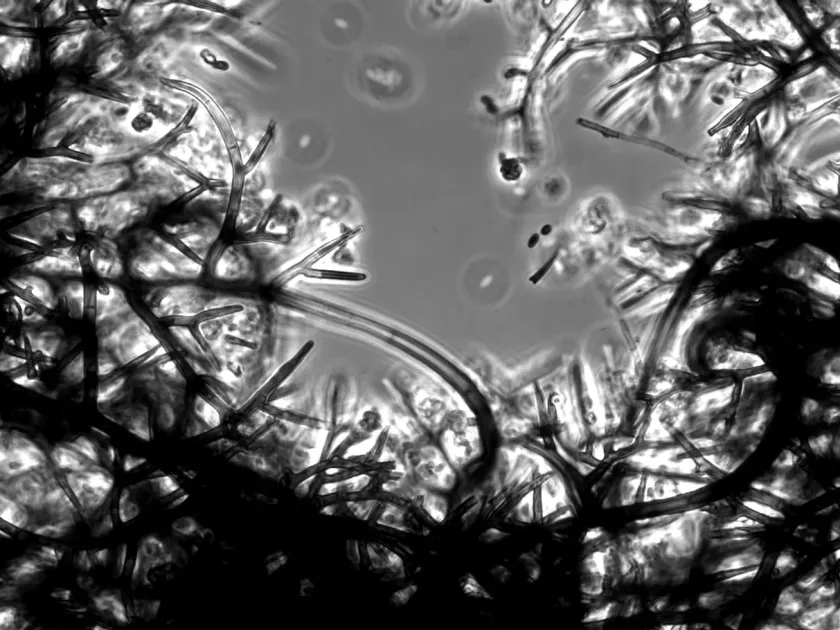
Visually under a microscope, affected areas look like clusters of dark fungal fruiting bodies that densely cover the plant epidermis.
A characteristic symptom in conditions of high humidity is the rapid spread of infection to neighboring healthy tissues, which leads to focal dying off of the vegetative mass.
Pathogen
The causative agent of the disease is the ascomycete fungus Myxotrichum chartarum. This is a microscopic saprophytic or weakly parasitic organism belonging to the Myxotrichaceae family.
Biologically, this pathogen is characterized by the formation of specific fruiting bodies called cleistothecia. They have a dark color and are surrounded by characteristic branched appendages, which facilitates the identification of the fungus during laboratory analysis.
The fungus is able to persist for a long time in plant debris, soil, and substrates. Its spores are characterized by high resistance to adverse environmental factors, making it difficult to eradicate in greenhouse conditions.
In phytopathological terms, Myxotrichum chartarum often acts as a secondary agent, attacking tissues already weakened by other infections or unfavorable environmental conditions.
The fungal mycelium actively spreads across the surface of the substrate, penetrating the intercellular spaces of affected plant tissues and causing their gradual destruction through enzymatic activity.
Conditions for development
The main factor provoking the active development of Myxotrichum chartarum is high air humidity, exceeding 80-85 percent, as well as the presence of liquid moisture on the plant surface.
The optimal temperature range for mycelial growth and spore formation of the fungus is between +18 and +25 degrees Celsius, although the fungus remains active at lower temperatures as well.
Insufficient ventilation in greenhouses or dense crop planting contributes to moisture stagnation, creating a favorable microclimate for the germination of pathogen spores.
The presence of a large amount of undecomposed plant residues on the soil surface serves as a nutritional base for the accumulation of the fungal inoculum before the start of the growing season.
Violations of agricultural practices, such as excessive application of nitrogen fertilizers, provoke excessive growth of vegetative mass, which reduces aeration and increases the susceptibility of crops to infection.
Why it matters
The main danger lies in the reduction of the commercial quality of the harvest and the possibility of total loss of marketable products during storage if infection occurs during the pre-harvest period.
Damage to growing plants leads to a significant decrease in the photosynthetic surface area, which naturally entails a drop in crop yields.
The fungus produces mycotoxins that can accumulate in the affected parts of plants, making the produce unsuitable for food or feed purposes.
In the case of seedling infection, the pathogen causes the death of young plants, which requires re-seeding and leads to economic losses due to non-productive expenditures on seeds and labor.
The rapid spread of infection in warehouses and storage facilities can lead to mass spoilage of seed material intended for sowing in the future season.
Protection
The basis of protection is strict adherence to crop rotation rules that exclude the accumulation of infection in the soil, as well as timely removal and destruction of plant residues from fields.
To prevent the development of the fungus in greenhouses, it is necessary to maintain an optimal air humidity level by organizing a high-quality ventilation system and a correct watering regime.
The use of chemical protective agents, including broad-spectrum fungicides, should be carried out strictly according to the regulations at the first signs of the disease appearing on the crops.
- Disinfection of seed material before sowing with fungicides.
- Maintaining spatial isolation between crops.
- Regular disinfection of premises and containers for crop storage.
Biological control methods based on the use of fungal antagonists show high efficiency in integrated protection systems, reducing the pesticide load on the environment.
Discussion
No discussions yet — be the first.