
Myriogenospora grass disease
Myriogenospora atramentosa
Description
Symptoms
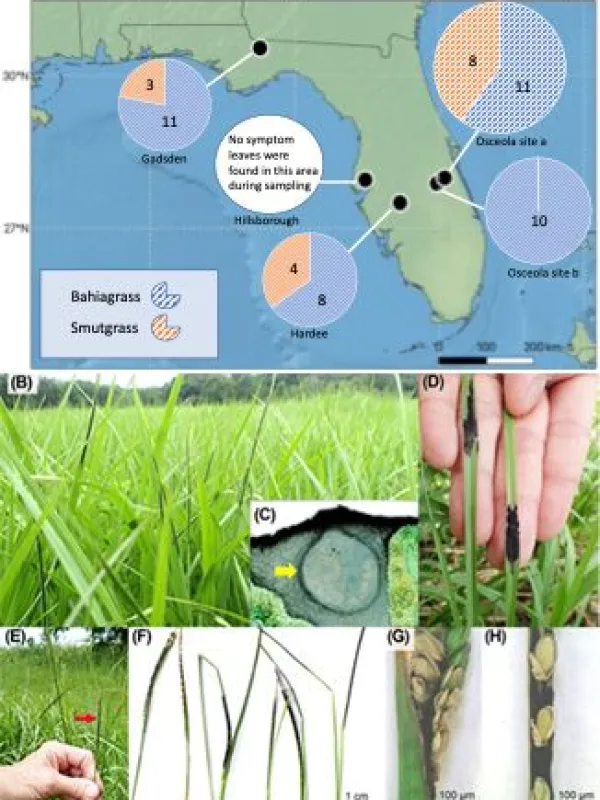
The most visible sign of infection is the emergence of dense, black fungal stromata that cover stems, leaf sheaths, and flower heads of the host grass.
Infected plants often exhibit stunted growth, significant deformation of stems, and a characteristic inability of the inflorescence to emerge properly from the boot.
The mechanical pressure of the fungal tissue prevents the formation of viable seeds, leading to sterility in affected plants and a loss of reproductive capacity.
During peak infection stages, the fungus may produce exudates that cause parts of the grass to become sticky, leading to the matting of leaves and floral organs.
Secondary symptoms include premature yellowing and necrosis of tissues as the fungus drains the plant's metabolic resources to fuel its own reproductive development.
Pathogen
The causal agent of this disease is the ascomycete fungus Myriogenospora atramentosa. It is a specialized, systemic pathogen belonging to the Clavicipitaceae family that primarily affects grasses.
The fungus develops inside the host plant's tissues, infiltrating the vascular system and interfering with the normal growth and development of the grass stems and leaves.
Its biological cycle is strictly synchronized with the development of the grass. The pathogen typically remains latent until the host reaches the reproductive phase, when it triggers the formation of its fruiting bodies.
The fungus forms characteristic black, carbonaceous stromata that encircle the stems and inflorescences, which is the hallmark feature of this specific pathological condition.
As a systemic parasite, it spreads through the plant by following the apical meristem, ensuring that the entire developing structure becomes colonized and impacted by the fungus.
Conditions for development
High humidity and moisture are the primary environmental drivers for the development and spread of Myriogenospora atramentosa infection in grass populations.
Warm temperatures, coupled with sufficient leaf wetness, create a perfect environment for the germination of spores and the subsequent colonization of healthy plant tissues.
Wind and rainfall are the primary dispersal mechanisms for fungal spores, facilitating their movement from infected plants to neighboring healthy hosts in the vicinity.
Poorly drained fields and high-density grass stands limit airflow, resulting in microclimates that remain moist for longer periods, thereby increasing susceptibility to the fungus.
The disease is most prevalent during the rapid growth phase of grasses, when the tender tissues are more susceptible to the penetration of fungal hyphae.
Why it matters
The primary economic impact of this disease is the severe reduction in yield and biomass production in affected cereal crops and forage pastures.
Infected stands suffer from reduced quality, making them unsuitable for seed production and lowering the overall nutritional value of the harvested forage.
Chronic infections can lead to the thinning of grass stands, requiring farmers to undertake costly reseeding operations to maintain the productivity of their land.
In some cases, the metabolites produced by the fungus during its colonization process may be toxic, posing a potential health risk to livestock grazing on infected fields.
Overall, the disease represents a significant management challenge, particularly in extensive grazing systems where monitoring individual plants is difficult.
Protection
The use of clean, certified, and pathogen-free seed is the most effective preventative measure against the introduction of Myriogenospora atramentosa.
Implementing effective crop rotation strategies helps disrupt the survival cycle of the fungus by limiting the availability of susceptible host species in consecutive years.
Timely mowing of pastures and grass areas can prevent the fungus from completing its reproductive cycle and producing infective spores, thus lowering the disease pressure.
Improving field drainage to prevent waterlogging is essential for creating a less favorable environment for fungal spore germination and mycelial growth.
- Regular monitoring of fields for early infection signs.
- Proper disposal or burning of heavily infected plant debris.
- Strategic application of fungicides if economically feasible.
- Maintaining optimal stand density to improve ventilation.
Discussion
No discussions yet — be the first.