
Pigeon pea cercospora leaf spot
Mycovellosiella cajani
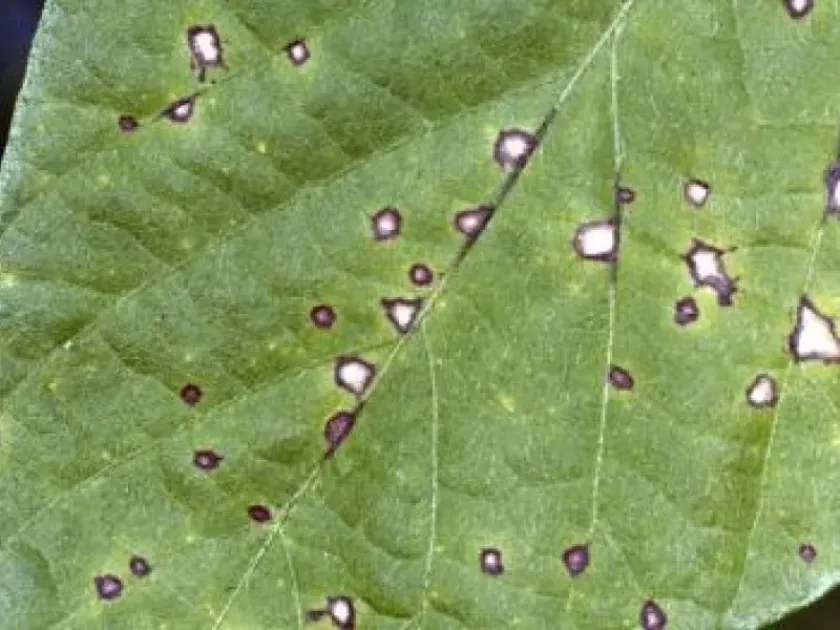
Description
Symptoms
Initial symptoms typically appear as small, irregular or angular spots on the leaves. As the disease advances, these spots expand and turn dark brown or greyish-brown, often surrounded by a distinct halo.
A characteristic dark, olive-colored fungal growth, consisting of conidiophores and conidia, is often visible on the underside of the leaves within the necrotic lesions, serving as a key diagnostic feature.
Under favorable conditions, lesions may coalesce, covering large portions of the leaf blade. Severely affected leaves eventually become chlorotic, wither, and drop prematurely.
The infection can also spread to petioles and stems, resulting in elongated dark lesions that can weaken the structural integrity of the plant.
The premature loss of foliage significantly reduces the photosynthetic capacity of the plant, which is critical during the pod-filling and seed maturation stages.
Pathogen
The causal agent of cercospora leaf spot in pigeon pea (Cajanus cajan) is the fungus Mycovellosiella cajani, previously classified as Cercospora cajani. It is a host-specific pathogen that primarily affects legume species.
The fungus belongs to the deuteromycetes group. It is a parasitic organism that derives nutrients from the host plant's tissues, developing its mycelium within the leaf cells and eventually emerging through stomata to produce spores.
The pathogen can survive in crop residues, soil, and on the surface of seeds, making it a persistent threat in agricultural fields where legumes are grown repeatedly.
Dissemination occurs primarily through wind currents and rain splashes, which transport conidia to healthy foliage, initiating new infection cycles across the canopy.
Understanding the life cycle and host-pathogen interaction of Mycovellosiella cajani is essential for developing effective phytosanitary measures in pigeon pea production.
Conditions for development
Cercospora leaf spot thrives in conditions characterized by high humidity and moderate temperatures, typically ranging from +20°C to +28°C. These conditions are optimal for spore germination and infection.
Frequent rainfall, extended morning mists, and heavy dew provide the surface moisture required for conidia to infect plant tissue effectively. Dry weather conditions significantly suppress the progression of the disease.
Dense plant spacing restricts air circulation and keeps the canopy environment humid, creating a microclimate that strongly favors the rapid spread of the fungal pathogen.
Poor crop management practices, such as failing to rotate crops or leaving infected plant debris in the field, lead to the build-up of high inoculum levels in the soil.
Nutrient-stressed plants, particularly those with mineral deficiencies, exhibit lower resistance levels and are more susceptible to severe infection compared to well-fertilized, vigorous crops.
Why it matters
The primary economic impact of cercospora leaf spot is the reduction in leaf area, which limits the plant's ability to accumulate photo-assimilates necessary for grain yield.
In cases of severe outbreaks, yield losses can range from 15% to 30%, as the plant is unable to support proper pod development and seed filling, leading to shriveled and low-quality grains.
The disease causes significant physiological stress to the pigeon pea plant, slowing its growth rate and potentially reducing its ability to withstand other abiotic and biotic stressors.
If seeds become infected, their viability may be compromised, which not only lowers the marketable quality of the harvested produce but also risks introducing the pathogen to new planting seasons.
In addition to direct yield reduction, growers face increased costs due to the need for chemical disease management and potential rejection of low-quality grain in the market.
Protection
The most effective strategy for managing cercospora leaf spot is a robust crop rotation program, typically leaving a gap of 3–4 years before returning to legumes in the same field.
Sanitation practices, such as the deep burial or burning of infected crop residues immediately after harvest, significantly reduce the primary inoculum available for the next season.
Sourcing and utilizing certified, disease-free seed is essential to prevent the long-distance transmission of the pathogen and to ensure healthy stand establishment.
Fungicide applications, specifically systemic products, are recommended when environmental conditions are conducive to disease and early symptoms appear on the foliage.
Integrating resistant cultivars into farming systems is the long-term solution to sustainable control, reducing the reliance on chemical inputs and ensuring better productivity in high-risk areas.
Discussion
No discussions yet — be the first.