
Mycovellosiella leaf spot
Mycovellosiella
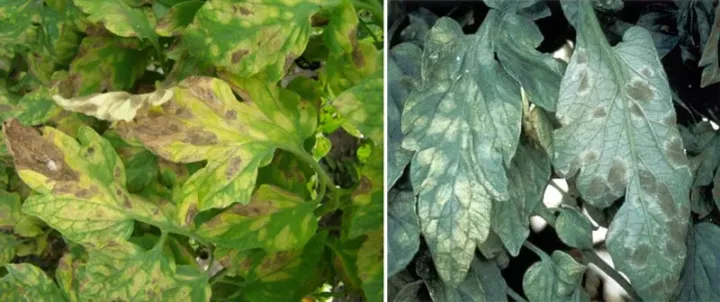
Description
Symptoms
Early symptoms appear as small, chlorotic, or pale-green spots on the leaves. These spots gradually expand and transition into yellowish-brown or tan necrotic lesions.
A distinctive feature of the disease is the presence of a gray or olive-colored velvet-like fungal growth, which is most noticeable on the undersurface of the leaves.
As the disease progresses, these lesions merge, covering large areas of the foliage. This often leads to severe chlorosis, where the entire leaf turns yellow and eventually withers away.
In advanced stages, the dead tissue within the spots may tear or drop out, giving the leaves a "shot-hole" or ragged appearance. Premature leaf drop is a common consequence of heavy infestations.
The overall plant vigor declines significantly, characterized by stunted growth of the main stem and reduced fruit development, which ultimately impacts the plant's yield capacity.
Pathogen
The disease is caused by an imperfect fungus of the genus Mycovellosiella, which is a common plant pathogen affecting various leafy crops and vegetables.
The fungus propagates through conidia, which are produced on specialized conidiophores emerging from the stomata of infected leaves. These spores are easily dispersed by wind, water splashes, and physical contact with tools.
The pathogen is highly persistent, capable of overwintering in soil debris, seeds, or on perennial weed hosts, making it a recurring threat in agricultural environments.
Upon infection, the mycelium penetrates the leaf tissue, colonizing the intercellular spaces. It secretes enzymes that break down plant cells, leading to the characteristic visual symptoms of necrotic spotting.
The life cycle of Mycovellosiella is closely synchronized with environmental humidity. Once the environmental conditions become favorable, the fungus enters an explosive phase of sporulation.
Conditions for development
High relative humidity (typically above 75-80%) is the most critical environmental factor that facilitates the rapid spread of Mycovellosiella.
The pathogen thrives in warm conditions, with an optimal temperature range between +20°C and +28°C. These conditions are commonly found in glasshouses and greenhouses with insufficient airflow.
Poor ventilation prevents the foliage from drying out after irrigation, providing a moist surface that is perfect for spore germination and successful colonization by the fungal mycelium.
High planting density contributes significantly to the disease, as crowded foliage creates a microclimate with stagnant, moist air that protects the fungus from drying sunlight.
Inadequate sanitation in the greenhouse, such as leaving fallen leaves or old stems on the ground, increases the inoculum pressure, allowing the disease to initiate earlier in the growing season.
Why it matters
The primary damage is caused by the loss of the photosynthetic leaf area. As leaves die prematurely, the plant loses its ability to produce carbohydrates, leading to reduced size and quality of the harvest.
Severe infestations can cause yield losses ranging from 30% to over 60%, especially in susceptible cultivars or during prolonged periods of high humidity.
The weakened state of the plant makes it susceptible to secondary infections by other opportunistic bacteria or fungi, further complicating the management of the crop.
Market value is often lost due to poor fruit development, including smaller sizes, improper coloration, or reduced shelf life of the harvested products.
Economic impact includes not only the reduction in crop output but also the high costs associated with repeated fungicide applications and increased labor required for manual sanitation.
Protection
Managing this disease requires an integrated approach that focuses on prevention and timely intervention when the first symptoms are spotted.
- Crop rotation with non-host species for at least 3 years to break the pathogen's life cycle.
- Strict sanitation: removing all infected plant debris, including fallen leaves, from the cultivation area.
- Optimizing greenhouse management: installing ventilation systems and controlling irrigation to keep the foliage as dry as possible.
- Utilizing disease-resistant varieties and maintaining healthy plant vigor through balanced nutrition.
- Fungicide applications: using copper-based or systemic fungicides to suppress fungal growth during periods of high disease risk.
Rotation of chemical agents with different modes of action is highly recommended to delay the development of fungicide resistance in the pathogen population.
Discussion
No discussions yet — be the first.