
Poplar Mycosphaerella leaf spot
Mycosphaerella populicola
Description
Symptoms
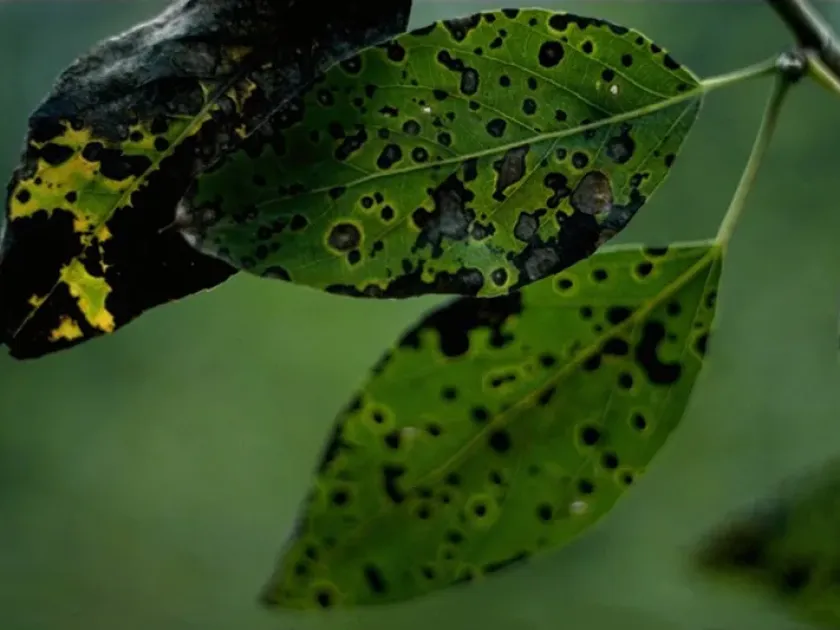
The first symptoms appear as small, scattered spots on the leaves, which gradually enlarge. These necrotic spots are typically dark brown or nearly black, often surrounded by a distinct yellowish halo.
On the underside of the leaves, small black dots representing the fungal fruiting bodies can be observed within the lesions. When infection is severe, these spots coalesce, covering large parts of the leaf area.
Affected leaves often curl and show signs of deformation. The tree canopy may appear sparse and discolored prematurely, with severe infestations leading to significant yellowing and browning of the leaves during the summer.
In addition to the leaf blades, the petioles can also be affected, leading to premature leaf drop. In high humidity, an olive-green fungal growth might be visible on the surface of the lesions.
Symptom severity varies depending on the susceptibility of the poplar clone and current weather conditions. However, the focal pattern of leaf spots across the crown remains a reliable diagnostic feature.
Pathogen
The causative agent of this disease is the ascomycete fungus Mycosphaerella populicola. Its life cycle includes a conidial stage, which facilitates rapid dissemination of the infection throughout the growing season.
The fungus infects various poplar species, showing a preference for those in the Aigeiros and Tacamahaca sections. This makes these species particularly vulnerable in commercial nurseries and young forest plantations.
The pathogen overwinters in fallen leaves, where pseudothecia form during the fall and winter. In the spring, these fruiting bodies release spores that travel via wind or rain splash to infect new, emerging foliage.
Infection primarily occurs during moist, humid weather. Ascospores land on leaf surfaces, and if free moisture is present, they germinate and penetrate the tissue to establish the infection cycle.
The fungus's biology is closely linked to the phenological stages of the poplar tree. Primary infection often coincides with bud break and the initial growth of leaves, providing the pathogen with a continuous supply of susceptible tissue.
Conditions for development
The development of the disease is favored by wet, humid, and moderately warm weather. Years with prolonged spring rains are particularly conducive to the rapid spread and germination of fungal spores.
High planting density is a significant risk factor. Poor airflow within dense plantations creates microclimates with high humidity, which accelerates the growth of the fungus and the spread of conidia.
Stressed trees, whether due to nutrient deficiencies or drought, are more susceptible to infection. The optimal temperature range for the pathogen's growth is between 18 and 22 degrees Celsius.
The presence of last year's leaf litter is a critical factor for the persistence of the disease. If the litter is not removed, the source of inoculum remains available for the next season's infections.
In nursery environments, excessive overhead irrigation can create favorable conditions for spore germination on young seedlings. Proper water management is essential to mitigate these risks.
Why it matters
The primary damage is caused by premature defoliation, which severely reduces the tree's photosynthetic capacity. This leads to a substantial decrease in wood increment in both height and diameter.
Chronic infection weakens the tree's physiological state, reducing its cold hardiness. Weakened trees are significantly more susceptible to secondary pests, including stem-boring insects.
In nurseries, the disease can cause major losses in seedling production. Young trees may lack sufficient reserves to recover from recurring infections, leading to growth stunting or mortality.
The aesthetic value of poplar trees in parks and urban areas is greatly diminished. Early leaf drop turns otherwise green, lush alleys into unattractive, sickly-looking landscapes prematurely.
Failure to manage the disease leads to a cumulative build-up of the fungal inoculum, making future control efforts significantly more difficult and expensive to implement.
Protection
The foundation of effective management is cultural control: raking and destroying fallen leaves to eliminate the primary source of the pathogen. This drastically reduces the initial spore load.
Choosing resistant poplar clones is the most effective long-term strategy for preventing widespread infection in new plantations. Selecting genetically robust materials is essential for sustainable forestry.
Chemical control involves the use of contact or systemic fungicides. Applications must be timed to coincide with the most vulnerable periods for infection, following strict regulations for application rates and safety.
Preventive spraying is most effective when performed early in the growing season as leaves emerge. If necessary, follow-up applications can be performed at 10 to 14-day intervals depending on environmental conditions.
- Optimize planting density to improve canopy aeration.
- Conduct sanitary pruning to remove severely diseased branches.
- Apply balanced fertilizers to boost tree immune responses.
- Remove and destroy severely affected trees to prevent further spread.
Discussion
No discussions yet — be the first.