
Septoria leaf spot of gooseberry
Mycosphaerella grossulariae
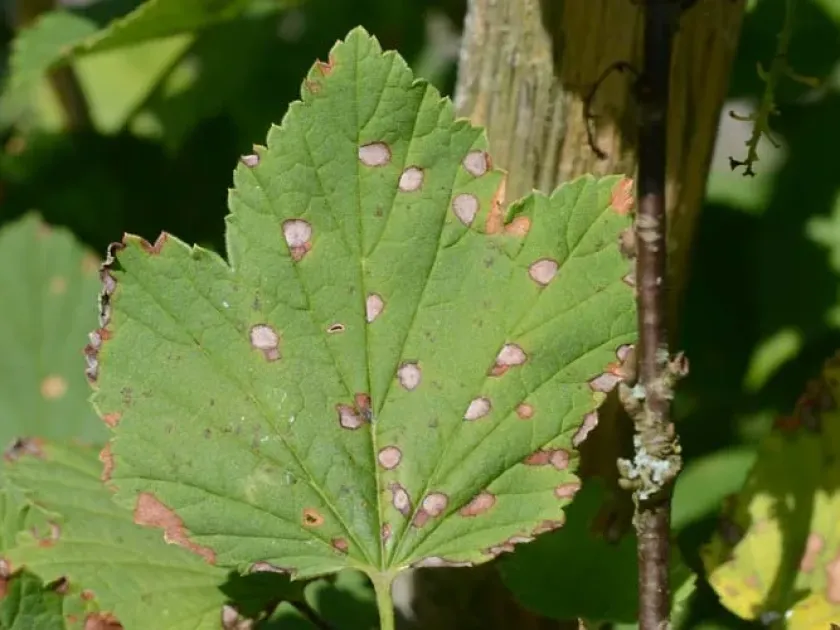
Description
Symptoms
The first symptoms appear as small, circular or angular spots measuring 2–3 mm in diameter. Initially, they are brown or brownish in color with a darker, distinct margin.
As the disease progresses, the center of the spot turns pale or whitish, giving rise to the common name "white leaf spot." A darker border typically remains around the bleached center.
Black dots, known as pycnidia, become visible on the surface of the pale spots, particularly on the underside of the leaves. These structures house the spores responsible for spreading the disease.
In cases of severe infection, individual spots merge, covering large areas of the leaf surface, which leads to tissue deformation, leaf curling, and premature necrosis of the plant tissue.
While primarily a foliage disease, it can also affect leaf petioles and young shoots under high infection pressure, which negatively impacts the overall health and vigor of the bush.
Pathogen
The disease is caused by the fungus Mycosphaerella grossulariae (anamorph Septoria grossulariae). It is a specialized pathogen specifically affecting members of the Grossulariaceae family.
It is classified as a leaf spot disease. The fungus overwinters in pseudothecia found on fallen, infected leaves, remaining viable in plant debris for an extended period.
In spring, ascospores are released from overwintered fruiting bodies. These spores are dispersed by wind or rain splashes, initiating primary infection cycles on young gooseberry leaves.
Throughout the growing season, the pathogen produces pycnidia containing conidia. These ensure secondary infections of healthy plant parts, significantly increasing infection levels during the summer months.
The fungus's lifecycle is highly dependent on humidity, as liquid water on the leaf surface is required for spore germination and the establishment of new fungal colonies.
Conditions for development
Development of the fungus is favored by high air humidity and frequent rainfall during the first half of the summer. Temperatures between 18°C and 25°C are optimal for mycelial growth.
Dense plantings and areas with poor air circulation create an ideal microclimate for spore germination and rapid spread of the disease throughout the plant crown.
Lack of proper sanitary pruning leads to the accumulation of inoculum. Overgrown bushes hold moisture longer, which directly stimulates fungal growth and prevents leaves from drying out.
Overhead irrigation, especially during the day, promotes the splash dispersal of spores from the lower parts of the canopy to healthy leaves, accelerating the spread of the infection.
Plants suffering from nutritional deficiencies or stress are more susceptible to infection and show faster disease progression compared to well-maintained, healthy specimens.
Why it matters
The primary damage is premature defoliation, which can begin as early as mid-summer. The loss of foliage severely limits the plant's ability to perform photosynthesis.
Defoliation disrupts the formation of flower buds for the following year, which results in a significant reduction in fruit yield and poor berry quality in subsequent seasons.
Weakened plants are less capable of accumulating sufficient carbohydrates for winter, making them highly prone to winter injury or total death when exposed to harsh cold.
Infection of the shoots impairs vascular function and overall nutrient transport, leaving the plant vulnerable to secondary pests and various other environmental stressors.
If left unmanaged, the impact of the disease can lead to the economic collapse of the plantation, making it unsustainable for commercial or home gardening purposes.
Protection
The foundational management strategy is sanitary: collecting and destroying all fallen leaves in autumn is crucial, as this removes the main source of overwintering inoculum.
Regular pruning is essential to thin the canopy and ensure adequate air circulation, which helps keep the foliage dry and creates an environment less favorable for fungal growth.
Chemical control via fungicides is often necessary. The most effective timing includes applications before blooming, immediately after flowering, and post-harvest to protect foliage until the end of the season.
- 1% Bordeaux mixture
- Copper oxychloride
- Mancozeb-based fungicides
- Systemic triazole fungicides
Balanced fertilization, particularly with potassium and phosphorus, boosts the plant's natural immune system and helps gooseberry bushes withstand the pressure of fungal pathogens more effectively.
Discussion
No discussions yet — be the first.