
Mycosphaerella leaf spot of brassicas
Mycosphaerella cruciferarum
Description
Symptoms
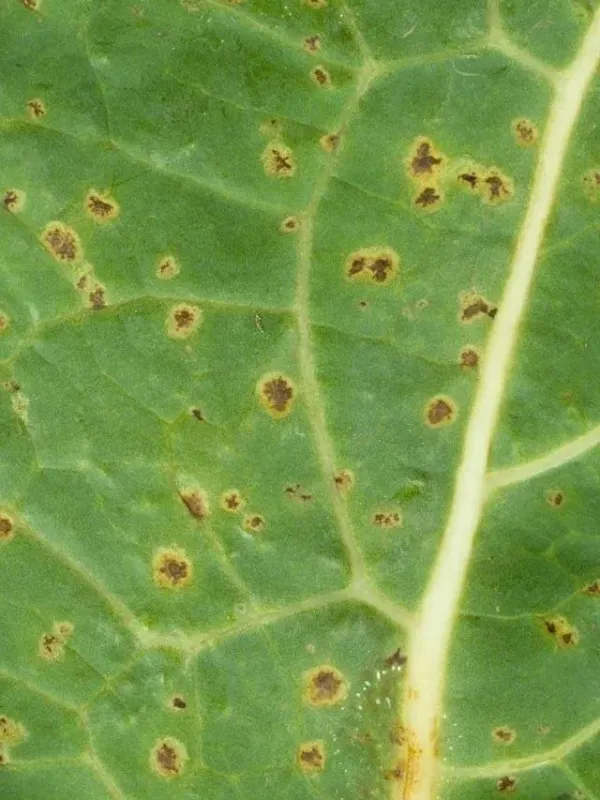
Initial symptoms of the disease appear on the lower leaves as small, circular or irregular spots. These spots are typically greyish or light brown and are often encircled by a distinct dark margin.
As the infection progresses, these spots expand and may coalesce, covering large portions of the leaf blade, which leads to premature yellowing, necrosis, and leaf senescence.
A key diagnostic feature of this disease is the appearance of tiny, black fruiting bodies (pycnidia or perithecia) on the surface of the lesions, visible upon close inspection.
Stems and petioles can also be affected, showing elongated necrotic streaks that may weaken the structural integrity of the plant or interfere with nutrient transport.
Severe infestations result in leaf distortion and defoliation, and when pods are infected, they may crack prematurely, leading to the shedding and shriveling of seeds.
Pathogen
The disease is caused by the fungus Mycosphaerella cruciferarum, a member of the Ascomycota phylum. The pathogen produces sexual spores (ascospores) within perithecia, which serve as the primary source of inoculum after wintering.
The fungus survives on plant debris, in the soil, and can be seed-borne. It is a specialized pathogen that affects various species within the Brassicaceae family, including cabbage, oilseed rape, mustard, and radishes.
The pathogen infects host tissues by penetrating through stomata or directly through the epidermis, particularly where the plant surface has been compromised by insect damage or environmental stress.
During the growing season, the fungus produces conidia, which are dispersed by wind and rain splash, facilitating secondary infections and rapid spread across the field.
The biological success of the fungus is attributed to its ability to adapt to varying temperatures, provided that moisture levels are sufficient for spore germination and colonization.
Conditions for development
High relative humidity and frequent rainfall are the primary environmental drivers for disease outbreaks. The fungus thrives in temperatures ranging from 18°C to 22°C.
Dense crop canopies that limit air circulation create a microclimate with prolonged leaf wetness, which is essential for the rapid germination of spores and successful infection.
The presence of unburied crop residues from previous seasons acts as a significant reservoir for the pathogen, ensuring a high level of inoculum for the next crop.
Foggy weather and heavy morning dews significantly increase the risk of disease spread, as these conditions keep the foliage wet for extended periods, favoring fungal activity.
Plants under physiological stress, whether due to nutrient deficiency, pest pressure, or drought, show increased susceptibility to Mycosphaerella infection.
Why it matters
The primary damage is the significant reduction of photosynthetic leaf area, which severely hampers the growth and yield potential of the crop during critical development stages.
Infection of reproductive parts, such as pods, leads to reduced seed weight, lower oil content in oilseed rape, and poor seed quality, significantly impacting market value.
Plants affected on the stems become prone to lodging, which complicates harvesting operations and causes additional mechanical losses in the field.
In epidemic years with prolonged rainy weather, yield losses can reach 30% to 50%, representing a major economic threat to large-scale brassica production.
The potential for the pathogen to be seed-transmitted means that infected fields can act as sources of inoculum for subsequent plantings, complicating long-term management.
Protection
Crop rotation is the cornerstone of disease prevention; planting brassicas in the same field should be avoided for at least 3-4 years to reduce soil-borne inoculum.
Deep plowing to bury infected crop residues is a vital cultural practice, as it accelerates the decomposition of debris and limits the survival of the fungus.
Using high-quality, certified, and fungicide-treated seeds is crucial to prevent the introduction of the pathogen into new areas through contaminated planting material.
When environmental conditions favor disease development, foliar applications of systemic fungicides are recommended to protect the crop and limit further spread.
- Effective weed control to eliminate alternative hosts.
- Optimized plant spacing to improve airflow.
- Balanced NPK fertilization to enhance plant vigor.
- Regular field monitoring during wet weather periods.
Discussion
No discussions yet — be the first.