
Mycosphaerella leaf spot
Mycosphaerella chrysanthemi
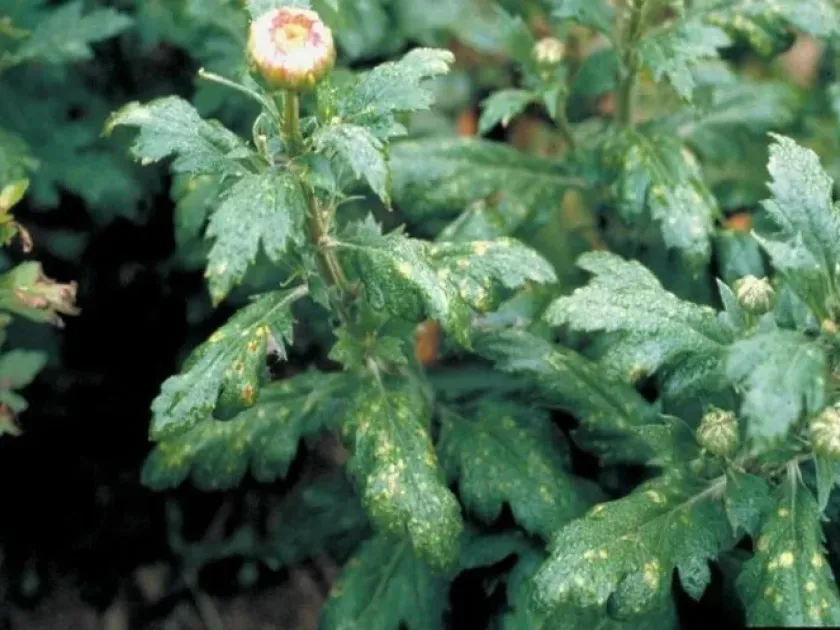
Description
Symptoms
The first signs typically appear as small, circular, dark spots on the lower leaves. These spots gradually expand and may become irregular in shape as they coalesce over the leaf surface.
A distinct necrotic halo often surrounds the central lesion. As the infection progresses, the center of the spot may turn grey or light brown, contrasting with the dark margins.
Tiny, black, pin-head-sized fruiting bodies, known as pycnidia, eventually develop within the lesions. These are diagnostic features that can be confirmed with a hand lens.
In severe cases, the infected leaves undergo chlorosis and necrosis, leading to premature leaf drop. This results in the characteristic "bottom-up" defoliation of the chrysanthemum plant.
Stem lesions may also develop, appearing as elongated dark streaks. These lesions can girdle the stem, causing the upper portion of the plant to wither and eventually collapse.
Pathogen
The causative agent of this disease is the fungus Mycosphaerella chrysanthemi. It is a specific plant pathogen that predominantly affects various species and cultivars of chrysanthemums.
The fungus produces pseudothecia, which serve as the overwintering structures on plant debris. These structures contain ascospores, released during periods of moisture to initiate new cycles of infection.
Under favorable conditions, the fungus produces conidia, which act as secondary inoculum. These spores are easily spread by water splashes, air currents, and human handling during maintenance.
The pathogen thrives by colonizing the leaf tissue, where it slowly breaks down cell structures. As it progresses, it establishes a mycelial network that can penetrate deep into the plant's vascular system.
Biology of M. chrysanthemi is highly dependent on humidity. Its ability to produce both sexual and asexual spores makes it a persistent threat in both greenhouse and outdoor environments.
Conditions for development
High humidity levels, typically above 80%, are the primary catalyst for the development of Mycosphaerella leaf spot. Wet leaves are essential for spore germination and infection.
Temperature plays a crucial role, with the fungus showing optimal growth between 18°C and 24°C. These conditions frequently coincide with peak growing periods for chrysanthemums.
Poor ventilation within the canopy traps moisture, creating an ideal microclimate for the fungus to spread rapidly. This is particularly problematic in densely planted greenhouse benches.
Overhead irrigation is a significant risk factor. The splashing water physically transfers spores from the lower canopy to healthy foliage, accelerating the spread of the pathogen.
Plants under nutrient stress or those grown in stagnant air conditions are more susceptible to infection, as their natural cuticle defense is often compromised.
Why it matters
The disease causes significant aesthetic damage, rendering the chrysanthemums unsalable. Leaf spots and defoliation ruin the plant's appearance, which is critical for ornamental trade.
Reduced photosynthetic leaf area leads to stunted plant growth. The plants fail to reach their full potential in terms of size, vigor, and overall development during the season.
Infection affects the quality of the blooms. Plants stressed by fungal disease often produce smaller, malformed, or fewer flowers, directly reducing the crop's market value.
If left unmanaged, the pathogen can quickly spread throughout an entire greenhouse, leading to severe economic losses and high costs for remediation and plant replacement.
Weakened plants are prone to opportunistic secondary infections by bacteria and other pathogens, further complicating the management of the chrysanthemum crop.
Protection
Good sanitation is the cornerstone of control. Removing and destroying all infected plant material, including fallen leaves, significantly reduces the amount of inoculum available.
Improved air circulation is vital. Spacing plants adequately and utilizing fans in greenhouses helps keep foliage dry, which prevents the spores from successfully infecting the leaves.
- Transitioning to drip irrigation systems to keep leaves dry.
- Applying preventative fungicides (e.g., strobilurins or triazoles).
- Regular inspection of the crop for early symptoms of the disease.
Fungicide applications should be timed to periods of high humidity or following rainy spells. Rotation of active ingredients is recommended to prevent the development of resistant fungal strains.
Maintaining optimal plant health through balanced fertilization and pH management strengthens the plant's natural resistance, making it harder for M. chrysanthemi to establish.
Discussion
No discussions yet — be the first.