
Mycogone
Mycogone
Description
Symptoms
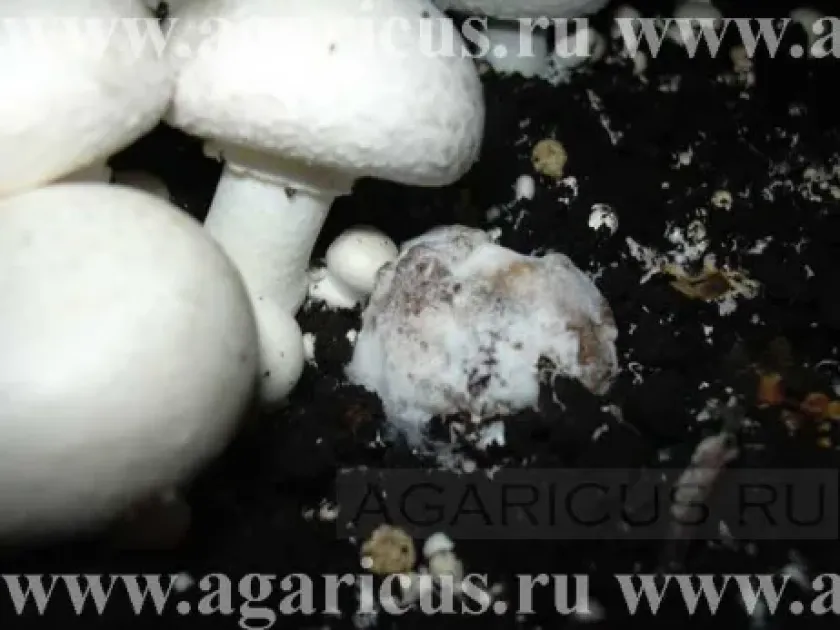
The first sign of infection is a dense, white, moldy growth on young mushrooms, which gives the disease the common name "wet bubble" or "white mold."
Affected mushrooms show severe malformation: the stipe becomes thick and bulbous, the cap often fails to develop, and the entire fruit body becomes a white, distorted mass.
Secondary bacteria often colonize the rotted tissue, causing a foul, fishy odor and changing the color of the lesion to brown or dark gray.
Amber-colored drops of exudate often appear on the surface of the infected mass, which is a classic diagnostic symptom of Mycogone perniciosa.
The disease manifests in patches (pockets) across the growing beds, where all production eventually ceases as the parasite overtakes the mushroom mycelium.
Pathogen
The disease is caused by the fungus Mycogone perniciosa, an aggressive parasite that specifically targets cultivated mushrooms, most notably the white button mushroom (Agaricus bisporus).
The pathogen develops a thick, white, felt-like mycelium that rapidly spreads across the casing layer and onto the developing mushrooms themselves.
It produces two types of spores: conidia and resistant chlamydospores. These chlamydospores are highly durable and can survive for years in soil, dust, and structural crevices.
Infection is typically introduced through contaminated casing soil, dirty tools, or by insects such as sciarid and phorid flies that carry spores on their bodies.
The fungus functions by parasitizing the host mycelium, draining its nutrients, and producing enzymes that digest and rot the mushroom tissue.
Conditions for development
Mycogone thrives in high relative humidity (above 90%) and relatively high temperatures, making it a common problem during warm growing seasons.
Poor ventilation prevents surface moisture from evaporating, creating a thin film of water on mushrooms that acts as a perfect site for spore germination.
Excessive watering is a primary factor in disease transmission, as splashes of water can carry spores from an infected patch to healthy areas.
Inadequate hygiene in the mushroom house, such as failing to disinfect shoes, tools, or carts, allows the pathogen to establish itself and build up inoculum pressure.
Rapid growth of the fungus is also linked to the nutritional status of the compost and casing, which, if poorly pasteurized, provide no defense against the invasive parasite.
Why it matters
This disease is considered one of the most destructive in commercial mushroom production, capable of causing total crop failure in affected rooms.
It results in significant economic losses due to the total unsalability of infected mushrooms and the labor costs associated with removing and treating affected areas.
The persistent nature of the spores often requires expensive, industrial-grade sanitation procedures and lengthy room downtime to clear the infection.
If not contained, the disease spreads rapidly between cultivation rooms, potentially endangering the output of an entire commercial facility.
The quality of the environment is compromised, as the smell and presence of rot necessitate strict isolation protocols for personnel and equipment.
Protection
Strict hygiene is the cornerstone of control: ensure all casing materials are properly pasteurized and tools are regularly disinfected with approved agents.
Managing the population of mushroom flies is essential, as these pests act as the main vectors for spore transmission within the growing facility.
Upon detection, carefully remove the infected fruit bodies and the surrounding casing soil, ensuring that the spores are not dispersed into the air during the process.
Apply salt or localized fungicides to the area where the infection was removed to prevent re-emergence of the pathogen in that specific spot.
Regulate humidity and optimize ventilation to ensure that the mushroom caps dry quickly after watering, which significantly discourages the growth of Mycogone.
Discussion
No discussions yet — be the first.