
Mycocalia
Mycocalia
Description
Symptoms
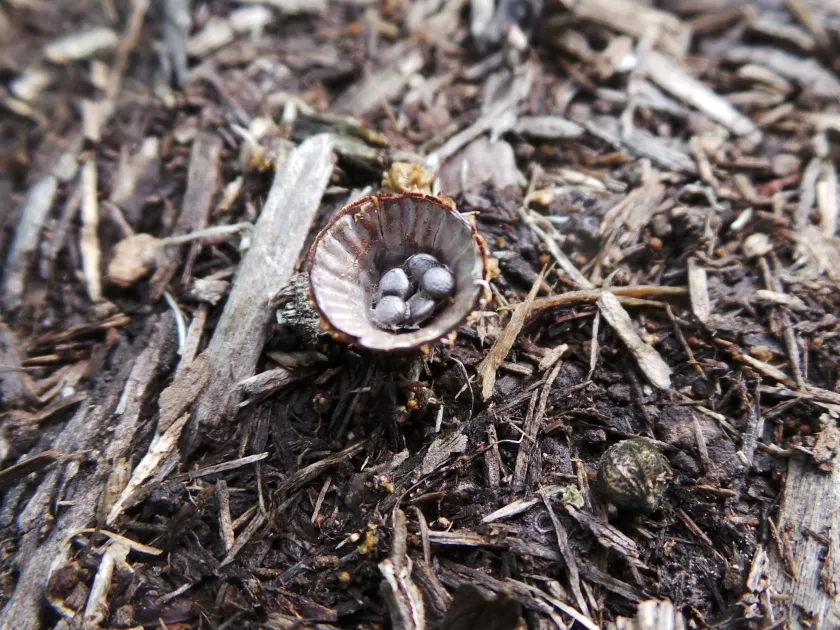
The most distinctive sign of Mycocalia is the emergence of tiny, cup-like structures, usually 1 to 3 mm in diameter, on the surface of soil or rotting wood.
These fruiting bodies are often brownish or grayish, making them blend in with organic mulches or decomposing plant materials.
During humid periods, the cups become more visible and may be accompanied by thin, white mycelial threads spreading through the surrounding soil or debris.
While rarely seen on healthy living plants, they can grow on stems that are in constant contact with very wet soil or organic waste piles.
The fungus does not cause chlorosis or wilting directly, but its abundance indicates a habitat where fungal pathogens may thrive due to excessive moisture.
Pathogen
Mycocalia is a genus of fungi belonging to the Nidulariaceae family, often referred to as bird's nest fungi due to the unique shape of their fruiting bodies.
Biologically, these organisms act as saprophytes, meaning they derive their energy from decomposing organic matter such as wood debris, leaf litter, and moist soil.
They are not true plant pathogens in the sense of infecting healthy tissue; rather, they populate environments where organic matter is readily available and moisture levels are high.
The fungus produces small, cup-shaped fruiting structures that contain peridioles—capsules housing spores. These spores are dispersed by mechanical energy, such as raindrops splashing into the cups.
In a horticultural setting, their presence is primarily an ecological indicator rather than a sign of a primary infectious plant disease.
Conditions for development
Mycocalia flourishes in environments with high relative humidity and consistent moisture, typically exceeding 80% in the immediate microenvironment.
Shaded locations with poor light penetration allow the soil surface to remain moist for extended periods, providing an ideal substrate for fungal colonization.
The presence of raw organic matter, such as fresh wood chips, sawdust, or dense piles of dead leaves, serves as the primary food source for this fungus.
Temperatures between 15°C and 25°C are optimal for the development of these fungi, with growth slowing down in hot, dry weather conditions.
Compacted soils that lack proper aeration tend to retain the moisture required by Mycocalia, encouraging its establishment in garden beds and greenhouses.
Why it matters
The direct harm caused by Mycocalia to crops is negligible, as it does not typically invade living plant cells or cause systemic disease.
The main risk is that the conditions promoting this fungus (excessive dampness) are also highly favorable for the development of dangerous root rot pathogens.
In ornamental nurseries, the appearance of these fungi can detract from the aesthetic value of the plants and containers, necessitating cleanup.
While the fungus is not aggressive, its mycelium can temporarily immobilize certain nutrients in the upper layer of the soil while decomposing organic matter.
Overall, Mycocalia is considered a minor annoyance that serves as a useful diagnostic tool for gardeners to identify areas of the garden that need better drainage.
Protection
Management of Mycocalia is focused on environmental modification rather than chemical application, as the fungus is a natural decomposer.
- Improve soil drainage to prevent surface water accumulation.
- Limit the thickness of organic mulch layers to allow for air circulation.
- Ensure adequate spacing between plants to reduce humidity.
- Remove and dispose of decaying organic debris from the immediate plant zone.
Allowing the soil surface to dry out periodically is the most effective way to inhibit the growth and reproductive cycle of the fungus.
Fungicides are generally unnecessary and ineffective in the long term, as the fungus will naturally return if the underlying moisture issues are not resolved.
Discussion
No discussions yet — be the first.