
Mycoblastus sanguinarius
Mycoblastus sanguinarius
Description
Symptoms
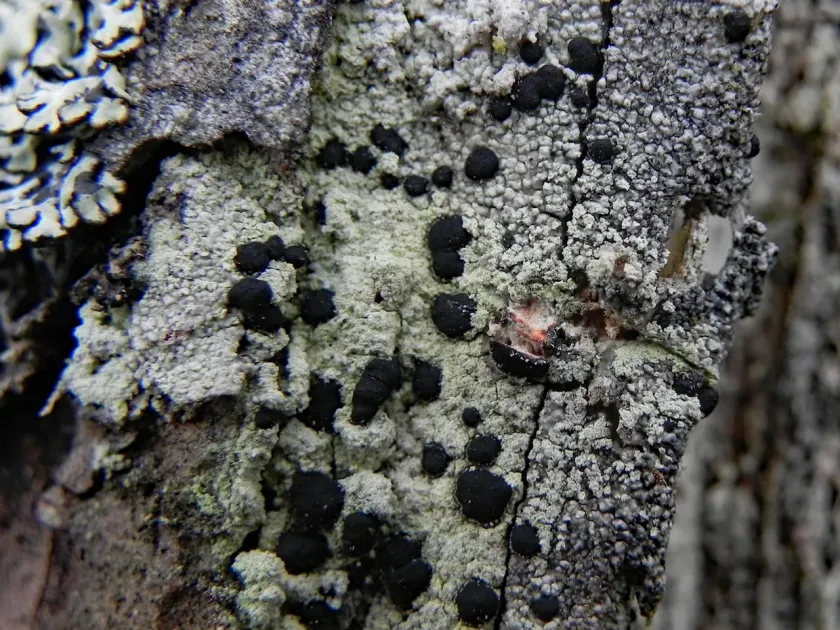
Mycoblastus sanguinarius is a species of crustose lichen that is commonly found growing on the bark of various tree species.
It forms a flat, crust-like thallus that adheres firmly to the bark surface without causing direct tissue damage to the plant.
The most distinctive feature of this species is its vivid blood-red to dark purple apothecia, which act as the reproductive bodies.
The main thallus of the lichen is usually grayish-green, providing a stark color contrast against the striking red discs of the fruiting bodies.
These organisms appear as patchy, slow-growing clusters on the surface of branches and trunks in stable environments.
Pathogen
It is crucial to clarify that Mycoblastus sanguinarius is not a pathogenic fungus and does not cause plant disease in the clinical sense.
It is an obligate symbiotic organism, representing a mutualistic association between a fungus and photosynthetic algae.
The lichen does not extract nutrients from the tree; instead, it uses the bark surface solely as a physical substrate for attachment.
Its reproduction relies on spores dispersed through wind and water, allowing it to colonize suitable surfaces over time.
As an epiphyte, it typically prefers trees with relatively rough or long-standing bark, which offers a stable platform for growth.
Conditions for development
The development of this lichen is highly dependent on humidity levels and the overall cleanliness of the atmospheric environment.
It thrives in humid, cool temperate regions where moisture persists on bark surfaces for extended periods of the year.
Mycoblastus sanguinarius is generally considered an indicator of good air quality, as it is sensitive to high levels of industrial pollution.
Dense, unpruned canopies are ideal for lichen establishment, as they maintain the high humidity and low air circulation required for growth.
Trees that are showing signs of stress or lack of vitality are often more susceptible to colonization by epiphytic organisms.
Why it matters
While not a parasite, the presence of heavy lichen cover can be disadvantageous to tree health in an orchard setting.
Excessive coverage may interfere with the bark's ability to "breathe" or facilitate gas exchange, potentially stressing the tree.
The intricate structure of the lichen provides a perfect micro-habitat for overwintering pests, such as scale insects and spider mites.
Lichen patches often mask early symptoms of bark infections or structural damage, delaying necessary diagnostic actions.
A sudden increase in lichen growth is often a secondary symptom reflecting the tree's overall decline in physiological vigor.
Protection
Control measures are usually focused on general orchard hygiene rather than direct eradication of the lichen itself.
Regular maintenance, including scraping off old, loose bark, effectively removes existing lichen colonies from trunks and limbs.
Whitewashing the trunks with a lime-based mixture creates an alkaline environment that is inhospitable for lichen settlement.
Proper pruning practices ensure the canopy remains well-ventilated, reducing the dampness required for lichen propagation.
- Removing dead or dying branches annually.
- Applying balanced fertilizers to promote overall plant vigor.
- Using mild fungicides for bark sanitation if secondary pests are present.
Discussion
No discussions yet — be the first.