
Mycoblastus
Mycoblastus
Description
Symptoms
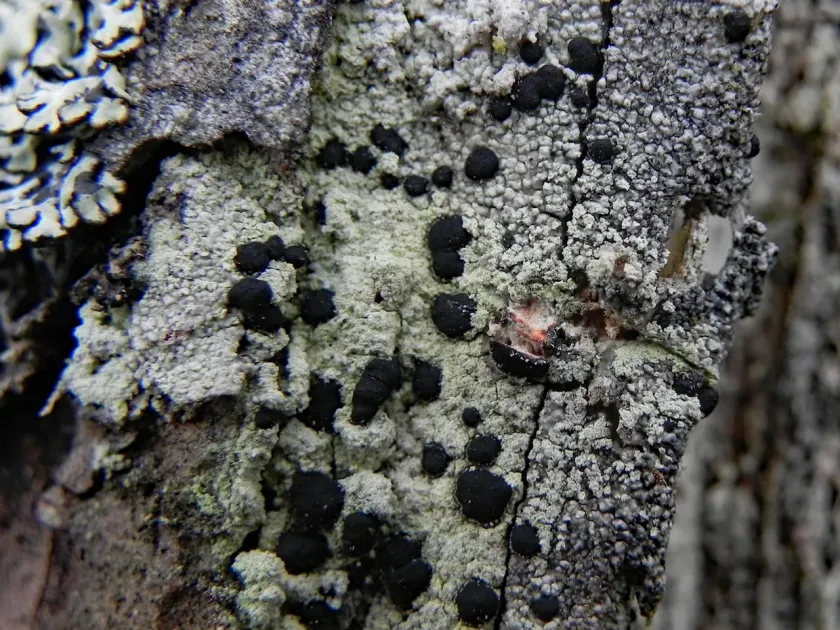
The primary sign of Mycoblastus is the presence of crust-like thallus patches on the bark of trunks and older branches of woody plants.
The color of the lichen can vary, typically displaying shades of grey, green, or brown depending on the specific species and environmental moisture levels.
A distinctive feature is the presence of conspicuous, often brightly colored apothecia, which are the reproductive structures of the lichen.
The bark underneath the lichen colony usually remains healthy, without rot, cankers, or structural degradation caused by the lichen itself.
Visual identification requires careful observation to ensure that the crusty growth is indeed a lichen and not a fungal disease like bark necrosis.
Pathogen
Mycoblastus is a genus of crustose lichens belonging to the family Mycoblastaceae, and it is not a plant pathogen causing infections.
These organisms are biological symbionts composed of a fungus and photosynthetic algae, which thrive on the surface of trees as epiphytes.
They do not invade the living tissues of the host plant, such as the phloem or cambium, and thus do not extract nutrients from the tree.
In agronomy, it is essential to distinguish between parasitic pathogens that destroy tree tissue and non-parasitic organisms like Mycoblastus.
The study of this genus falls under the field of lichenology, focusing on its reproductive structures, such as the colorful apothecia.
Conditions for development
Mycoblastus development is favored by environments with high humidity, cool temperatures, and relatively clean, unpolluted air.
They are typical indicators of ecological health, as they are highly sensitive to air pollutants like sulfur dioxide, which inhibit their growth.
Trees with rough, aging bark provide the perfect substrate for these lichens to anchor and initiate colonization over long periods.
Areas of the canopy with moderate light exposure are often preferred, as the photosynthetic component of the lichen requires light to survive.
Poor orchard management, characterized by dense canopies and restricted airflow, creates an ideal microclimate for colonization.
Why it matters
While not a direct parasite, excessive colonization of Mycoblastus can have minor indirect negative effects on tree vitality.
The dense crust may impede the bark's ability to undergo gas exchange, potentially affecting the respiration of the underlying tissues.
Lichens can create a damp microhabitat that serves as a reservoir for various overwintering pests, such as scales and spider mites.
By trapping moisture, the lichen layer may create conditions that facilitate the germination of spores of actual pathogenic fungi.
In high-production orchards, controlling lichen growth is considered a good maintenance practice to ensure optimal bark health and vigor.
Protection
Standard fungicide applications are generally ineffective against Mycoblastus because they are not plant-pathogenic fungi.
The most effective management approach is physical removal of the lichen from the bark using specialized brushes or scrapers during dormancy.
Applying traditional whitewash or mineral oil treatments to the trunks can help suppress the growth of lichen colonies.
Cultural practices that involve proper canopy management to improve airflow and sun penetration are highly effective preventive measures.
- Mechanical removal of lichen patches using a soft wire brush.
- Annual whitewashing of tree trunks with lime solution.
- Pruning to reduce shade and increase tree ventilation.
Discussion
No discussions yet — be the first.