
Mycoaciella
Mycoaciella
Description
Symptoms
The primary symptom of Mycoaciella infection is the appearance of a creamy or yellowish crust-like growth on the bark or exposed wood. Bark peeling or detachment from the stem is a common sign of advanced infection.
Branches affected by the fungus become brittle and lose their structural integrity, as the wood becomes soft and decayed. This often leads to branch breakage during heavy wind or snowfall.
Yellowing of foliage and premature leaf drop may occur, indicating a disruption in the vascular system of the tree, which hinders the upward movement of water and essential nutrients.
Necrotic lesions frequently form at the site of fungal entry. These spots gradually expand, and beneath the bark, a white, mat-like mycelium can often be observed upon closer inspection of the damaged area.
- creamy fungal growth on bark;
- peeling or cracked bark;
- brittle and decayed branches;
- premature wilting and leaf fall;
- visible mycelial mats under the bark.
Pathogen
Mycoaciella is a genus of basidiomycete fungi belonging to the family Meruliaceae. These fungi are recognized in agronomy and forestry as wood-decaying organisms that cause white rot in various plant species.
As a pathogen, it primarily acts as a saprotroph, but it can switch to a parasitic lifestyle when the host plant is weakened by environmental stressors or physical damage. The fungal mycelium penetrates the woody tissues, degrading lignin and cellulose.
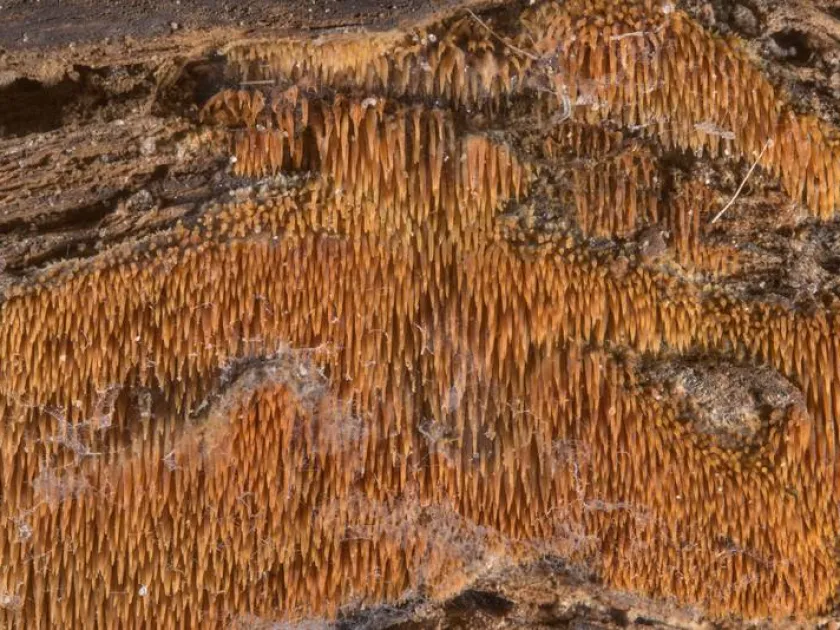
The fungus is characterized by the formation of resupinate, often spiny or tuberculate fruit bodies. These structures produce spores that are dispersed by wind and water, especially during warm and humid weather conditions.
Mycoaciella can persist for extended periods in infected soil, dead wood, or on pruning tools, which can facilitate its spread across orchards or forest nurseries if proper hygiene is ignored.
Microscopic identification of the fungus is based on the presence of hyphae with clamp connections, which are diagnostic features distinguishing this genus from other common wood-rotting fungi.
Conditions for development
The development of Mycoaciella is highly dependent on humidity levels, as the fungus thrives in environments with constant moisture. Relative humidity above 80% is ideal for mycelial growth and sporulation.
Infection usually occurs through wounds, including pruning cuts, frost cracks, or sunscald. Fresh wounds provide a pathway for spores to colonize the interior wood of the tree.
Dense planting configurations that limit air circulation create a microclimate favorable for fungal spread. Stagnant air allows spores to settle and germinate on susceptible plant surfaces.
Periods of prolonged rain facilitate the movement of spores across orchards, making late spring and autumn high-risk seasons for new infections.
Plants suffering from nutrient deficiencies or root-zone stress are more vulnerable to colonization by Mycoaciella, as their natural defense mechanisms are often suppressed.
Why it matters
The primary economic harm caused by Mycoaciella is the decay of woody structures, which significantly reduces the lifespan and health of ornamental and fruit-bearing trees.
The disease disrupts the tree's vascular system, leading to decreased yield in fruit crops and overall physiological decline, which can result in long-term financial loss.
In forestry, Mycoaciella infection degrades the quality of timber, making the wood unsuitable for construction or high-grade lumber purposes due to the loss of structural integrity.
Severe infestations can lead to the systemic decay of the entire tree, eventually necessitating removal to prevent the pathogen from spreading to neighboring healthy plants.
Infected trees also become hotspots for secondary infestations by wood-boring insects, further complicating the management and rehabilitation of the site.
Protection
Sanitation is the most critical control measure. This includes the immediate removal and destruction of all infected branches or trees to eliminate the source of inoculum from the site.
Tools used for pruning must be disinfected with alcohol or other appropriate solutions between cuts to prevent mechanical transmission of the fungus from infected to healthy wood.
Applying protective fungicides to pruning cuts or wounds can prevent the initial colonization by the fungus and protect the tree during the healing process.
Cultural practices such as whitewashing trunks to prevent sunscald, and proper irrigation to avoid root stress, play a vital role in maintaining tree resilience against decay.
Ensuring adequate spacing between trees to improve airflow is a preventative measure that reduces the humidity levels necessary for the fungus to thrive and spread.
Discussion
No discussions yet — be the first.