
Mycoacia
Mycoacia
Description
Symptoms
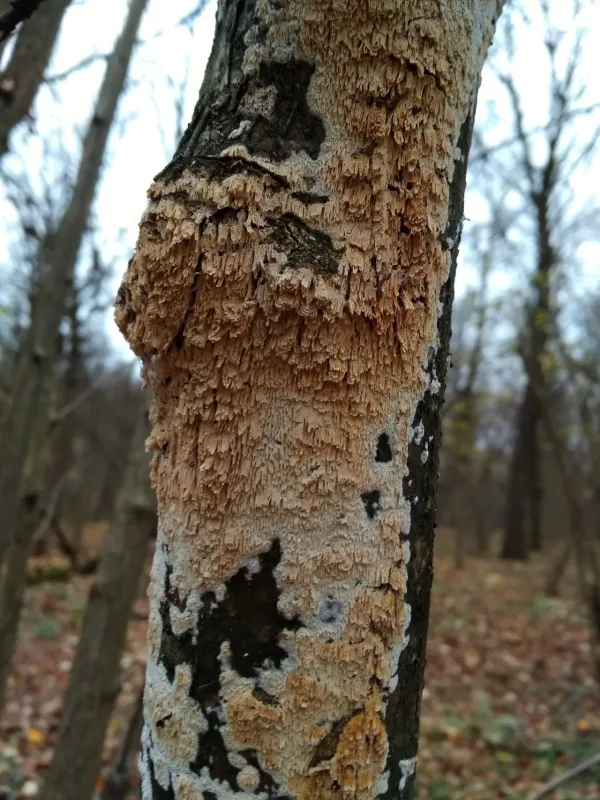
The most visible symptom is the appearance of thin, skin-like crusts on the surface of bark or wood. These crusts have a distinctive "spiny" or "toothed" appearance, which is a hallmark of the genus.
The color of these fruiting bodies can range from white and cream to yellow or even orange, depending on the specific species and environmental moisture levels.
The underlying wood loses its structural integrity, becoming soft and spongy. This is often described as white rot, where the wood tissue becomes lightened and brittle.
In advanced stages, thin fungal rhizomorphs or mycelial cords may be visible in bark cracks or underneath loose bark, facilitating the spread of the fungus throughout the plant.
- Visible spiny crusts on the trunk or branches.
- Softening and discoloration of wood tissue.
- Presence of white mycelial mats in crevices.
- Branch dieback and reduced vigor of the tree.
Pathogen
Mycoacia is a genus of fungi within the order Polyporales, known for its role as a wood-decaying agent. These fungi are saprotrophs that decompose lignin and cellulose, effectively breaking down woody tissues.
The pathogen reproduces via basidiospores that are dispersed by wind and water splash. These spores land on wounds or crevices in tree bark, initiating a new infection cycle.
The fungus develops characteristic resupinate, crust-like fruiting bodies. The surface is typically covered in small, tooth-like structures (hyphae aggregations) which are responsible for spore production.
Biologically, Mycoacia species prefer dead organic matter, but they are opportunistic and can easily transition to living trees that are stressed, injured, or weakened.
The mycelium grows deep within the xylem, creating a network of hyphae that digest the woody structure, leading to structural instability of the affected plant.
Conditions for development
High humidity and moisture are the primary drivers for Mycoacia development. The fungus thrives in stagnant, humid environments where wood remains wet for prolonged periods.
Moderate temperatures are optimal for mycelial growth, typically during the spring and autumn months. Excessive heat may inhibit growth, but mild, damp weather accelerates it.
Mechanical injuries are the main entry points for the pathogen. Sunscald, frost cracks, and improper pruning wounds provide direct access to the tree's internal structures.
Overcrowded orchards or landscapes with poor airflow and excessive leaf litter promote infection. Accumulated debris serves as a reservoir for the fungus to persist.
Shaded areas that prevent rapid drying of bark surfaces after rainfall are particularly susceptible to colonization by Mycoacia species.
Why it matters
The primary damage caused by Mycoacia is the degradation of structural wood, which can lead to branch failure and canopy loss. This poses safety risks in managed landscapes.
The fungal growth interferes with water and nutrient transport, resulting in wilting, chlorosis, and the general decline of the tree's physiological health.
Trees affected by this fungus become significantly more susceptible to windthrow and secondary infestations by wood-boring insects, which often accelerate the tree's demise.
Economic losses are notable in fruit orchards, as the disease reduces tree longevity and yields, necessitating expensive removal and replacement of affected specimens.
If left untreated, the fungus can produce vast amounts of spores, leading to widespread infection within a plantation or forest stand.
Protection
Sanitation is the cornerstone of control. Remove all dead or infected branches and dispose of them through burning or deep burial to minimize spore load in the vicinity.
All pruning must be done with clean tools to avoid wounding healthy trees. Treat all significant cuts with wound dressings or fungicides to prevent opportunistic colonization.
Maintaining tree vigor through proper fertilization, irrigation, and pest management helps trees develop natural defenses against wood-decaying fungi like Mycoacia.
Apply lime-based whitewash with copper compounds to trunks to protect bark and prevent fungal spores from establishing contact with the wood.
Monitor high-risk areas during periods of high humidity and remove any fruiting bodies of the fungus immediately upon detection to interrupt the lifecycle.
Discussion
No discussions yet — be the first.