
Mycenastrum corium
Mycenastrum corium
Description
Symptoms
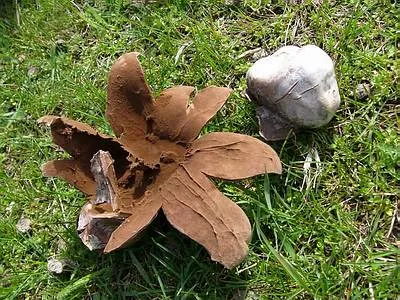
The most visible evidence of this fungus is the appearance of spherical or club-shaped fruiting bodies, which have a distinctive leathery outer skin.
These fruiting bodies are often white to tan when young and turn brownish as they mature, eventually cracking open to reveal the dark, powdery interior.
The spore mass, or gleba, becomes exposed as the peridium (outer shell) degrades, allowing the spores to be dispersed by wind and rain splash.
They are commonly found on open fields, pastures, and fallow land, usually appearing in clusters after significant moisture events.
Because the fungus is a saprophyte, there are no necrotic lesions or chlorosis associated with it on surrounding agricultural plants.
Pathogen
Mycenastrum corium is a saprophytic fungus belonging to the family Agaricaceae. It is classified as a gasteromycete and primarily functions as a decomposer in various soil environments.
This fungus does not act as a pathogen for agricultural crops. It does not infect or cause systemic diseases in living plant tissues, making it non-hazardous to plant health.
Biologically, it is involved in the breakdown of organic matter, specifically lignocellulosic residues, contributing to nutrient cycling within the soil profile.
The mycelium develops through the substrate, utilizing available organic carbon, which positions it as an important, albeit secondary, component of soil microbiota.
In agronomic terms, it is studied as an indicator of soil organic matter presence rather than a primary biotic stressor for crops.
Conditions for development
Mycenastrum corium thrives in environments with high organic matter content, particularly in soils where crop residues have not been fully incorporated.
It prefers open, well-lit habitats with adequate moisture levels, as seen in pasture lands and field margins that are exposed to direct sunlight.
Optimal development of the fruiting bodies occurs following periods of moderate rainfall and warm temperatures, which stimulate the reproductive cycle.
Compacted soils often favor its development, as these conditions tend to keep organic debris near the surface where the fungus can actively colonize it.
The species is highly adaptable and can survive long periods of environmental stress due to the durable nature of its spores.
Why it matters
Mycenastrum corium causes no direct damage to crop yields or plant growth. It is not an infectious agent for field crops, vegetables, or fruit trees.
Minimal indirect impact may occur in pasture management, where dense colonization could theoretically compete with forage species for space and moisture.
Large outbreaks are generally viewed as an aesthetic issue or a biological indicator of significant residual organic debris on the soil surface.
No economic thresholds exist for this fungus, and it does not necessitate intervention by farmers or agronomists for disease control purposes.
The primary concern regarding this organism is the potential for allergic reactions to spore clouds for people working in highly infested areas.
Protection
Since this fungus is not a plant pathogen, no chemical fungicides or biological disease control agents are necessary or recommended for its management.
Effective control is achieved through standard agronomic practices such as deep tillage to promote the rapid decomposition of organic materials.
Maintaining proper soil aeration and fertility balance will naturally discourage the establishment of this saprophyte in agricultural settings.
For pastures, ensuring proper mowing and preventing the accumulation of heavy thatch layers helps reduce the habitat available for the fungus.
Good rotation and land management practices will naturally mitigate the conditions that favor the proliferation of this common soil-dwelling fungus.
Discussion
No discussions yet — be the first.