
Mycena zephirus
Mycena zephirus
Description
Symptoms
The presence of Mycena zephirus is identified by the emergence of its sporocarps (fruit bodies) during the autumn season in coniferous forests.
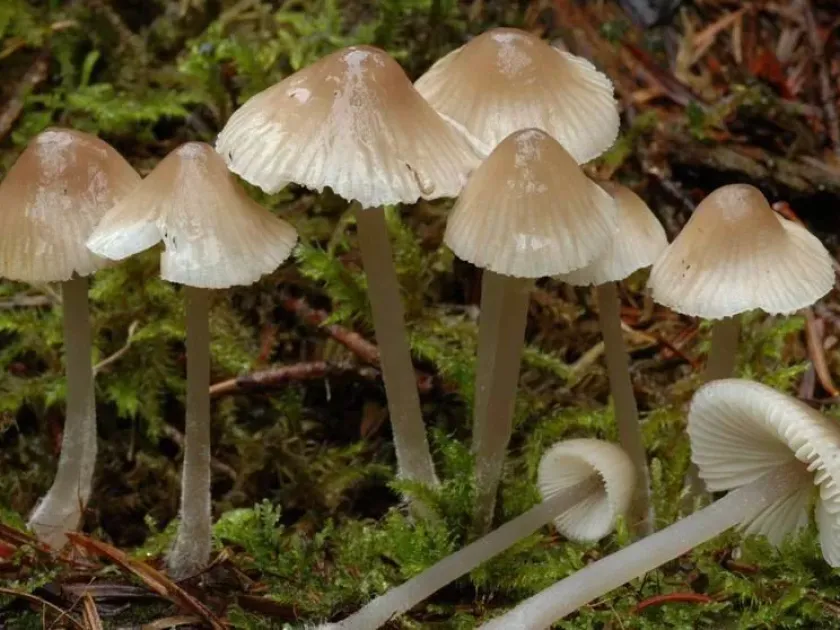
The cap is typically small, ranging from 1 to 4 cm in diameter, often displaying a conical shape with a pale, whitish to pinkish-brown coloration.
The stipe (stalk) is characteristically slender, fibrous, and frequently curved, serving as a distinct morphological feature for accurate field identification.
Gills are attached or slightly decurrent, sparsely arranged, and exhibit a light color that contrasts against the darker needle litter upon which they grow.
They usually appear in clusters or dense groups, transforming the forest floor into a mosaic of small, pale mushrooms, particularly following periods of heavy rainfall.
Pathogen
Mycena zephirus (Mycena zephirus) is a mushroom species within the Mycenaceae family. In agronomy and forestry, it is classified not as a plant pathogen, but as a beneficial saprotroph.
The fungus plays a critical role in the decomposition of organic matter, specifically pine needles and other coniferous forest debris, contributing to soil nutrient cycling.
Its biological mechanism involves the enzymatic breakdown of lignocellulose, which is essential for transforming needle litter into minerals that become available to surrounding vegetation.
The organism develops an extensive mycelial network within the forest litter layer, where it actively extracts nutrients and builds biomass during favorable weather conditions.
Since it lacks the ability to infect living plant tissue, it is not considered a disease-causing agent for agricultural or horticultural crops.
Conditions for development
Optimal development of Mycena zephirus requires high atmospheric humidity and consistently damp substrate conditions, typical of autumnal forest climates.
The fungus thrives in moderate temperature ranges, typically between +8°C and +16°C, which are ideal for its metabolic processes and sporulation.
A thick layer of coniferous needles is the essential substrate for this fungus; it rarely colonizes areas lacking acidic forest litter or tree debris.
Adequate soil aeration is necessary for the mycelium to function effectively, allowing the fungus to distribute its enzymes throughout the litter depth.
It generally avoids waterlogged, anaerobic conditions, preferring well-drained but humid environments that promote rapid decomposition of organic materials.
Why it matters
Mycena zephirus poses no threat to living plants or crops, as it does not possess the pathogenic capability to breach the defenses of healthy root or stem tissues.
In nursery environments, while its presence is generally neutral, an excessive buildup of organic debris can sometimes indicate poor sanitation practices that might favor the development of harmful pathogens.
There is no economic damage associated with this species in commercial agriculture, making monitoring programs unnecessary for this specific organism.
The fungus is ecologically valuable, as it maintains soil health by preventing the excessive accumulation of needle litter, which would otherwise acidify the soil profile.
No agricultural studies have reported negative impacts on crop yield or quality resulting from the presence of this mushroom in nearby areas.
Protection
No chemical or biological control measures are required or recommended for Mycena zephirus, as it fulfills an important role as a decomposer in the ecosystem.
In cases where mushroom growth in seedling nurseries needs to be minimized, basic sanitation such as clearing excess mulch or debris is sufficient and effective.
Fungicide application is strongly discouraged as it would disrupt the beneficial soil microbiome and hinder the natural nutrient cycling processes necessary for plant growth.
Maintaining proper soil drainage and aeration through good agricultural practices is the most effective approach to managing the forest floor environment.
Given its role in carbon cycling, Mycena zephirus should be regarded as a natural component of a healthy ecosystem rather than a pest to be managed.
Discussion
No discussions yet — be the first.