
Common bonnet
Mycena vulgaris
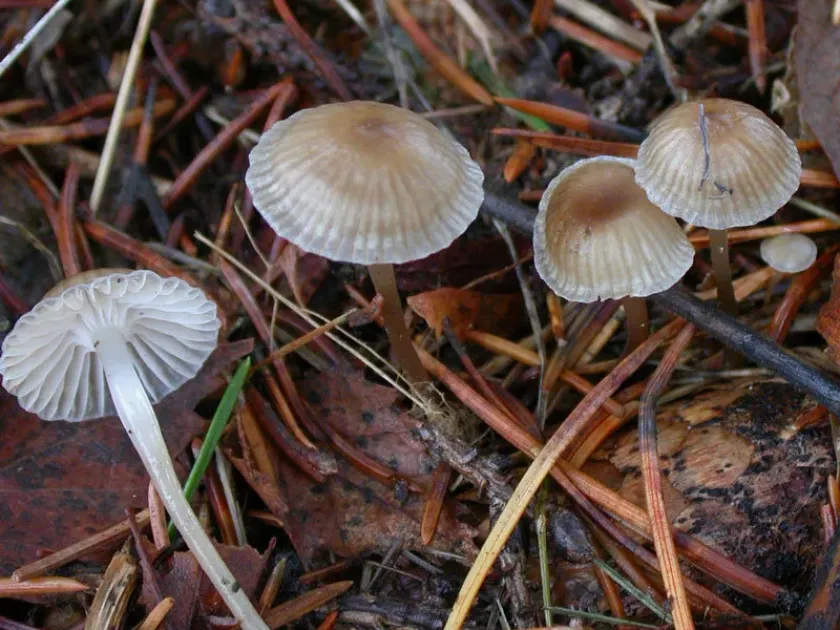
Description
Pathogen
The common bonnet, scientifically known as Mycena vulgaris, is a saprotrophic fungus that is not a plant pathogen. Its primary function in nature is the decomposition of organic matter, specifically pine needles and twigs.
This species belongs to the Mycenaceae family and does not possess the biological capacity to infect or damage the tissues of agricultural crops or garden plants.
As a saprotroph, its mycelium is essential for nutrient cycling in forest ecosystems, breaking down complex plant polymers into simpler compounds.
It is crucial to distinguish this fungus from parasitic agents that cause root rots, wilts, or stem infections, as the common bonnet lives exclusively on dead organic substrates.
The lifecycle of the fungus revolves around nutrient assimilation from dead foliage, making it a harmless and beneficial inhabitant of moist forest soils.
Conditions for development
The growth and fruiting of Mycena vulgaris are highly dependent on high moisture levels and cool, humid weather conditions typical of the autumn season.
The fungus thrives in acidic soils, primarily in coniferous forest environments where thick layers of organic debris provide a steady food supply.
Optimal temperatures for mycelial expansion and fruiting body development range from 10 to 18 degrees Celsius, often following consistent rainfall.
The species requires a shaded and protected microclimate, which explains its absence from open, cultivated farmlands and agricultural fields.
Spore dispersal is facilitated by air currents, allowing the fungus to colonize new patches of leaf litter during periods of high humidity.
Why it matters
Mycena vulgaris poses no threat to agricultural productivity and is categorized as a beneficial decomposer rather than a plant disease agent.
There is no evidence of the fungus causing necrosis, chlorosis, or any other pathological symptoms in the plants surrounding its habitat.
Because it lacks the ability to parasitize living hosts, it is not considered a target for fungicide applications or any other plant protection measures.
The economic impact of the common bonnet is non-existent in an agricultural context, as it does not compete with crops for resources nor affect plant health.
No agricultural safety regulations or monitoring protocols exist for this species, as it represents no risk to crop yields or soil health.
Discussion
No discussions yet — be the first.