
Mycena venustula
Mycena venustula
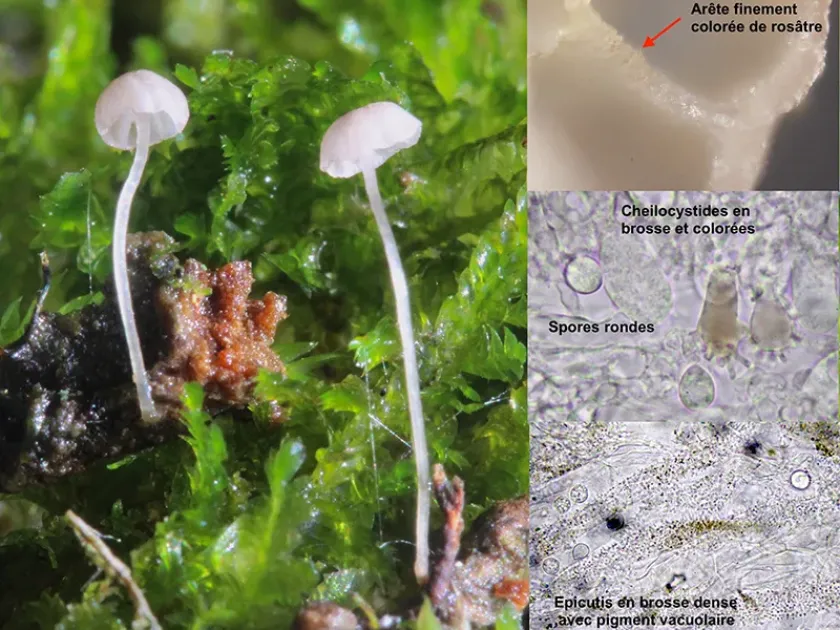
Description
Symptoms
The primary sign of its presence is the emergence of small fruiting bodies (mushrooms) during moist periods. These have characteristic reddish-brown, conical caps.
A diagnostic feature of this species is the gills, which are distant and often display a reddish-colored margin, helping to distinguish it from other small mycena species.
The mycelium resides within the substrate and is usually invisible, appearing as faint white hyphal threads only when the decaying wood is carefully examined.
The fruiting bodies often grow in clusters, firmly attached to decaying bark or wood fragments by a thin, delicate stipe that may be covered in fine hairs at the base.
As the fruiting bodies mature, they may produce a very fine, light-colored spore deposit on the surface of the substrate, though this is often difficult to see.
Pathogen
Mycena venustula is a saprotrophic fungus belonging to the Mycenaceae family. It is strictly a decomposer of organic matter and does not act as a pathogen for living plants or crops.
The fungus plays a vital ecological role by breaking down dead wood, twigs, and bark, thereby contributing to the nutrient cycle in forest environments.
The mycelium of the fungus penetrates the structural components of dead woody debris, initiating the degradation of cellulose and lignin through extracellular enzymes.
Unlike parasitic fungi that attack living tissue, Mycena venustula exclusively colonizes necromass, making it an essential component of forest soil health and regeneration.
From an agricultural standpoint, this fungus is completely harmless. It does not inhabit fields or croplands, as its biological requirements are confined to specific woodland habitats.
Conditions for development
Mycena venustula requires high levels of relative humidity to develop its fruiting bodies. It thrives in damp, shaded environments such as dense forest floors.
The optimal temperature range is typical of cool, temperate autumn weather. Excessive heat or direct sunlight inhibits growth and can lead to the rapid desiccation of the fruiting bodies.
The fungus colonizes dead wood of both coniferous and deciduous trees, preferring material that is already in a moist state, which facilitates easier nutrient absorption.
Spore dispersal is managed by air currents, allowing the fungus to find and colonize new, suitable decaying woody debris within the forest ecosystem.
Stability in the environment is key; fluctuations in moisture levels can cause the fungus to remain dormant as mycelium within the substrate until conditions become favorable again.
Why it matters
There is no economic or agricultural damage associated with Mycena venustula. It is not capable of attacking healthy or stressed agricultural crops.
In forestry, the activity of this fungus is considered beneficial. By facilitating the decomposition of forest waste, it helps clear the ground and recycles essential nutrients back into the soil.
The presence of this fungus does not indicate disease or poor health of the surrounding standing trees, as it is strictly limited to dead woody material.
No risks to human, animal, or environmental health have been reported. It is a non-toxic natural component of temperate forests, contributing to biodiversity.
Efforts to control or eliminate this fungus are unnecessary and counterproductive, as it occupies a niche in the natural decomposition process.
Protection
As Mycena venustula is a natural decomposer and not a pathogen, no control or protection measures are recommended or required in any context.
If wood decay is undesired on specific ornamental structures, the application of wood preservatives or sealants can effectively prevent colonization by this and other saprotrophic fungi.
Maintaining a clean area by removing unnecessary dead wood is a cosmetic choice rather than a pest management necessity, and has no impact on crop health.
There are no chemical fungicides approved or designed for this species, as its role in the ecosystem is generally viewed as neutral or positive.
Best practices suggest leaving this fungus undisturbed, allowing it to perform its natural function in the ecological cycle without human intervention.
Discussion
No discussions yet — be the first.