
Mycena strobilicola
Mycena strobilicola
Description
Symptoms
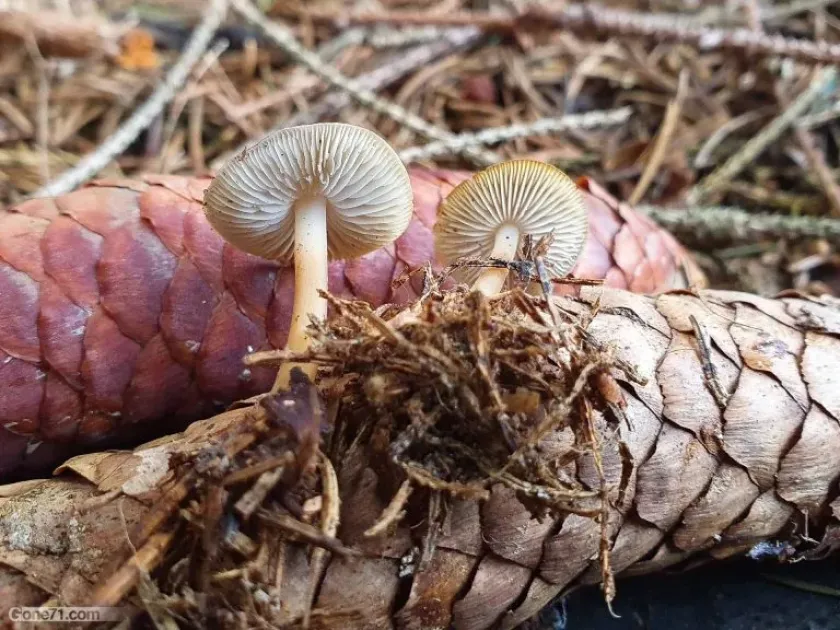
The primary sign of Mycena strobilicola presence is the emergence of small, delicate mushrooms directly from the surface of fallen spruce cones.
The cap is conic or bell-shaped, typically ranging from 0.5 to 2 centimeters in diameter, with a gray to brownish hue.
The gills are white or gray, attached to the stem, and sometimes feature a darker edge, which serves as a key diagnostic character for mycologists.
The stem is slender, brittle, and hollow, often matching the color of the cap and frequently showing white basal mycelium.
A distinctive feature of this species is a strong, unpleasant odor often described as chlorine or rancid flour, which becomes apparent when the fungus is touched.
Pathogen
Mycena strobilicola, commonly known as the cone mycena, is a saprotrophic fungus belonging to the family Mycenaceae.
This fungus exclusively colonizes the fallen cones of Norway spruce (Picea abies), playing a crucial role in the breakdown of organic matter in coniferous forests.
As a decomposer, it breaks down complex plant polymers such as lignin and cellulose, which are abundant in the scales of fallen pine and spruce cones.
The fungus produces its fruit bodies early in the spring, often appearing as soon as the snow melts, making it a reliable indicator of the start of the mushroom season.
The mycelium resides within the scales of the cones, digesting the woody tissue throughout the winter to support the spring flush of fungal growth.
Conditions for development
Successful growth of Mycena strobilicola requires high moisture levels and an abundance of fallen spruce cones scattered on the forest floor.
The fungus thrives in cool, early spring conditions, typically developing when temperatures remain between 5 and 12 degrees Celsius.
Stable humidity within the forest litter layer is essential for the activation of the mycelium and the subsequent production of fruit bodies.
The availability of fresh cones from previous years provides the necessary substrate density to sustain the fungal colony throughout its active period.
Shaded, deep forest environments are preferred as they minimize the evaporation of soil moisture, providing a constant water supply for the developing fungus.
Why it matters
Mycena strobilicola is not a plant pathogen and causes no harm to living trees, shrubs, or agricultural crops.
In fact, the fungus provides an essential ecosystem service by accelerating the decomposition of spruce cones, which are otherwise slow to break down.
By processing these organic residues, the fungus helps return essential nutrients to the forest soil, facilitating the growth of other forest flora.
There is no economic damage associated with this species in forestry, as it does not compete with forest resources or attack vital tree parts.
Its role is strictly beneficial within the forest ecosystem, making it a non-threat to both wild forest stands and nursery plantations.
Protection
No control or protection measures are required for Mycena strobilicola, as it is a natural and beneficial inhabitant of coniferous forest ecosystems.
In cases where spruce cones are collected for seed extraction, simply keeping the collection dry is sufficient to prevent fungal colonization.
Proper storage in well-ventilated, dry areas effectively prevents the growth of any moisture-loving fungi on the collected material.
There is no need for chemical or biological treatments, as the fungus does not damage living plant tissues or compromise forest health.
Maintaining natural forest conditions ensures the survival of this species, which contributes to the health and recycling capacity of the forest floor.
Discussion
No discussions yet — be the first.