
Mycena rorida
Mycena rorida
Description
Symptoms
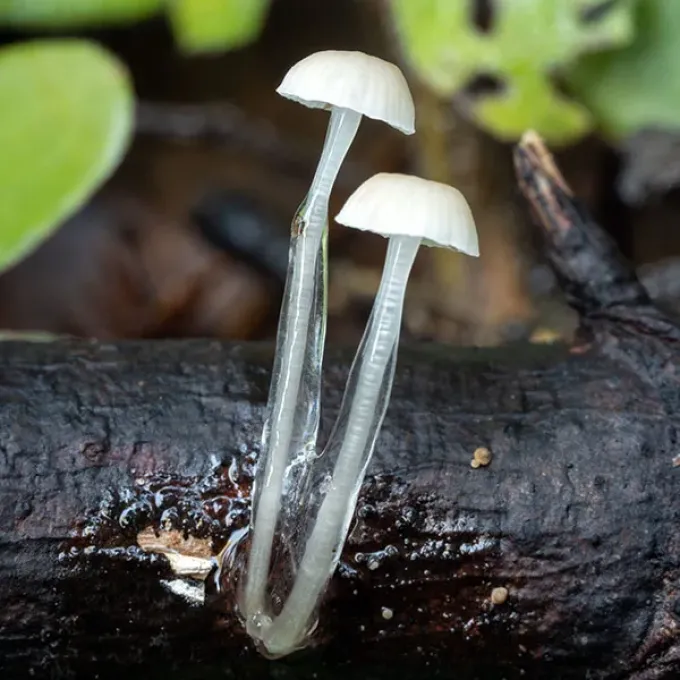
Identification of this species is relatively straightforward due to its distinct morphological features, primarily its size and texture.
The cap is very small, usually measuring between 5 to 15 millimeters, and ranges in color from white to pale yellowish-cream.
The most defining characteristic is the stem, which is covered in a dense, gelatinous layer of slime that stretches when touched.
The gills underneath the cap are relatively distant and adnate, providing a key taxonomic trait for expert identification.
The overall appearance is delicate and translucent, resembling a dewy morning droplet, which is reflected in its specific epithet rorida.
Pathogen
Mycena rorida (also classified as Roridomyces roridus) is a saprotrophic fungus, not a plant pathogen. It plays no role in causing diseases in crops or garden plants.
As a decomposer, this fungus lives on dead plant material such as twigs, leaves, and needles in forest environments.
It lacks the necessary enzymes to degrade healthy plant tissues, which distinguishes it clearly from parasitic fungi that cause plant diseases.
The organism belongs to the Mycena family and is considered an essential component of forest biodiversity.
Mycena rorida contributes to the nutrient cycle by breaking down complex organic matter into simpler compounds that can be reused by other plants.
Conditions for development
The development of Mycena rorida is strictly dependent on high humidity and the presence of moist organic matter.
These fungi thrive in temperate, deciduous, and coniferous forest ecosystems where the humidity remains consistently high.
Optimal fruiting conditions are met during late autumn, particularly after periods of prolonged rainfall when the forest floor is thoroughly soaked.
The fungus is highly sensitive to desiccation, requiring protection from direct sunlight and dry air to maintain its characteristic mucilaginous layer.
It typically populates shaded areas with thick layers of leaf litter, which provides a stable microenvironment for mycelial expansion.
Why it matters
Mycena rorida poses no threat to agricultural productivity, crop safety, or garden health.
It does not cause root rot, vascular wilt, or any other form of tissue degradation in living crops.
There is no economic harm associated with this fungus; therefore, it requires no chemical control or preventative measures.
Attempting to remove or treat areas where this fungus occurs is unnecessary and would be ineffective, as it is a natural part of soil biological health.
Farmers and gardeners do not need to implement any crop protection strategies against this fungus, as it is strictly a saprobe of dead matter.
Discussion
No discussions yet — be the first.