
Mycena renati
Mycena renati
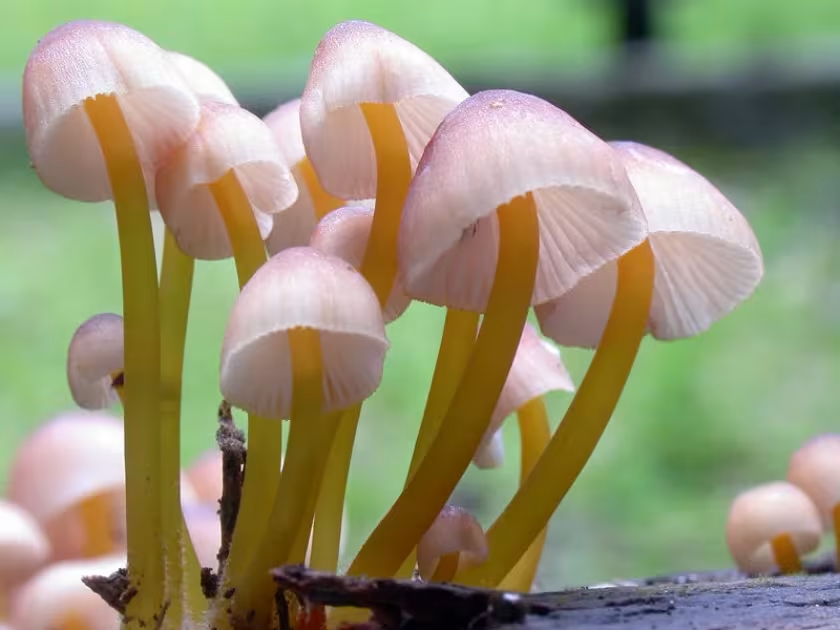
Description
Pathogen
Mycena renati is a species of gilled mushroom in the family Mycenaceae. It is critical to note that this organism is not a plant disease or a pathogen of crops.
Classified as a saprotroph, this fungus derives its nutrients from decaying organic matter, specifically dead wood rather than living host plants.
Unlike parasitic fungi, it lacks the biological mechanisms required to attack living plant tissues, making it harmless to agricultural and horticultural plants.
Its role in the environment is defined by its ability to break down complex organic compounds like lignin and cellulose present in fallen logs and stumps.
This fungus is a common inhabitant of deciduous forests, where it acts as a decomposer rather than an agent of plant pathology.
Conditions for development
The fungus thrives on decaying wood of broad-leaved trees, most notably beech and oak, in moist and shaded environments.
Optimal development conditions include high humidity and moderate temperatures, typically occurring from late spring to autumn.
Spores are dispersed by the wind, allowing the fungus to colonize new woody substrates effectively in its natural forest habitat.
It does not require any specific agricultural management, as it does not inhabit cultivated fields, orchards, or managed crops.
The mycelium grows internally within the decaying wood, and only emerges as visible fruiting bodies when environmental conditions are favorable.
Why it matters
Mycena renati causes no damage to crops, vegetables, or ornamental plants. It is considered a beneficial organism in its forest ecosystem.
There are no symptoms of disease associated with this species on living plants, as it has no mechanism to infect or harm healthy tissue.
Growers should not be concerned if they see these mushrooms on rotting wood piles or old stumps on their property, as they do not spread to live trees.
No protective or control measures are necessary, as this fungus is strictly a saprotroph that aids in nutrient recycling.
The presence of this mushroom is an indicator of the natural decomposition process, which contributes to soil fertility in forest settings.
Discussion
No discussions yet — be the first.