
Mycena pura
Mycena pura
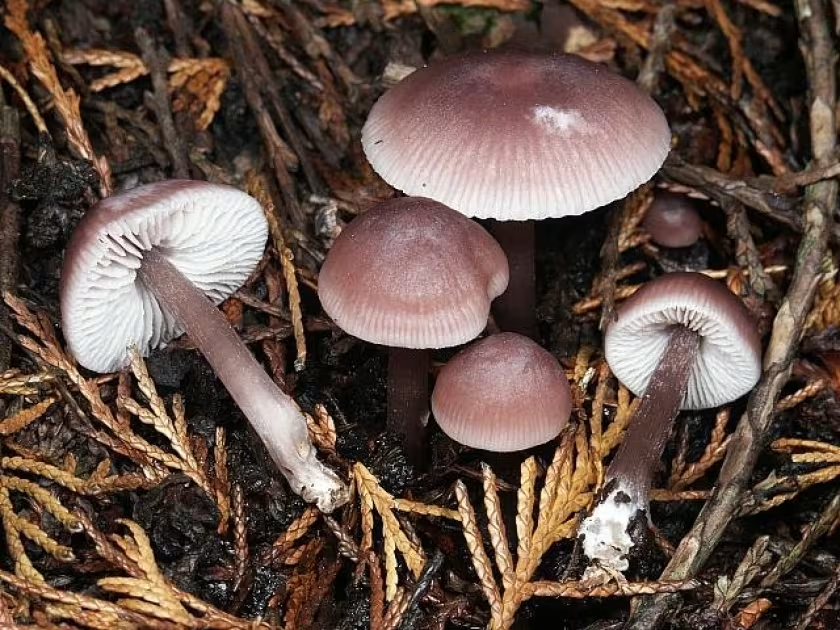
Description
Pathogen
Mycena pura, commonly known as the lilac bonnet, is a mushroom belonging to the Mycenaceae family. It is strictly a saprotrophic fungus that feeds on decaying organic material.
As a saprotroph, it plays a vital role in forest ecosystems by decomposing leaf litter, dead wood, and other organic matter, which contributes to soil nutrient cycling.
It is crucial for agronomists to distinguish between saprotrophic species like Mycena pura and true plant pathogens that damage living tissues.
The fungus does not produce enzymes capable of attacking living plant cells, meaning it poses zero risk to crops, ornamentals, or turfgrass.
Its biological cycle is entirely dependent on dead organic matter, making it an ecological ally rather than an agricultural enemy.
Conditions for development
Mycena pura requires specific environmental conditions, typically found in shaded, moist woodland habitats with rich organic topsoil.
The fungus thrives during cooler, damp periods, often appearing in autumn when the moisture levels in the forest floor are consistently high.
In managed agricultural environments, these conditions are rarely met because regular cultivation and crop rotation prevent the accumulation of the specific organic layers the fungus needs.
The presence of Mycena pura is limited to uncultivated areas or peripheries of fields where leaf litter can accumulate undisturbed.
It is sensitive to sunlight and soil desiccation, which explains its absence in exposed, well-tilled commercial fields.
Why it matters
The fungus causes no harm to agricultural production; it does not compete for space or nutrients with crops and does not act as a vector for plant diseases.
While the mushroom contains muscarine, making it toxic to humans and animals if consumed, it does not release substances that impact crop health.
Agronomically, its presence in the soil is often an indicator of high organic matter content, which generally supports overall soil fertility.
There are no recorded instances of this fungus causing root rot, damping-off, or foliage damage in any agricultural or horticultural crops.
The economic impact is negligible, and farmers should not consider this fungus a threat that requires management or intervention.
Protection
Since Mycena pura is not a plant pathogen, there is no need for chemical, biological, or physical control measures.
No fungicides are registered for this species because killing saprotrophic organisms that aid in organic decomposition would be counterproductive to soil health.
Should the mushrooms appear in greenhouses or nursery containers, they can be easily removed by hand as they have shallow mycelial networks.
Preventative actions to eradicate this species are unnecessary as it does not pose a threat of spreading to healthy plants.
Focusing on balanced soil nutrition and appropriate irrigation is sufficient to maintain a healthy growing environment, regardless of the presence of harmless saprotrophs.
Discussion
No discussions yet — be the first.