
Mycena polygramma
Mycena polygramma
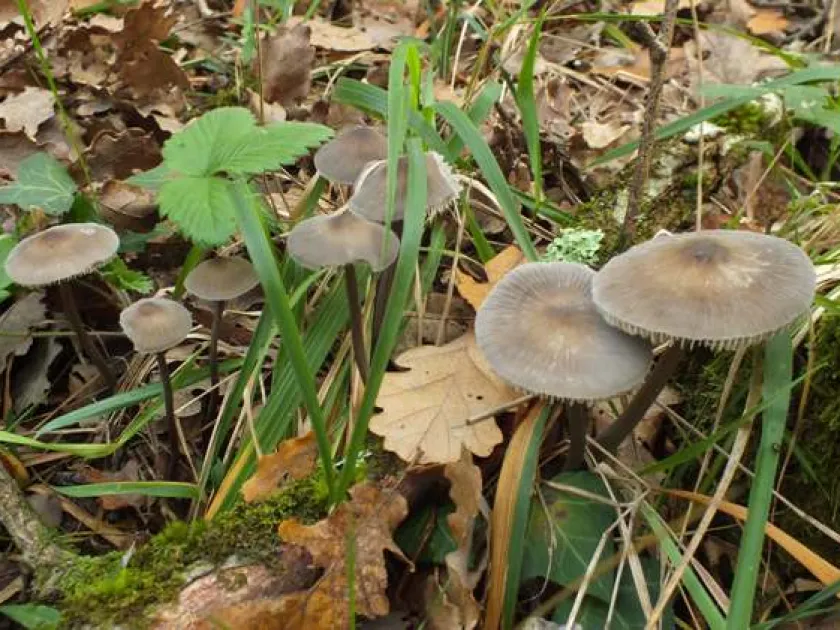
Description
Pathogen
Mycena polygramma, commonly known as the grooved bonnet, is a saprotrophic fungus and does not cause diseases in living plants or agricultural crops.
This organism derives its nutrients from dead and decaying organic matter, specifically decaying wood and woody debris on the forest floor.
As a saprotroph, it plays a vital ecological role by breaking down complex organic compounds, contributing significantly to the nutrient cycling in forest environments.
The fungus colonizes stumps, buried roots, and fallen branches, utilizing enzymes to degrade lignin and cellulose components of the dead wood.
It is not a parasite and does not possess the mechanisms required to infect healthy plant tissues, classifying it as a beneficial decomposer rather than a pathogen.
Conditions for development
The development of Mycena polygramma fruiting bodies is heavily dependent on moisture and humidity levels within its habitat.
This species is frequently observed from spring through autumn, flourishing during periods of high rainfall and moderate ambient temperatures.
The fungus thrives in shaded, damp woodland areas where an abundance of decaying broad-leaved wood provides a stable substrate for growth.
Spore dissemination relies on air currents, enabling the fungus to colonize various pieces of rotting wood across its ecological niche.
Consistent environmental conditions, specifically the absence of prolonged desiccation, are essential for the survival of the vegetative mycelium.
Discussion
No discussions yet — be the first.