
Mycena olida
Mycena olida
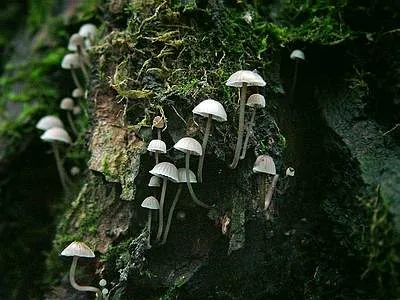
Description
Pathogen
Mycena olida is a saprotrophic mushroom species, a member of the Mycenaceae family. It is strictly a decomposer of organic matter and is not considered a plant pathogen.
This fungus survives by consuming dead plant materials such as decaying wood, fallen leaves, and forest debris. It possesses no enzymatic capability to infect or damage living plant tissues.
In terms of agriculture and horticulture, Mycena olida poses no threat to crops, ornamental plants, or fruit trees. It should not be confused with pathogenic fungi that cause wilting or rot.
The mushroom serves as a natural recycler, breaking down complex biological molecules into simpler forms that contribute to soil structure and fertility.
Botanists and agronomists classify this species as a harmless commensal organism in the ecosystem, rather than a disease-causing agent.
Conditions for development
The growth of Mycena olida is triggered by high moisture levels and cool temperatures. It thrives in environments where organic matter remains consistently damp.
These fungi are typically found in shaded, sheltered areas with significant amounts of woody debris or decaying vegetation, which provides the necessary nutrient base.
High relative humidity and moderate rainfall are essential for the development of the mushroom's fruiting bodies. Dry, arid conditions usually inhibit its visible presence.
Spore dispersal occurs primarily through wind or water droplets, allowing the fungus to colonize new organic substrates in the vicinity of existing patches.
As a forest-dwelling fungus, its presence in a garden is often indicative of good soil organic matter content rather than poor management or infection.
Why it matters
Mycena olida causes no harm to plant life. It does not compete with plants for nutrients, nor does it obstruct their physiological processes.
There is no evidence to suggest that this species causes any reduction in crop yields, nor does it impact the quality of garden produce.
The species is entirely non-toxic to garden plants. Its interaction with plant roots is purely mechanical and ecological, providing no risk of parasitic colonization.
- It does not secrete toxins that affect plant health.
- It does not cause root rot or stem blight.
- It does not require any chemical control or fungicides.
In summary, the presence of Mycena olida should be viewed as part of a functioning ecosystem that actively breaks down organic waste, requiring no defensive intervention from the gardener.
Discussion
No discussions yet — be the first.