
Mycena niveipes
Mycena niveipes
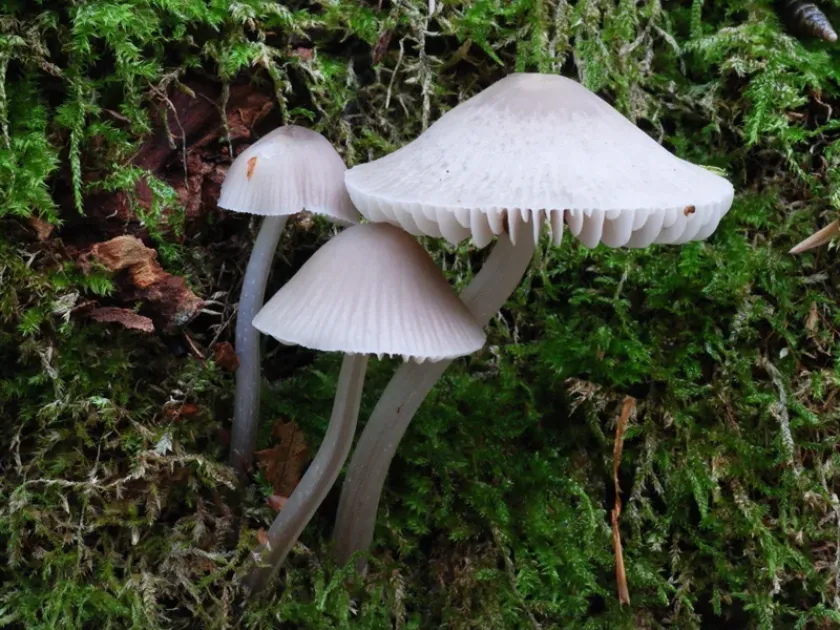
Description
Symptoms
The most visible sign of infection is the emergence of fruit bodies at the base of the tree or on dead bark. These are characterized by conical, whitish caps on smooth white stems.
Infected areas often show signs of local necrosis. The bark may start to loosen or crack, revealing a white, thread-like fungal mat (mycelium) underneath.
Internal wood symptoms include discoloration, ranging from pale to dark patches, and an increase in wood friability as the fungal enzymes destroy the timber fibers.
Leaves on infected branches may show signs of yellowing or chlorosis early in the season, indicating an impaired nutrient supply to the canopy.
In advanced stages, the tree may exhibit a general lack of vigor, with restricted annual growth and potential dieback of secondary limbs.
Pathogen
Mycena niveipes is a saprotrophic fungus belonging to the Mycenaceae family. While primarily a wood-decaying organism, it often colonizes weakened or damaged tree tissues, contributing to the structural degradation of the wood.
The pathogen spreads via airborne spores that settle on damaged bark or exposed wood surfaces. Once established, the mycelium penetrates deeper into the heartwood and sapwood layers.
As a xylotrophic fungus, it thrives by breaking down complex organic compounds like lignin and cellulose, which are essential for the structural integrity of the tree.
The life cycle involves the formation of ephemeral fruit bodies (mushrooms) which appear during favourable conditions to release new spores into the environment.
It is classified as a facultative parasite that exploits trees experiencing physiological stress, making it a significant concern for managed gardens and orchards.
Conditions for development
High humidity and consistent rainfall are the primary drivers for the rapid colonization and fructification of this fungus within a garden ecosystem.
Moderate temperatures ranging from 15°C to 22°C create an optimal environment for mycelial development and the spread of fungal infections across tree stands.
Poor aeration in dense plantings contributes to moisture retention on the bark surface, providing the perfect hydration for spore germination.
Mechanical damage caused by improper pruning, gardening equipment, or wildlife serves as a primary entry point for the fungus into the plant's vascular system.
Accumulation of dead woody material around the base of trees provides a continuous source of inoculum, significantly increasing the probability of new infections.
Why it matters
The main harm caused by Mycena niveipes is the internal rot of wood, which significantly reduces the structural stability of the tree trunk and major branches.
The degradation of xylem vessels impairs the water and nutrient transport system, leading to a progressive decline in the tree's overall health and vitality.
Infected trees become more susceptible to other pathogens and secondary pests, such as wood-boring insects, which further accelerate the decay process.
The structural instability increases the risk of limb failure or whole-tree collapse during severe weather, posing a physical danger in populated areas.
For fruit-bearing trees, the infection results in diminished yields and reduced fruit quality due to the plant's inability to maintain its physiological requirements.
Protection
Effective management begins with rigorous sanitation: promptly removing and destroying infected branches or stumps that act as reservoirs for fungal spores.
Proper wound care, including the application of protective sealants to pruning cuts, is essential to prevent the entry of airborne spores into the tree.
Promoting tree vigor through appropriate fertilization and regular watering programs can enhance the natural defenses against fungal colonization.
Preventive application of fungicides, particularly those containing copper or systemic compounds, can help protect susceptible areas during periods of high fungal activity.
- Prune and destroy infected wood immediately.
- Seal all wounds and large pruning cuts.
- Ensure adequate spacing between trees.
- Remove dead wood and debris from the soil.
Discussion
No discussions yet — be the first.