
Mycena metata
Mycena metata
Description
Pathogen
Mycena metata is a species of gilled mushroom in the Mycenaceae family. It is critical to state that this organism is not a plant pathogen and does not cause any crop diseases.
In biological terms, this species is classified as a saprotroph. This means it feeds exclusively on dead organic matter, playing a vital role as a decomposer in natural and agricultural ecosystems.
The fungus develops primarily in leaf litter, among plant debris, conifer needles, or humus-rich soils. Its mycelium lacks the physiological ability to penetrate or destroy living plant tissues.
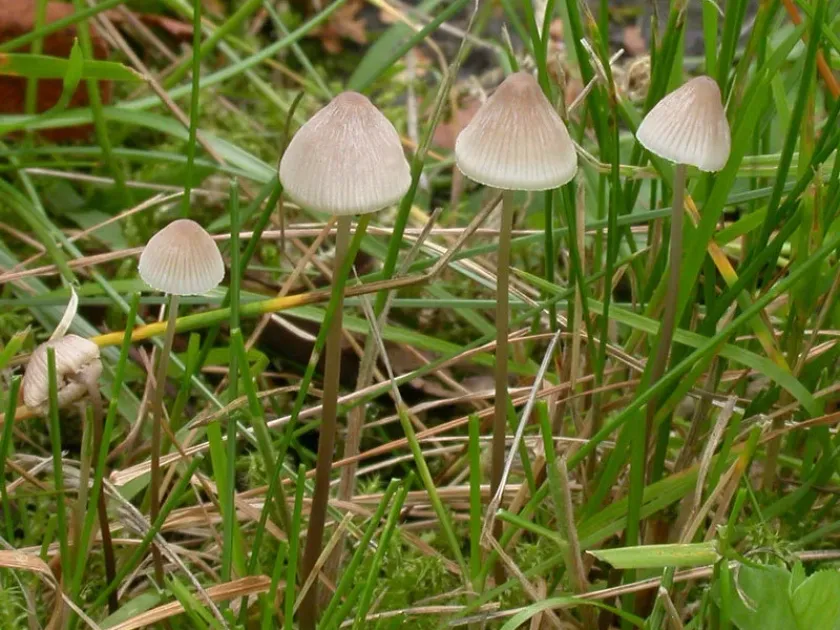
Morphologically, the fungus is characterized by small fruiting bodies with bell-shaped, grayish-brown caps. Its spores are wind-dispersed and germinate only in the presence of moist organic substrates.
From an agronomic perspective, Mycena metata is a beneficial organism that assists in humification and the recycling of organic residues into the soil structure.
Conditions for development
For active growth, the mycelium of Mycena metata requires high levels of humidity in both the air and the soil. It prefers shaded environments with a significant accumulation of organic matter.
The optimal temperature for the formation of fruiting bodies is a moderately warm climate, typically during autumn or rainy summer days. Temperatures below freezing effectively halt the metabolic activity of the mycelium.
The presence of partially decomposed plant residues is the primary factor for its spread. The fungus does not survive in clean, intensively cultivated mineral soils that lack organic content.
Soil aeration is also a factor, as a loose, well-structured soil allows the mycelium to break down cellulose and lignin more efficiently.
In agro-ecosystems, this species is more commonly found in areas adjacent to forest belts, where spores are naturally transported to fields containing significant surface residues.
Why it matters
This fungus poses no threat to cultivated crops. It does not cause root rot, wilting, leaf spotting, or any other pathological conditions common in agricultural production.
In some instances, a high density of saprophytic fungi in the root zone may simply serve as an indicator of excessive soil moisture or a buildup of unworked organic matter.
Any potential harm would be purely indirect, as excessive surface residue can create a microclimate favorable for the development of actual plant pathogens.
However, Mycena metata itself does not compete with plants for nutrients, as its ecological niche is strictly defined by dead organic material, not living roots.
Agronomists can view the presence of these fungi as a positive marker of a healthy biological cycle of decomposition within the soil horizon.
Protection
Control or protection measures against this fungus are not required. The application of fungicides to eliminate saprophytic fungi is considered unnecessary and economically unjustified.
If the visual appearance of these fungi is a concern, the recommended strategy is to improve field drainage and ensure the timely incorporation of crop residues into the soil.
Prevention relies on standard good agricultural practices, such as crop rotation and regular soil cultivation, which disrupt the fungal network and prevent excessive reproduction.
It is important to remember that destroying beneficial soil mycobiota can lead to a decrease in soil fertility, so excessive chemical intervention should be avoided.
If moisture levels are too high, review the irrigation schedule and provide adequate field drainage to prevent waterlogging of the topsoil.
Discussion
No discussions yet — be the first.