
Mycena megaspora
Mycena megaspora
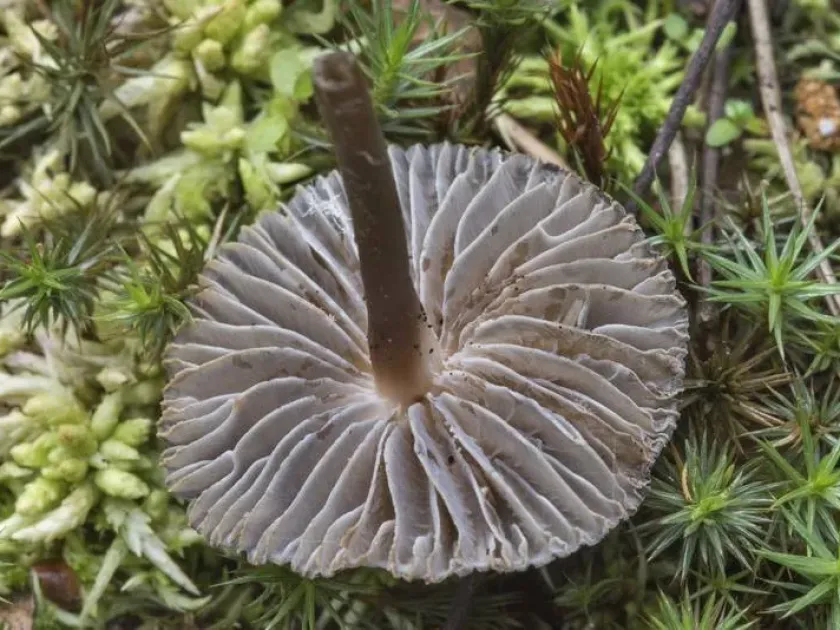
Description
Pathogen
Mycena megaspora is a species of fungus in the Mycenaceae family. It is strictly classified as a saprotroph, meaning it feeds on decaying organic matter rather than infecting living plant tissues.
The fungus functions by decomposing complex plant residues in forest soils. Its mycelial network breaks down cellulose and lignin, contributing significantly to the nutrient cycle in forest ecosystems.
It is important to clarify that this fungus does not act as a pathogen for agricultural crops. It lacks the biological machinery, such as haustoria or specialized enzymes, to invade living plant cells or cause disease.
Morphological examination reveals that the species is characterized by small fruiting bodies and, as the name suggests, relatively large spores. These features are essential for accurate identification by mycologists.
Because it is not a plant parasite, Mycena megaspora does not pose any threat to farm produce, ornamental plants, or forestry plantations. It occupies a niche of decomposers in the soil food web.
Conditions for development
Development of Mycena megaspora is strictly tied to high humidity levels and the availability of organic substrates such as leaf litter, decaying wood, or root debris in forest environments.
The fungus thrives in moderate temperature ranges typical of forest floors. Periods of excessive drought or extreme fluctuations in temperature inhibit the formation of its fruiting bodies.
Propagation is achieved primarily through the dispersal of spores by air currents. These spores settle in suitable moist areas to initiate new mycelial colonies within the soil matrix.
Soil composition and pH play a role in its colonization success. It is most commonly found in acidic, humus-rich soils where organic accumulation is stable throughout the seasons.
In agricultural settings, the lack of permanent organic cover and regular soil disturbance significantly limit the potential for this fungus to establish or spread across crop fields.
Why it matters
Mycena megaspora is entirely harmless to agricultural crops. It does not produce mycotoxins or pathogenic substances that could impair plant health or reduce crop yields.
The fungus carries no economic impact on farming operations. There are no known instances where this species has been associated with crop losses or agricultural disease outbreaks.
It is viewed as a beneficial member of the soil microflora in natural settings, as it assists in the breakdown of organic matter, which eventually recycles nutrients back into the soil profile.
Farmers do not need to implement any control measures or protective treatments against this fungus. Any presence of this species on farm edges is purely coincidental and ecologically neutral.
In summary, Mycena megaspora is a saprotrophic organism that plays a positive role in nature without any negative interference with human agricultural practices.
Discussion
No discussions yet — be the first.