
American coffee leaf spot
Mycena citricolor
Description
Symptoms
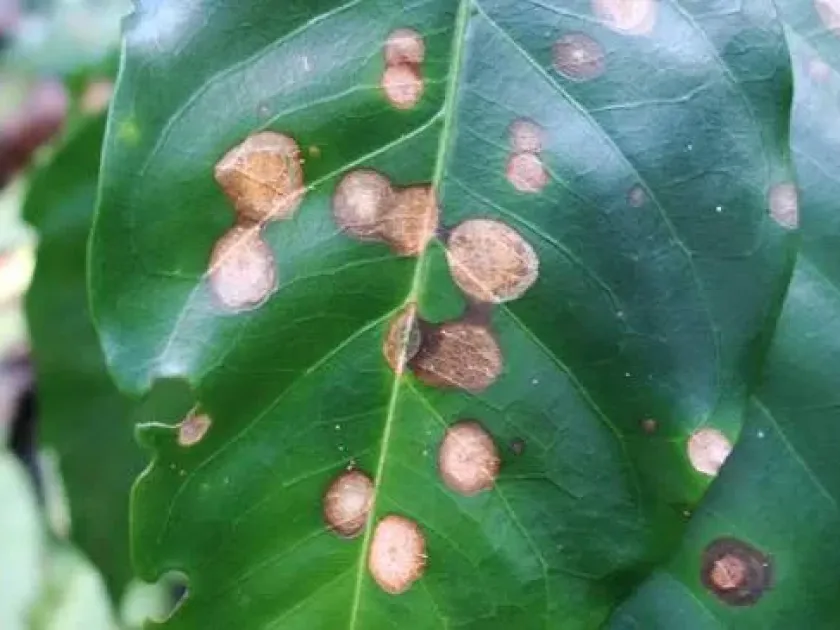
The first symptoms are small, circular, light-colored spots on the leaves. These spots often develop a dark brown border and eventually turn dry, causing the leaf tissue to disintegrate.
On the underside of the leaves, tiny, pale, stalk-like fruiting bodies appear. These structures are a key diagnostic feature for identifying the presence of Mycena citricolor in the field.
Infection leads to severe defoliation, as affected leaves yellow and drop prematurely. This process significantly reduces the tree's photosynthetic capacity, which weakens the entire plant.
Coffee berries are also susceptible, showing dark, sunken lesions. Such berries often mummify or drop before harvest, directly reducing the yield and affecting the quality of the coffee beans.
If the disease advances, tender shoots and terminal buds may die, leading to stunted growth. This causes a loss of apical dominance and deforms the structure of the coffee tree branches.
Pathogen
The causative agent of the disease is the fungus Mycena citricolor, a member of the basidiomycetes group. This pathogen produces a specific toxin called citricorin, which causes tissue necrosis in coffee plants.
The fungus colonizes leaves, berries, and tender shoots. It spreads through small, specialized structures that are easily dispersed by rain splashes or wind, making it highly contagious within a plantation.
This pathogen has a wide host range, although it is particularly destructive to Coffea arabica. It can survive in dead leaf litter and plant debris for extended periods, serving as a reservoir.
The life cycle of Mycena citricolor is closely adapted to humid tropical environments. It thrives by infecting living tissue and can transition to a saprophytic lifestyle on decaying matter.
Under suitable conditions, the fungus produces abundant spores, facilitating rapid spread across large areas. Its ability to survive in various forms makes it a challenging pest to eradicate entirely.
Conditions for development
The development of American coffee leaf spot is highly dependent on high relative humidity and frequent rainfall. Prolonged moisture on the leaf surface is necessary for spore germination.
Temperatures between 20°C and 25°C are optimal for the fungus. These conditions are standard in many coffee-growing regions, making the crop vulnerable for much of the year.
Poorly ventilated plantations with high tree density create a microclimate that promotes disease. Limited airflow prevents leaves from drying out, favoring fungal colonization.
The spread of the disease is usually linked to rainy seasons. Raindrops carry the fungal spores from the canopy to the lower branches and surrounding plants, leading to widespread infection.
Excessive shade and improper weed management further exacerbate the problem by keeping the lower atmosphere humid. Effective farm management is essential to disrupt the disease cycle.
Why it matters
The primary impact of the disease is a significant reduction in yield due to both bean damage and tree exhaustion. Premature leaf drop prevents the tree from storing enough energy for future fruit development.
The economic loss can be severe, especially in areas where environmental conditions favor the fungus. Farmers may face reduced profits due to lower quality beans and increased production costs.
Continuous infection cycles weaken the trees over time, making them more susceptible to other pests and diseases. This cumulative effect can lead to the long-term degradation of the plantation.
Coffee beans from infected berries often exhibit quality defects, such as off-flavors or discoloration. This lowers their market value and can even render the harvest unsuitable for processing.
In extreme cases, the cumulative damage necessitates the uprooting of severely affected trees. This results in significant capital losses and the need for expensive replanting efforts.
Protection
Sanitation is the most effective cultural control measure. Removing and burning all infected plant material helps to significantly reduce the inoculum load in the plantation.
Pruning is critical to ensure proper airflow and light penetration. Thinning the canopy helps leaves dry quickly after rain, which inhibits the growth of the fungus.
Preventive application of copper-based fungicides is a standard management practice. Regular spraying before and during the rainy season can protect healthy tissue from infection.
Weed control in the inter-row areas helps reduce humidity levels at the ground level. Maintaining a clean plantation is essential for minimizing the conditions that favor the disease.
Selecting and planting resistant coffee varieties is a long-term strategic approach. Research into genetic resistance remains a priority for sustainable coffee production globally.
Discussion
No discussions yet — be the first.