
Orange-edged mycena
Mycena aurantiomarginata
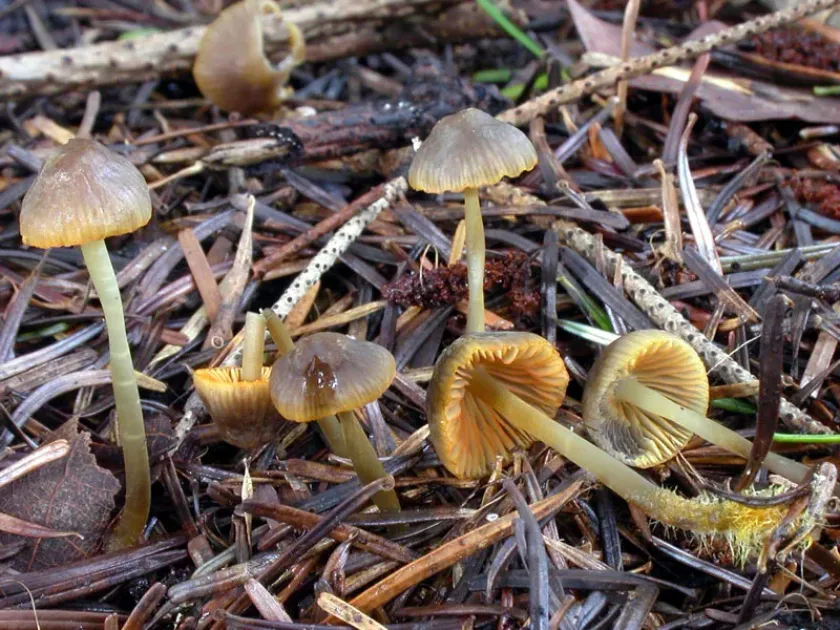
Description
Symptoms
The Orange-edged mycena is a small mushroom characterized by a bell-shaped or convex cap ranging from 1 to 2 cm in diameter.
The most distinctive feature of this species is the vibrant orange edge of the gills, which gives the mushroom its unique visual appearance.
The surface of the cap is typically gray-brown or dark brown, often with olive hues, becoming lighter toward the margins.
The stem is slender, brittle, and often colored similarly to the cap, frequently featuring a fine whitish powder at the base.
The flesh of the mushroom is extremely thin, lacking any strong odor or distinctive taste, rendering it unsuitable for human consumption.
Pathogen
It is important to clarify that this organism is not a plant disease but a saprotrophic fungus living on decaying organic matter.
It belongs to the family Mycenaceae and does not possess any phytopathogenic traits, meaning it cannot infect living plants.
The biological cycle of this fungus is entirely focused on the breakdown of forest debris, such as pine needles and small twigs.
Unlike parasitic fungi, the Orange-edged mycena does not interact with the living tissues of plants, roots, or agricultural crops.
Systematically, it is a decomposer that plays a beneficial role in natural ecosystems by cycling nutrients back into the soil.
Conditions for development
This fungus typically thrives in coniferous forests, where deep layers of needle litter provide the necessary substrate for growth.
Fruit bodies appear most frequently during the autumn season, triggered by cooler temperatures and increased atmospheric humidity.
The species prefers acidic soil conditions often found in pine or spruce forests, where decaying organic material is abundant.
Moisture is a critical factor for the development of the fungus, and significant fruiting occurs after periods of frequent rain.
Spores are dispersed through wind currents, allowing the fungus to colonize suitable forest floor patches throughout its habitat.
Why it matters
The Orange-edged mycena causes no harm to agricultural crops, horticultural plants, or forestry, as it is strictly a saprotroph.
There is no risk of infestation for living plants, and the presence of the mushroom does not degrade the health of the ecosystem.
No economic losses are associated with this species, and it is not considered a pest in any agricultural or professional context.
Its role in mineralizing forest floor litter is highly beneficial for the overall nutrient cycle within the forest environment.
Consequently, the species is perfectly safe for surrounding plants, as it lacks the physiological mechanisms to attack living tissue.
Protection
As this mushroom is not a pathogen, there is no need for chemical control, fungicides, or any specific management practices.
Agricultural intervention is not required, and applying pesticides would be ecologically harmful to beneficial soil microflora.
No preventative measures are necessary, as the presence of the fungus does not indicate any disease state in local plant communities.
Management of the land should focus on general environmental health rather than attempting to eradicate non-pathogenic species.
In conclusion, the Orange-edged mycena should be considered a natural component of forest biodiversity rather than a target for control.
Discussion
No discussions yet — be the first.