
Monosporascus root rot
Monosporascus cannonballus
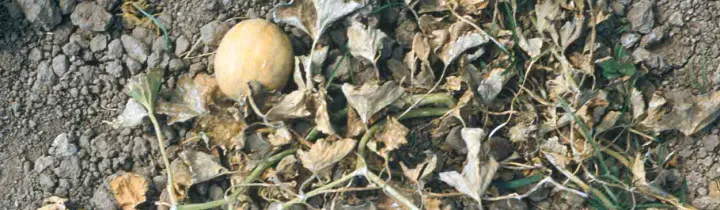
Description
Symptoms
Early symptoms include mid-day wilting of foliage, where plants appear stressed during peak heat but seem to recover during the cooler night hours.
As the disease progresses, leaves develop interveinal chlorosis, followed by necrosis, and eventually, the entire plant may collapse permanently.
Root systems show severe browning and decay, with the cortex sloughing off, leaving only the vascular cylinder intact in advanced stages of infection.
The presence of black, sand-grain-sized perithecia on the outer root tissue is a diagnostic hallmark of this specific fungal pathogen.
Affected plants often show significantly stunted growth, and the fruit produced is typically small, poorly developed, and of low commercial quality.
Pathogen
The disease is caused by the soil-borne ascomycete Monosporascus cannonballus. This fungus is a specialized pathogen recognized for producing small, black, spherical perithecia on infected roots.
These perithecia are highly resilient and act as survival structures, allowing the pathogen to persist in agricultural soils for many years without a host plant.
Infection is initiated as the fungus colonizes the root cortex, where it produces enzymes that degrade plant tissues, effectively causing root necrosis.
The fungus is notorious for its ability to thrive under high temperatures, which makes it particularly lethal in arid and semi-arid production areas.
Its biological cycle is intricately linked to the heat-stressed environment of the root zone, often causing severe vascular dysfunction in the host.
Conditions for development
The development of Monosporascus cannonballus is strongly favored by high soil temperatures, typically ranging between 25°C and 35°C during the growing season.
Soil conditions such as high salinity and poor moisture management can exacerbate the impact of the pathogen on the host's vitality.
Continuous cropping of susceptible hosts, such as muskmelons and watermelons, allows the pathogen population to build up rapidly in the soil profile.
Intensive tillage practices that may move infested soil particles can contribute to the dissemination of the pathogen within the field or to adjacent areas.
The fungus is most damaging when plants are already under abiotic stress, which limits their physiological capacity to defend against root colonization.
Why it matters
The disease leads to sudden vine decline, causing substantial losses in yield and often resulting in total crop failure in heavily infested fields.
In addition to yield quantity, the disease severely compromises fruit sugar content and overall shelf life, making the produce unacceptable for market.
Management becomes increasingly difficult due to the pathogen's long-term survival in soil, often forcing farmers to abandon infested land.
Input costs rise significantly due to the necessity of soil fumigation or the acquisition of specialized resistant rootstocks for grafting.
The ecological and economic stability of cucurbit production in affected regions is often threatened by the persistent nature of this fungus.
Protection
The most effective strategy for managing Monosporascus root rot is the use of resistant rootstocks, particularly pumpkin or squash varieties bred for tolerance.
Extending crop rotation cycles with non-host crops, such as cereals or grasses, can help reduce the density of fungal perithecia in the soil over time.
- Implementation of precise irrigation to prevent water stress.
- Proper destruction of crop debris to reduce the inoculum load.
- Application of bio-control agents like Trichoderma species.
- Use of soil solarization in regions with high solar radiation.
Pre-plant soil fumigation is an option, though its effectiveness varies depending on soil depth and the level of initial inoculum present in the field.
Maintaining high soil fertility and balanced nutrition helps plants mitigate the effects of the disease and maintains higher levels of vigor throughout the season.
Discussion
No discussions yet — be the first.