
Blueberry mummy berry
Monilinia vaccinii-corymbosi
Description
Symptoms
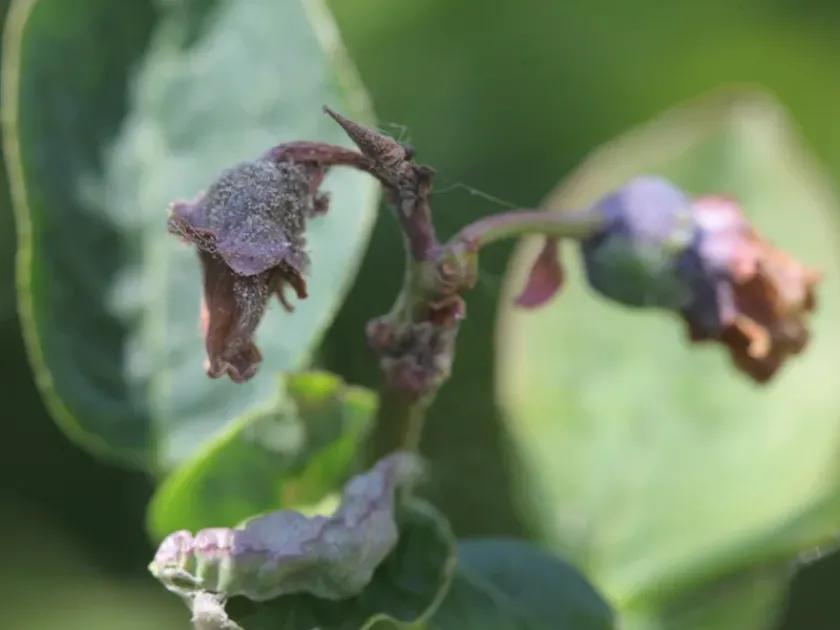
The first symptoms of mummy berry are observed in early spring as shoot blight. Infected young leaves and shoots suddenly wilt, turn black, and curl, often being mistaken for frost damage.
During humid conditions, a gray, powdery mass of conidia appears on these blighted shoots. This sporulation serves as the source of secondary infection for flowers and developing fruits.
The most distinctive symptom appears later in the season as the berries mature. Infected berries stop growing, become hard, shriveled, and light tan or gray, earning the name "mummy berries."
These mummified berries often drop to the ground before the healthy fruit is harvested. They serve as the overwintering structure for the fungus, remaining in the soil until the next spring.
Visible signs of the disease on a plantation include scattered blighted shoots among healthy foliage and the presence of wrinkled, hardened fruit clusters that ruin the commercial value.
Pathogen
The disease is caused by the fungus Monilinia vaccinii-corymbosi. It is an ascomycete fungus that is specifically adapted to infect plants in the Ericaceae family, particularly highbush blueberries.
The fungus overwinters as sclerotia within the mummified berries on the ground. In early spring, these sclerotia produce small, trumpet-shaped structures called apothecia that release ascospores.
These ascospores are the primary inoculum, infecting emerging succulent tissues of the blueberry plant. Once established, the fungus produces conidia, which spread the disease to the blossoms.
The pathogen's life cycle is tightly synchronized with the development of the blueberry plant, which is why early-season management is critical for controlling the disease.
The survival of the fungus in the soil makes it a persistent threat in blueberry fields, necessitating integrated management approaches every growing season to reduce inoculum density.
Conditions for development
Infection is highly dependent on environmental conditions, particularly high moisture and cool temperatures during the early spring bloom period when susceptible tissues are emerging.
Ascospore release from apothecia is triggered by wet weather and temperatures typically ranging between 12°C and 18°C. Frequent rain during bud break significantly increases the risk of a severe outbreak.
Prolonged leaf wetness is necessary for the spores to germinate and penetrate the plant tissue. Poor air circulation within the canopy allows humidity to persist, facilitating the infection process.
Plantations located in low-lying areas or sites with poor drainage are often at higher risk because these areas stay cooler and wetter for longer periods, favoring fungal development.
High nitrogen fertilization can sometimes contribute to overly lush, succulent growth, which may be more susceptible to rapid colonization by the fungus during the early growth stages.
Why it matters
The primary economic impact is a direct loss of marketable yield. In severe cases, mummy berry can destroy up to 80% of the crop, making the remaining fruit unusable for fresh market sales.
Beyond fruit loss, the blight phase can damage the structural integrity of the plant by killing young shoots, which reduces the potential for fruit production in subsequent growing seasons.
The presence of mummified fruit in the harvest significantly increases labor costs for sorting and creates risks of post-harvest contamination if diseased berries are processed alongside healthy ones.
Chronic infections weaken the overall health of the blueberry bushes, making them more susceptible to environmental stress and secondary pathogen attacks, leading to gradual stand decline.
For growers, the consistent threat of this disease requires proactive monitoring and fungicide investment, which raises the total cost of production and impacts profit margins.
Protection
Cultural control is essential; covering the soil under the bushes with a layer of mulch, such as wood chips, helps prevent the ascospores from reaching the susceptible plant tissues.
Sanitation is a critical step; removing and destroying infected shoots and mummified berries before the next spring reduces the primary inoculum source significantly in the plantation.
Fungicide applications are most effective when timed precisely to the development of the apothecia and the blueberry phenology, typically focusing on the green tip to bloom stages.
Selecting resistant cultivars can drastically reduce the need for intensive chemical programs, although no cultivar is completely immune to high infection pressure under ideal weather conditions.
- Pruning to ensure good airflow within the canopy.
- Monitoring weather patterns to predict infection windows.
- Ensuring proper field sanitation during the off-season.
- Using registered systemic fungicides according to local regulations.
Discussion
No discussions yet — be the first.