
Quince Monilinia
Monilinia linhartiana
Description
Symptoms
The first symptoms appear during blooming as the blossoms suddenly wilt, turn brown, and collapse. Unlike healthy flowers, infected blossoms remain attached to the twigs, appearing as if they were scorched.
The infection then spreads to young shoots, causing them to blacken and die back. This shoot blight is a hallmark of the disease and significantly impacts the tree's architecture and growth.
On leaves, the disease manifests as irregular brown spots that quickly expand, eventually leading to premature defoliation and a decline in the tree's overall vigor.
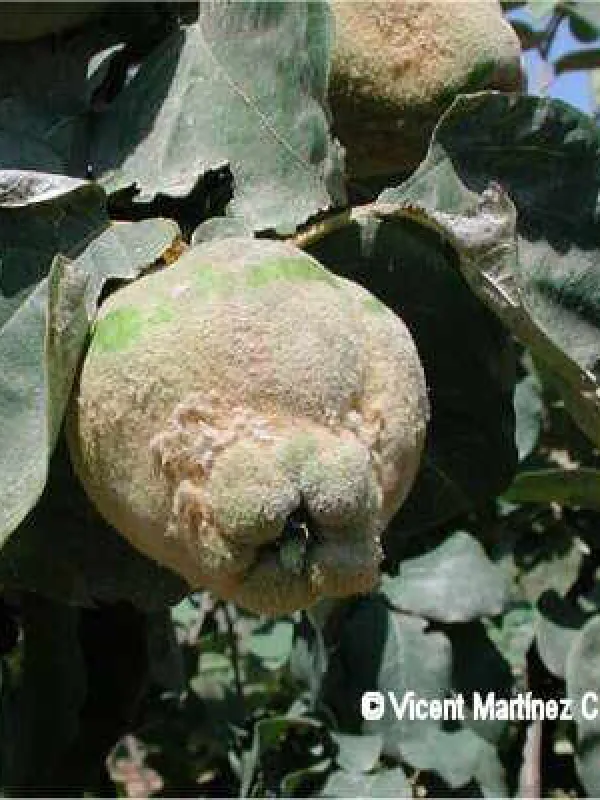
As fruit develops, the pathogen causes circular brown rot spots. Under high humidity, these spots develop characteristic gray or yellowish spore pustules arranged in concentric circles.
Eventually, the infected fruit undergoes complete decay and turns into a black, shriveled "mummy." These mummified fruits are extremely durable and often remain hanging on the branches through the winter.
Pathogen
The disease is caused by the ascomycete fungus Monilinia linhartiana, which specifically targets quince trees. This pathogen is highly specialized and can cause devastating effects on susceptible orchards.
The fungus overwinters as mycelium within mummified fruits and infected twigs. During the spring, the pathogen produces apothecia, which release ascospores that initiate the primary infection process when weather conditions are favorable.
Infection typically occurs during the flowering period, with spores landing on blossoms and young shoots. Once established, the fungus grows into the plant tissue, secreting enzymes that destroy the cellular structure.
Secondary infections are spread by conidia, which are easily dispersed by wind, rain splashes, and pollinators. This allows the disease to propagate rapidly throughout the tree canopy during the active growth season.
The persistence of the pathogen in mummified fruit ensures that it can survive unfavorable environmental conditions, making it a recurring threat for orchards where sanitation practices are ignored.
Conditions for development
High humidity and consistent rainfall are the primary drivers for the development and spread of Monilinia linhartiana. Wet conditions during bloom are particularly critical for successful primary infection.
Temperatures ranging from 15°C to 20°C (approx. 59-68°F) are considered optimal for the pathogen. A cool, moist spring often leads to severe outbreaks that are difficult to manage later in the season.
Poor orchard sanitation, such as failing to remove infected mummified fruit, provides a high inoculum pressure that enables the fungus to spread quickly as soon as the trees break dormancy.
Inadequate pruning leads to dense canopies, which restrict airflow and maintain high humidity levels within the foliage, creating a perfect microclimate for fungal colonization.
Mechanical damage caused by pests, hail, or agricultural tools serves as an entry point for the pathogen, significantly increasing the likelihood of fruit rot in the later stages of ripening.
Why it matters
Quince Monilinia can cause catastrophic yield losses, sometimes reaching 90% in severe cases. Both blossoms and developing fruit are highly susceptible, leading to total crop failure.
The persistent dieback of shoots weakens the tree, reducing its energy reserves and making it more susceptible to other pests and harsh winter conditions, which can lead to tree mortality.
Infected fruits are completely unmarketable and unsuitable for processing. The accumulation of fungal metabolites in the fruit flesh renders them inedible and potentially toxic.
The long-term impact involves a steady decline in the orchard's productivity. Without rigorous control measures, the concentration of fungal spores in the environment increases every year.
High management costs are associated with the disease, as growers must invest heavily in protective fungicide applications and labor-intensive sanitation practices to keep the orchard productive.
Protection
Effective management requires a combination of cultural practices and chemical control. The most crucial step is the removal and destruction of all mummified fruits and infected twigs during the dormant season.
Proper pruning is essential to improve light penetration and air circulation within the tree, which directly reduces the humidity levels that the fungus requires to thrive.
Fungicide applications are recommended, specifically targeting the blooming window (pink bud stage) and immediately following petal fall, using copper-based or systemic products as appropriate.
Pest control is vital to prevent fruit damage, as healthy, intact fruit skins act as a natural barrier against fungal invasion during the summer months.
- Collect and bury or burn all fallen mummified fruit.
- Sanitize pruning tools between trees to prevent the spread of spores.
- Monitor the orchard regularly for early signs of blossom blight.
Discussion
No discussions yet — be the first.