
Head smut of millet
Moesziomyces bullatus
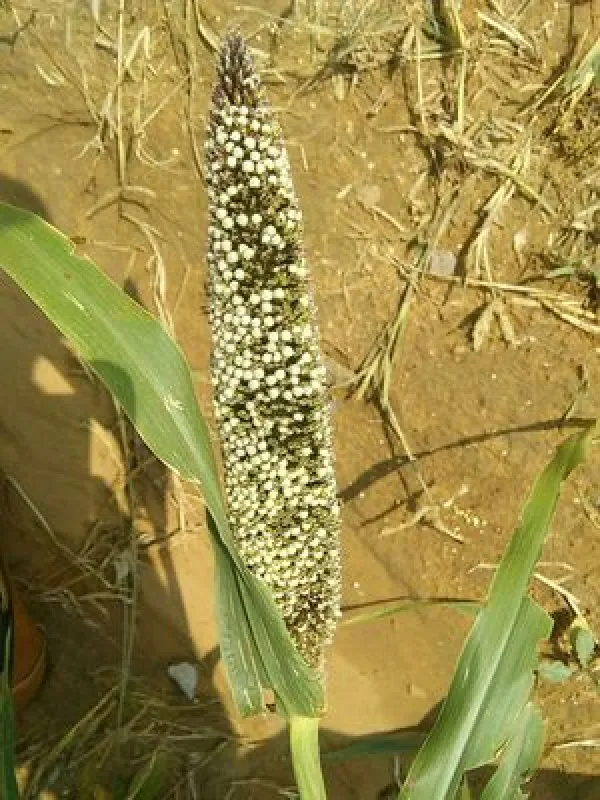
Description
Symptoms
The most diagnostic symptom of head smut is the formation of large galls or sori where the panicle (head) should be. These galls are initially covered by a thin, whitish membrane that eventually ruptures.
Once the membrane breaks, it releases a cloud of dark brown or black powdery spores, which are the fungal teliospores. In many cases, the entire panicle is replaced by this mass of spores, leaving the plant severely deformed.
Infected plants often display stunted growth, excessive tillering, and distorted stems. The panicle may remain partially enclosed in the sheath of the upper leaf, preventing it from fully emerging.
While the whole head can be affected, sometimes only parts of the panicle show signs of infection. This variation makes careful scouting necessary during the heading phase of crop development.
Affected plants are easily identifiable in the field due to their atypical morphology. Unlike healthy plants, they show no potential for grain production, and their overall vigor is significantly reduced.
Pathogen
The causative agent of this disease is the fungus Moesziomyces bullatus (formerly known as Sporisorium destruens), a specialized pathogen that affects proso millet. It belongs to the Ustilaginaceae family and typically causes systemic infection in host plants.
The disease cycle begins when teliospores, surviving in the soil or on seed surfaces, germinate and infect the young millet seedlings. The fungal mycelium then grows within the plant's tissues throughout the vegetation period.
As the plant develops its reproductive structures, the fungus concentrates in the ovaries. It displaces the developing grain with its own fungal mass, eventually forming large, swollen sori filled with dark, powdery teliospores.
Moesziomyces bullatus is known for its ability to persist in soil for several years. This longevity makes the pathogen a constant threat to millet production, especially when fields are continuously cropped with this cereal.
The fungus is highly adapted to the host, ensuring its survival and propagation by timing its sporulation with the flowering and grain-filling stages of the millet plant.
Conditions for development
Infection is favored by specific soil and environmental conditions during the seedling stage. Soil temperatures between 15°C and 25°C are ideal for spore germination and successful colonization of the millet host.
Soil moisture levels play a critical role; moderate moisture promotes rapid germination of both the host seed and the fungal spores. If environmental conditions delay seedling emergence, the plant remains susceptible to infection for a longer duration.
Crop rotation is the most significant factor in managing the soil-borne inoculum. Continuous cultivation of millet in the same field leads to a substantial buildup of teliospores in the soil, increasing the risk of severe disease outbreaks.
The pathogen is relatively hardy and can withstand various climatic fluctuations. Its ability to remain dormant in the soil ensures that the field remains a source of infection for successive seasons if no mitigation strategies are applied.
Cultural practices that promote vigorous and fast seedling growth help minimize the period during which the plant is susceptible, thereby reducing the chances of successful fungal penetration.
Why it matters
The primary economic impact of head smut is the direct loss of grain yield. Because the fungal sori replace the actual grain, the productivity of infected stems is reduced to zero.
Secondary losses include the contamination of harvested healthy grain with fungal spores. This lowers the quality of the commercial crop and renders the grain unsuitable for use as seed without extensive cleaning and chemical treatment.
Contaminated grain may also have reduced feed quality, potentially causing issues for livestock. Furthermore, the presence of spores can lead to respiratory irritation during handling and processing of the harvest.
The physiological stress caused by the systemic fungal infection drains the plant's resources, leading to reduced overall vigor and increased susceptibility to other environmental stresses, such as drought or secondary pathogens.
Recurring outbreaks in a region can destabilize millet production, leading to financial losses for farmers and forcing them to rotate to less profitable crops or invest heavily in high-end fungicide seed treatments.
Protection
The most effective strategy for managing head smut is the use of healthy, fungicide-treated seeds. Systemic fungicides are highly effective at protecting the germinating seed and the vulnerable seedling stage.
- Implement a crop rotation cycle, avoiding millet for at least 3 years on infested land.
- Use certified, disease-free seed to prevent the introduction of the pathogen into new fields.
- Select resistant or tolerant millet varieties bred for the specific growing region.
- Ensure rapid and uniform emergence through proper planting depth and soil preparation.
Rogueing or the removal of infected plants early in the season can help reduce the amount of inoculum returned to the soil, though this is only practical in smaller fields or seed production plots.
Monitoring fields during the panicle emergence phase is essential for assessing the disease level. This information helps farmers plan their management strategies and rotation schedules for future cropping seasons.
Discussion
No discussions yet — be the first.