
Mischococcus
Mischococcus
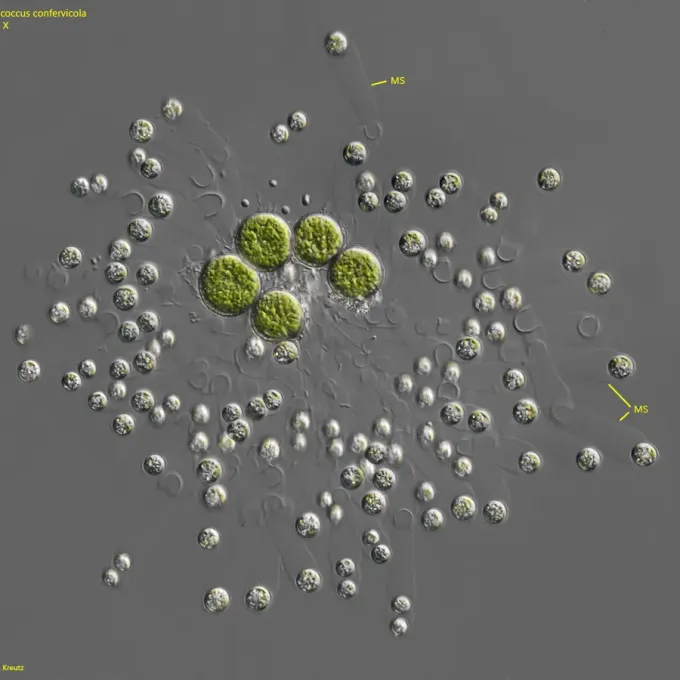
Description
Pathogen
Mischococcus is a genus of yellow-green algae (Xanthophyceae) known for forming characteristic colonial structures with branched stalks.
These organisms are not obligate parasites but function as epiphytes that attach to the surfaces of submerged or moisture-loving plants.
The morphology of the colony is defined by cells held together by a gelatinous substance produced during their metabolic processes.
These algae reproduce via zoospore formation, allowing for rapid colonization of available substrates in aquatic environments.
Their physiological profile includes high lipid storage, which facilitates their survival in fluctuating nutrient environments.
Conditions for development
Stagnant water conditions are the primary prerequisite for the aggressive proliferation of Mischococcus colonies.
High nutrient levels, particularly nitrates and phosphates, act as fertilizers that stimulate rapid algal growth in irrigation systems.
Optimal light exposure in shallow water bodies provides the energy required for significant biomass production by these algae.
Temperatures between 20°C and 25°C are considered ideal for the expansion and reproduction cycle of this organism.
Poor water circulation within fields or greenhouses increases the probability of stable colony formation on crops.
Why it matters
The accumulation of mucus-covered colonies on foliage significantly impedes the gas exchange necessary for healthy plant development.
Reduction in photosynthesis due to physical blockage results in stunted growth and delayed maturation of affected plants.
The presence of algae provides a humid niche that facilitates secondary infections by various fungal and bacterial plant pathogens.
Significant economic impact occurs in rice cultivation where algal blooms disrupt the early developmental stages of the seedlings.
Physical stress and nutrient deprivation caused by the algal layer reduce the overall vigor and quality of the final harvest.
Protection
Effective management begins with improving drainage systems to prevent long-term water stagnation in cultivation areas.
The application of specific algicides is a standard industry practice to keep water reservoirs and irrigation channels clean.
Managing nutrient runoff from fertilizers helps to decrease the potential for algal blooms in agricultural water supplies.
- Regular water agitation.
- Proper water level management.
- Manual removal of colonized substrate.
Proactive maintenance of irrigation infrastructure is crucial to prevent the establishment of permanent algae populations.
Discussion
No discussions yet — be the first.